In a nutshell
- 🧪 The science: tea’s tannins adsorb odour molecules (amines, sulphur compounds), reducing volatility without masking scents.
- 🧹 The method: ensure leaves are completely dry, sprinkle a light veil, let sit 20–60 minutes, then vacuum thoroughly; boost with bicarbonate of soda for broader capture.
- ⚠️ Safety first: patch-test, avoid wet tea to prevent stains, keep pets and toddlers away, and favour green/white tea on pale fibres.
- 🚫 Limits: not for deep urine saturation, mouldy underlay, or chemical spills—this is a maintenance deodoriser, not a substitute for professional cleaning.
- 🍵 Tea choice matters: black is potent but stain-prone, oolong balances power and safety, green/white are gentler for light carpets; match type to odour and colour.
The idea sounds quaint, but the science is robust: sprinkling dried tea leaves from a used tea-bag over carpet can help neutralise stubborn odours. In everyday homes, smells from pets, cooking and damp laundry cling to fibres and padding, resisting a quick vacuum. Tea offers a quiet fix because its tannins—natural polyphenols—can bind to and sequester the volatile molecules responsible for stink. When the leaves are completely dry, they act like a gentle, plant-based deodorising powder that you can vacuum away. For renters wary of chemical sprays or households preferring low-waste remedies, this trick saves money, trims packaging, and puts yesterday’s brew to work today.
What Are Tannins and How They Trap Odours
Tannins are a family of polyphenols abundant in tea, especially black and oolong varieties. Their large, ring-shaped structures create multiple points for hydrogen bonding and hydrophobic interactions, allowing them to latch onto odour-causing molecules such as amines from pet accidents and sulphur compounds from cooking. The process is closer to adsorption than absorption: the molecules cling to the surface of the dried leaf rather than being soaked into it. This interaction dampens volatility, so fewer smelly compounds reach your nose.
Tea also skews slightly acidic, which can help shift the equilibrium of alkaline odours so they’re less pungent. The fibrous leaf fragments physically trap particles, giving vacuums something to lift. The upshot is a simple, low-tech way to reduce the concentration of smelly volatiles without perfuming or masking. It’s not a cure-all for saturated underlay or serious spills, but for light, lingering odours it’s an elegant bit of kitchen chemistry.
How to Use the Tea-Bag Carpet Trick Step by Step
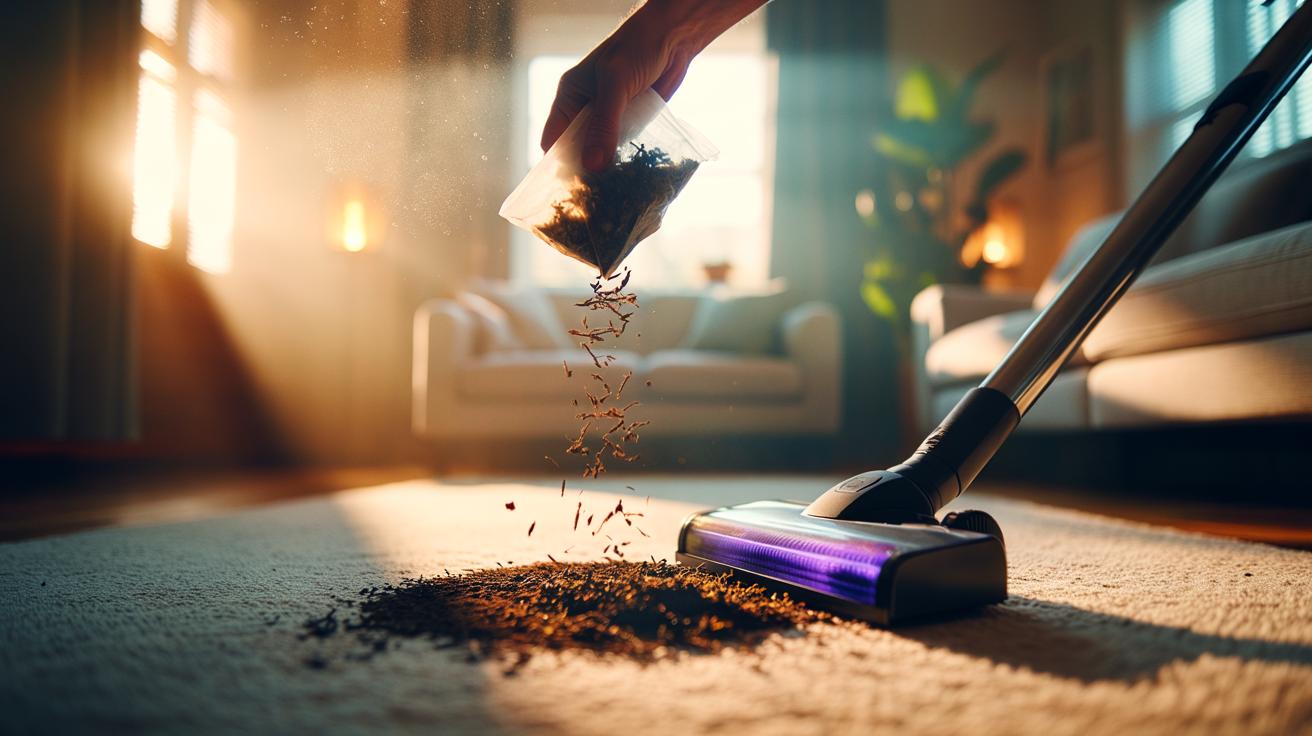
Brew your tea as usual, then set used bags aside to cool. Open them and spread the leaves thinly on a tray until bone-dry—this is vital to prevent staining and mould. You can also use fresh, dry leaf from a caddy. Lightly crumble the dried leaves and scatter a fine veil across the carpet, concentrating on high-traffic lanes, pet zones and by soft furnishings. A little goes a long way; you want coverage, not drifts.
Let the tea sit for 20–60 minutes so the tannins can interact with airborne and surface-bound volatiles. For stale smoke or mustiness, leave up to two hours in a dry room. Vacuum slowly with overlapping passes. Empty the dust canister promptly because the collected leaves now hold the odour molecules. For extra oomph, mix leaves 1:1 with bicarbonate of soda, which adds mild alkalinity and porosity for broader capture. Repeat across several days for deeply embedded smells.
Safety, Stain Risks, and When Not to Use It
Tea is gentle, but not infallible. Wet tea stains, and even dry black tea can tint pale fibres if overused. Always patch-test in an inconspicuous corner first. On light wool, viscose, silk, sisal or seagrass, choose green or white tea, which carry fewer dark pigments. Avoid damp rooms; moisture reactivates colour compounds and invites mildew. If you’ve recently used a carpet shampoo, wait until fibres are fully dry before trying tea.
Keep pets and toddlers away from scattered leaves; while tea isn’t highly toxic, ingestion and caffeine aren’t ideal. People with plant allergies should wear gloves when handling the leaves. If odour stems from urine saturation deep in underlay, mould growth, or a chemical spill, call a professional cleaner or consider underlay replacement. Use the tea-bag trick as a maintenance deodoriser, not a substitute for proper stain remediation or ventilation.
Comparing Tea Types for Carpet Deodorising
Different teas bring different tannin profiles and pigment risks. Black tea is potent but darker; green tea is a safer bet on pale carpets; white tea is gentlest and best for quick refreshes. Oolong sits between black and green. Herbal infusions aren’t technically tea, yet some—like rooibos—contain polyphenols, though their red hue can be risky on light fibres. Match the tea to both the odour and the carpet colour to get effective results without marks, and keep quantities modest.
| Tea Type | Tannin Level | Best For | Carpet Colours | Notes |
|---|---|---|---|---|
| Black | High | Smoke, kitchen, pet areas | Darker, patterned | Powerful; higher staining risk |
| Oolong | Medium–High | General stale odours | Mid-tone | Balanced strength and safety |
| Green | Medium | Pet musk, mild mustiness | Light to mid-tone | Lower pigment load |
| White | Low–Medium | Quick refreshes | Very light | Gentlest on fibres |
| Rooibos (Herbal) | Medium | Kitchen smells | Darker | Red tint; test carefully |
Whichever you choose, keep leaves fully dry, use a light hand, and vacuum meticulously. Combining a small amount of bicarbonate can broaden odour capture without the visual risk of overloading pigment-rich teas.
Used thoughtfully, the tea-bag carpet trick offers a low-cost, low-waste way to tame household whiffs using the quiet chemistry of tannins. It won’t replace deep cleaning, but it bridges the gap between washes and keeps rooms feeling fresher, especially in small UK flats where ventilation can be limited. As with any home remedy, success hinges on dry leaves, patch tests and patience. Which tea would you try first on your own carpets, and how might you tweak the method—blend types, add bicarbonate, or vary dwell time—to suit the particular odours in your home?
Did you like it?4.4/5 (24)