In a nutshell
- 🧪 The method is a redox reaction: reactive aluminium donates electrons to reduce silver sulfide (Ag2S) back to silver, making the process non-abrasive and detail-safe.
- ⚙️ How-to: Line a dish with aluminium foil, add hot water (about 60–80°C), dissolve 1 tbsp baking soda per litre, ensure direct contact with foil, then rinse and dry thoroughly.
- 📊 Key conditions: An electrolyte speeds ion movement, heat loosens aluminium’s oxide, and salt should be used sparingly to avoid AgCl films; contact points are crucial.
- 🛑 Safety: Avoid porous gems, enamel with cracks, items with adhesives, and pieces with deliberate oxidised patina; be cautious with silver plate and consult a conservator for valuable objects.
- ✨ Results: Tarnish is chemically converted—not rubbed off—preserving engraving and crisp edges; ideal for routine, low-wear care of everyday silverware.
It sounds like kitchen alchemy: a crumpled ball of foil, hot water, and a pinch of powder reviving a tarnished heirloom to showroom shine. The so-called “tin-foil ball” method is a household ritual across Britain, but the science behind it is surprisingly elegant. At its heart is a controlled exchange of ions between aluminium and silver sulfide—the dark film that dulls your spoons and serving trays. Rather than scraping the surface, the reaction converts tarnish back into silver. This is a non-abrasive process that protects fine detailing and reduces metal loss, making it a smart option for frequently used cutlery and everyday silverware.
What Actually Happens: From Tarnish to Shimmer
Tarnish on silver is primarily silver sulfide (Ag2S), formed when silver meets trace hydrogen sulfide in air, food, or rubber. When silver touches aluminium foil in a warm, mildly alkaline bath—typically water with baking soda—a tiny electrochemical cell forms. Aluminium is more reactive than silver, so it willingly gives up electrons. Those electrons flow through the metal-to-metal contact to the silver surface, reducing the silver ions within Ag2S back to metallic silver. Simultaneously, the sulfide leaves the silver and binds with aluminium to form compounds such as aluminium sulfide. The “polish” you see is actually tarnish chemically undone, not rubbed away.
Bicarbonate (or a little salt) acts as an electrolyte, helping ions shuttle between surfaces, while heat speeds the reaction by loosening aluminium’s oxide layer. The result is a gentle restoration: the dark film vanishes, revealing the underlying silver with minimal physical intervention. Because the method depends on electron transfer rather than friction, it reaches crevices and engraving where pastes struggle. That’s why delicate patterns often emerge crisper after this bath than after abrasive polishing.
Step-by-Step: The Tin-Foil Ball Method Done Right
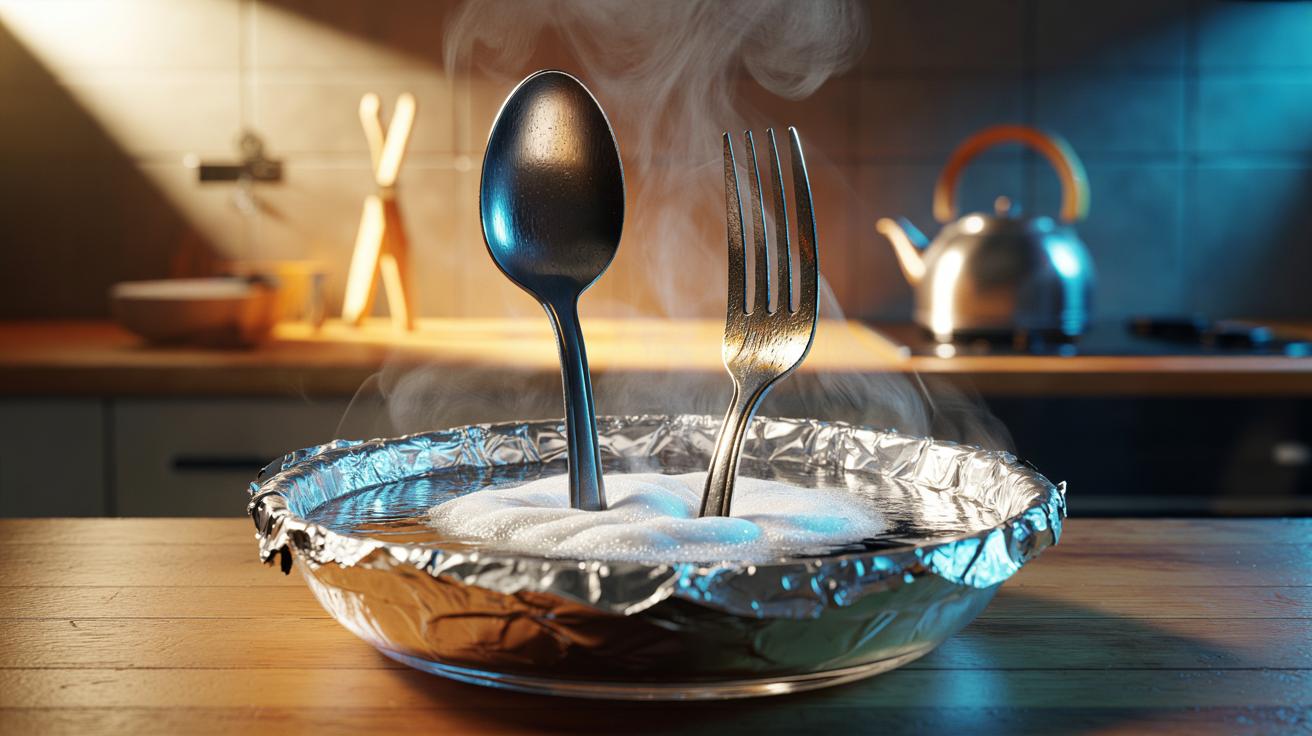
Line a heatproof glass or ceramic dish with aluminium foil, shiny side up. Place tarnished silver so it touches the foil—contact is essential for electron flow. Add hot water just off the boil and stir in one tablespoon of baking soda per litre. A pinch of salt can boost conductivity, but keep it modest to avoid promoting silver chloride films. You may notice a faint sulphurous whiff as sulfide leaves the silver. Within minutes, tarnish lightens from black to yellow-brown to bright. If nothing happens, increase heat or ensure the item is touching the foil.
When the piece brightens, lift it with wooden tongs, rinse thoroughly in clean hot water, and dry immediately with a soft, lint-free cloth. For stubborn crevices, briefly return the piece to the bath or gently agitate it. Do not overheat fragile items or soak jewellery strung on silk. Finish with a light buff using a microfibre cloth to align the surface and reduce water marks. Because this process preserves metal, it’s ideal for regular maintenance.
Key Chemistry and Conditions at a Glance
Think of this as a miniature battery: aluminium is the sacrificial anode, silver is the cathode, and the solution carries ions between them. The bicarbonate raises pH gently, letting aluminium shed its protective oxide so the reaction can proceed. Contact points and heat are crucial; without them, electrons and ions move sluggishly. Use the mildest conditions that work—heat helps, but boiling is rarely necessary. While people call it “ion exchange,” chemists would label the process a redox reaction where aluminium is oxidised and silver ions are reduced.
| Component | Role | Best Practice | Watch-outs |
|---|---|---|---|
| Aluminium foil | Provides electrons; binds sulfide | Ensure direct contact with silver | Oxide layer can slow reaction |
| Baking soda (NaHCO3) | Mild alkalinity; electrolyte | 1 tbsp per litre hot water | Too much is unnecessary |
| Heat | Accelerates ion movement | 60–80°C is ample | Avoid softening adhesives |
| Salt (NaCl) | Boosts conductivity | Use sparingly or omit | Excess may form AgCl film |
The visible “cleaning” is tarnish conversion, not abrasion. That distinction preserves hallmarks, filigree, and crisp edges, making this approach kinder than many polishes that mechanically remove metal.
Safety, Materials, and When Not to Use It
There are boundaries. Skip the bath for porous or delicate gemstones (pearls, opals, turquoise), enamel with hairline cracks, or items with unknown adhesives—heat and alkalinity can weaken glues and cloud stones. Avoid silver with deliberate oxidised patina (common on modern jewellery): the reaction will lift the dark shading intended for contrast. On silver plate, the method is generally gentle, but if base metal is exposed, it will not re-plate the bald spots; the contrast may become more obvious.
Rinse silver thoroughly to remove residues, and dry promptly to prevent spotting. Dispose of the cooled solution down the sink with plenty of water; the amounts of aluminium and sulfide produced are tiny in household use. Never combine with bleach or acids. If an item is valuable or historically significant, consult a conservator first. For daily-service cutlery and tea sets, this technique offers fast, low-wear revival with minimal risk, especially compared with aggressive creams that can thin surfaces over time.
The tin-foil ball method turns chemistry into a practical act of care, reversing tarnish by restoring silver rather than scraping it. With the right heat, contact, and electrolyte, the process is quick, gentle, and repeatable, leaving crisp engravings intact and gloss refreshed. For family silver pulled from a cupboard before guests arrive, it’s a small domestic marvel—efficient, inexpensive, and kind to metal. The key is to treat it as conversion, not polishing, and to know when to keep fragile pieces out of the bath. Which treasured piece in your home would you trust to this smart little reaction first?
Did you like it?4.5/5 (27)