In a nutshell
- 🧼 The two-cloth technique pairs a lightly damp microfiber with a dedicated dry microfiber to capture dust, prevent streaks, and finish surfaces in half the time.
- 🧴 Use split microfiber (300–400 GSM damp; 200–300 GSM dry), a neutral pH cleaner or distilled water, and avoid fabric softener to preserve absorbency.
- 🧭 Work top-to-bottom in an S-pattern, fold cloths into quarters, and rotate faces often to stop redeposit and keep pressure even.
- 🖥️ Biggest wins on monitors, stainless steel, glossy cabinetry, blinds, and skirting: a damp pass lifts debris, the dry pass restores a streak-free shine.
- ⏱️ Fewer re-wipes and motions: disciplined cloth rotation and clean tools deliver consistent results faster and keep surfaces cleaner for longer.
Dusting feels simple until you chase lint lines and stubborn haze across a surface. Professional cleaners cut through that frustration with the two-cloth technique, a nimble method that captures debris and polishes in one fluid sequence. One cloth is slightly damp to lift particles; the second is dry to lock in a streak-free finish. By separating pickup from buffing, you stop redistributing dust and stop doubling back. In busy homes, showrooms, and offices, the approach trims wasted motion and prevents residue that invites dust back. Here’s how it works, the kit you need, and where it saves the most time.
What the Two-Cloth Technique Is and Why It Works
At its heart, the method pairs a damp microfiber with a dry microfiber. The first cloth is misted—never wet—to harness capillary action, drawing dust and light grime into the split fibres instead of pushing it around. The second cloth follows immediately to pick up trace moisture and polish the surface. This one-two pass stops the “grey film” that appears when moisture dries with soil still in suspension. The move is simple, but the physics are doing the heavy lifting.
Microfiber excels because its filaments are split into microscopic hooks. Those hooks trap particles mechanically while generating a mild electrostatic attraction on dry passes. The damp-first, dry-second order ensures the static cling of the finishing cloth is maximised. On delicate finishes—lacquer, piano black, stainless steel—the dry cloth also levels the nap left by the damp wipe, preventing swirl marks.
Compared to a single-cloth approach, you reduce reapplication of soil and the constant need to re-wipe. Less re-wiping means fewer arm movements, fewer cloth rinses, and cleaner edges where dust likes to wedge. It’s a small habit that scales across a room of desks, blinds, or shelving.
Step-By-Step Method for Speed and Consistency
Prep two clean, lint-free microfibers: label one damp, one dry. Lightly mist the damp cloth with water or a neutral pH cleaner—no dripping. Fold both cloths into quarters to create multiple clean faces. Working with folded faces prevents cross-contamination and keeps pressure even across the surface. Start high and move down: tops of frames, shelves, blinds, then work surfaces and skirting. This top-to-bottom order prevents fallout from landing on areas you’ve already polished.
Use a smooth S-pattern with the damp cloth, overlapping edges slightly. The S reduces redeposit lines and catches edges where fluff accumulates. Follow immediately with the dry cloth in the same pattern, applying light pressure to absorb moisture and burnish the finish. For intricate items—keyboard bezels, lamp joints—pinch the cloth edge between fingers to control contact without snagging.
Flip to a fresh face as soon as you see a grey cast on the fabric. Swap the damp cloth when it stops lifting or starts streaking; change the dry cloth when it no longer buffs. Discipline on cloth rotation is the difference between fast results and dull smears. On sensitive electronics, power down first and use minimal moisture, allowing the dry pass to finish the job quickly.
The Right Tools: Cloth Types, Sprays, and Safety
Not all microfiber is equal. Look for split microfiber with medium to high GSM for dusting—around 300–400 GSM for general surfaces, 200–300 GSM for glass and screens. Heat-sealed or overlocked edges prevent lint and snags. Colour-code damp versus dry to prevent mix-ups on the fly. For liquid, choose distilled water or a light, neutral pH cleaner; avoid heavy polishes that leave films drawing dust back. Skip silicone sprays on high-touch surfaces unless you want fingerprints to reappear faster.
| Item | Spec | Best Use | Notes |
|---|---|---|---|
| Damp cloth | Split microfiber, 300–400 GSM | General surfaces, wood, metal | Light mist only; no dripping |
| Dry cloth | Split microfiber, 200–300 GSM | Glass, screens, glossy finishes | Dedicated to buffing |
| Cleaner | Neutral pH, low-residue | Fingerprints and light soil | Avoid strong solvents on coatings |
Launder cloths in cool water with a mild detergent; no fabric softener, which coats fibres and kills absorbency. Air-dry or tumble low to preserve the split structure. Clean tools are non-negotiable: a contaminated microfiber turns into a grit pad. For screens and electronics, use minimal moisture and a labelled, anti-static-safe cloth to reduce risk while keeping speed.
Where It Saves the Most Time: Real-World Scenarios
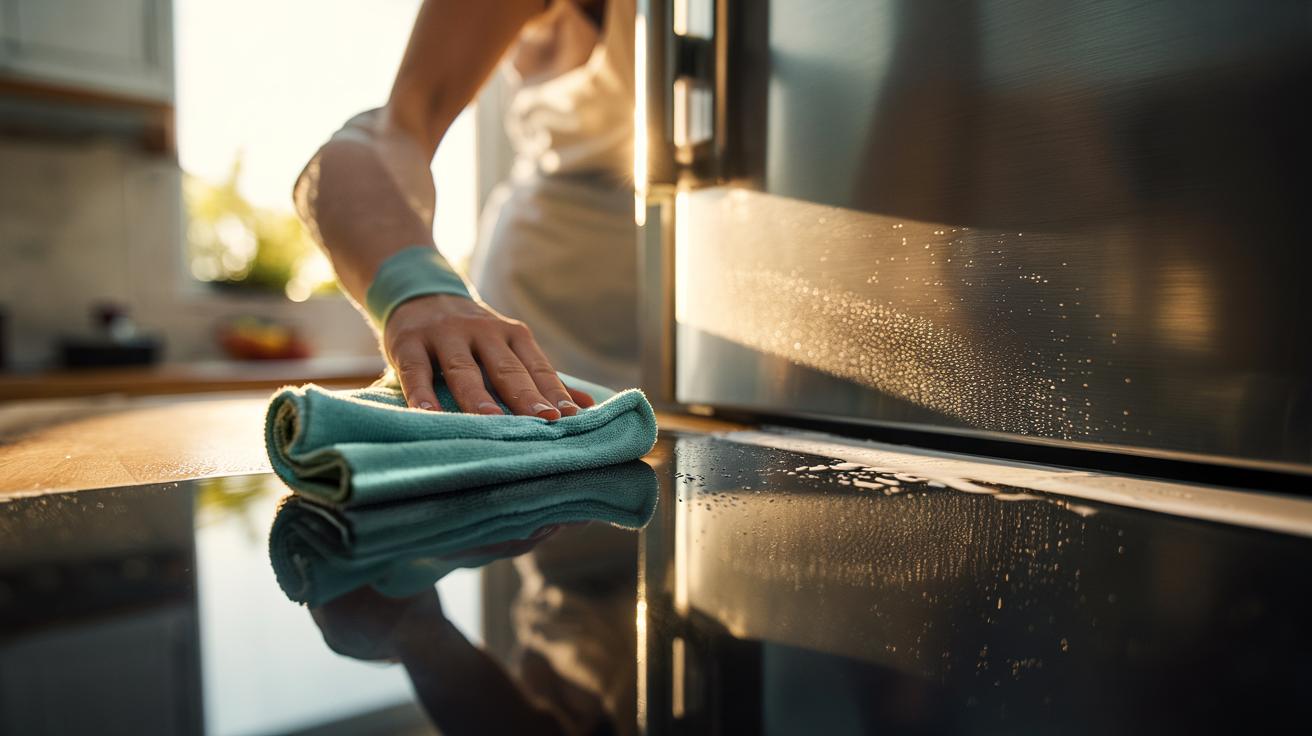
Open-plan offices brim with monitors, frames, and desk paraphernalia that trap dust. The two-cloth technique lets you sweep zones in a single loop: damp for debris, dry for polish, then move on without circling back. Teams report smoother progress because they stop chasing streaks left by an over-wet rag. On stainless fridges, lift handles and seams with the damp cloth, then a quick dry buff resets the grain without the cloudy trails that slow you down.
Hospitality settings benefit on glossy tables, menu holders, and mirrors. A misted pass dislodges crumbs and lipstick smears; the dry pass restores shine so staff aren’t re-wiping under service pressure. In homes with pets, static fur clings to TV bezels and skirting boards; the damp-first approach neutralises cling, and the dry cloth seals the win by reducing residual moisture that would magnetise fluff.
Shutters, blinds, and radiator fins are classic time sinks. Folded microfiber edges slide into slats, the damp edge capturing dust in one sweep, with the dry edge right behind to finish. On high-gloss cabinetry and piano-black appliances, moving from damp to dry in seconds prevents water spotting that otherwise demands multiple corrective passes. The cumulative effect is fewer motions per surface and far less backtracking.
The two-cloth technique is deceptively simple, yet it eliminates the twin enemies of speed: redeposit and streaking. By pairing a lightly damp microfiber with a dedicated dry buffer, you work with the surface, not against it, and your results hold longer between cleans. It scales beautifully—from a single desk to a floor of meeting rooms—without special chemicals or gadgets. Once the rhythm clicks, you’ll notice smoother progress and calmer, cleaner finishes. Where in your space would this one-two pass make the most visible difference, and how might you adapt it to your daily cleaning routine?
Did you like it?4.5/5 (26)