In a nutshell
- 🧪 Chemistry that works while you sleep: Acetic acid in white vinegar dissolves limescale (calcium carbonate) into calcium acetate, releasing CO₂; bubbles show the reaction, and long contact overnight boosts effectiveness.
- 🛠️ Simple wrap method: Submerge nozzles using a vinegar-filled bag secured with an elastic band and sealed with cling film; for handheld heads, use a bowl and cover. Finish with a soft brush, hot-water flush, and pinch rubber nozzles to clear debris.
- ⏱️ Ratios and timing: Use 5% white vinegar neat for heavy scale or a 1:1 dilution for delicate finishes; soak for 6–12 hours at room temperature. Repeat if needed rather than extending the first soak too long.
- ⚠️ Safety and finishes: Chrome and plastics tolerate overnight soaks; nickel, brass, and gold-plated parts need shorter times. Never mix vinegar with bleach, protect natural stone, and keep cartridges/hoses out of the solution.
- ♻️ Long-term care: Do monthly mini-soaks (30–60 minutes), rinse and microfibre buff, consider a scale-inhibiting shower filter, and slightly lower boiler temperature to reduce future build-up.
Hard water spoils the sparkle of a bathroom faster than you can say “morning shower.” In much of the UK, taps and shower heads accumulate chalky limescale that starves water pressure and sprays at odd angles. There’s a quiet fix that works while you sleep: white vinegar and a simple cling film wrap. No scrubbing marathons, no harsh chemicals—just kitchen-cupboard chemistry doing its best work overnight. This technique relies on the natural bite of acetic acid to dissolve mineral build-up, freeing blocked nozzles and restoring a clean, even spray. Here’s how the science plays out, how to wrap it like a pro, and what to avoid so your chrome shines without a scratch.
Why Vinegar Works: The Chemistry of Acetic Acid
The enemy on your shower head is largely calcium carbonate, the chalky deposit formed as hard water dries. The hero is acetic acid, the active component in white vinegar, typically around 5% strength. When acetic acid meets calcium carbonate, a neat reaction unfolds: the scale is converted into calcium acetate, releasing water and CO2 gas. You may notice tiny bubbles as it gets to work—proof that the acid is nibbling away at those stubborn layers. Crucially, vinegar is mild enough to be safe on most plastics and chrome finishes for short soaks, yet strong enough to cut through typical household scale.
This is why the overnight method is so effective: time. The acid needs consistent contact with the mineral build-up to penetrate and loosen it. By keeping vinegar in place for hours, the reaction can continue uninterrupted while you sleep, easing blockages deep in spray nozzles. The result is a smoother flow, improved pressure, and less bacterial harbourage in the head’s fine channels.
How to Do the Cling Film Wrap Overnight
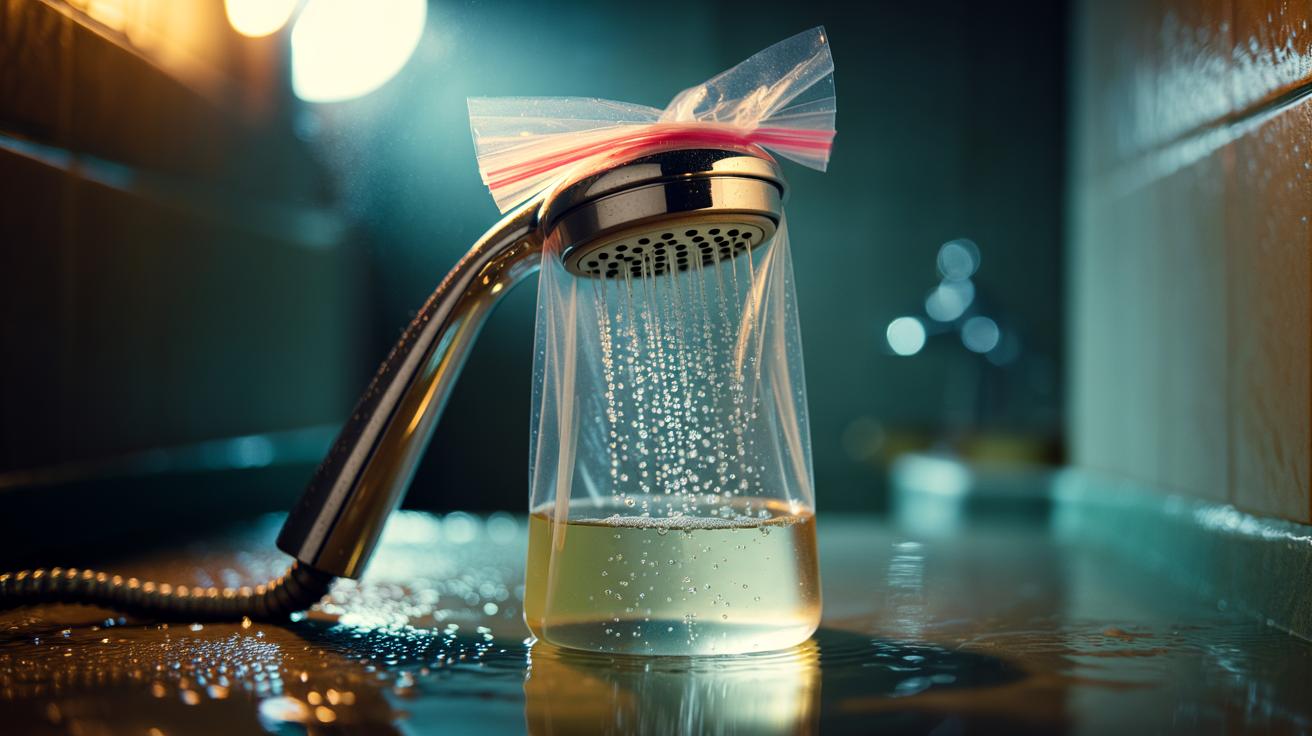
For a fixed shower head, pour enough white vinegar into a small food bag to submerge the nozzles, then lift it over the head. Use an elastic band to secure the bag at the neck, ensuring the outlets are fully immersed. Now wrap cling film around the bag and fitting, creating a snug seal so the vinegar won’t drip. For handheld heads, detach the unit, place it in a bowl of vinegar, and use cling film to cover and reduce evaporation. Keep metal joints above the liquid line if you’re unsure about their finish.
Leave the head to soak for 6–12 hours. In the morning, remove the wrap, gently rub the nozzles with a soft toothbrush or microfibre cloth, and run hot water for a minute to flush loosened debris. If your head has rubber nozzles, lightly pinch them to dislodge softened scale. For very heavy build-up, repeat once more rather than extending the first soak well beyond 12 hours—patience avoids finish damage.
Ratios, Timings, and What You Need
Most households will get results with supermarket distilled white vinegar used neat. If your finish is delicate or you’re cautious, try a 1:1 vinegar-to-water blend first. Heat is not essential; room temperature works. The schedule is forgiving: a minimum of four hours helps, while eight to twelve hours is a dependable overnight window. Here’s a quick reference to help you plan the job and avoid missteps.
| Item | Details | Notes |
|---|---|---|
| Vinegar strength | 5% white vinegar (neat or 1:1 with water) | Use neat for heavy scale |
| Contact time | 6–12 hours | Overnight is ideal |
| Wrap method | Bag + elastic band + cling film | Ensure nozzles are submerged |
| Tools | Bowl or bag, elastic band, cling film, soft brush | Avoid abrasive pads |
| Rinse | Flush with hot water for 60 seconds | Pinch rubber nozzles to clear |
Test on an inconspicuous area if your head is gold, nickel, or antique brass. If you’re pleased with the result, schedule a lighter 30–60 minute soak monthly to prevent future build-up, especially in hard-water regions such as the South East.
Safety, Finishes, and Long-Term Care
Vinegar is relatively gentle, but finishes vary. Chrome and most plastics tolerate an overnight soak, while nickel, brass, and gold-plated fittings prefer shorter exposures and lower concentrations. Avoid soaking cartridges, hoses with woven metal sleeves, or decorative collars—keep them above the liquid line. Never mix vinegar with bleach or chlorine-based cleaners; the combination releases hazardous gases. If your home has natural stone (marble or limestone), wipe any splashes immediately as acids etch calcite-based surfaces.
For routine care, finish with a fresh-water rinse and a microfibre buff to remove residue that can re-seed scale. If vinegar aroma lingers, follow with a quick wash of mild washing-up liquid and water. Citric acid crystals (dissolved at 5–10%) are a good alternative if you dislike vinegar’s smell. To maintain flow and extend your shower’s life, consider a scale-inhibiting shower filter or adjust your boiler temperature slightly lower to reduce precipitation on hot surfaces.
With one bag, some cling film, and a splash of vinegar, you can reclaim a shower’s smooth spray in a single night. The chemistry is simple: acetic acid quietly dissolves limescale while you sleep, leaving less to scrub and more time to enjoy your morning. Keep a note of your local water hardness and plan quick maintenance so scale never gets a foothold. If your fixtures are fancy or vintage, start gently and build up as needed. What’s the first fixture in your bathroom you’ll target with a vinegar wrap tonight—and what result are you hoping to see by morning?
Did you like it?4.5/5 (21)