In a nutshell
- 🧪 The trap works by combining vinegar as an irresistible lure with a few drops of washing-up liquid that break surface tension, causing fruit flies to sink and drown—highly effective overnight.
- 🥤 Setup is simple: use a wide-mouthed cup with 120–180 ml apple cider vinegar plus 2–3 drops of soap, place near hotspots (fruit bowl, sink, compost caddy), and optionally add pierced cling film to guide flies in.
- 🍷 Variations and ratios: apple cider vinegar is best; white vinegar needs a sugar or yeast boost; slightly stale red wine works; use minimal soap and refresh daily as aromas fade.
- 🧼 Prevention matters: refrigerate ripe fruit, rinse bottles, empty the compost caddy daily, scrub drains, and wipe sticky spills—traps cut numbers fast while cleanliness stops reinfestation.
- 🚫 Common mistakes: too much foam, odourless vinegar, drafty spots, or airtight covers reduce catch; remove competing lures and reposition traps; keep mixes out of reach of pets and children.
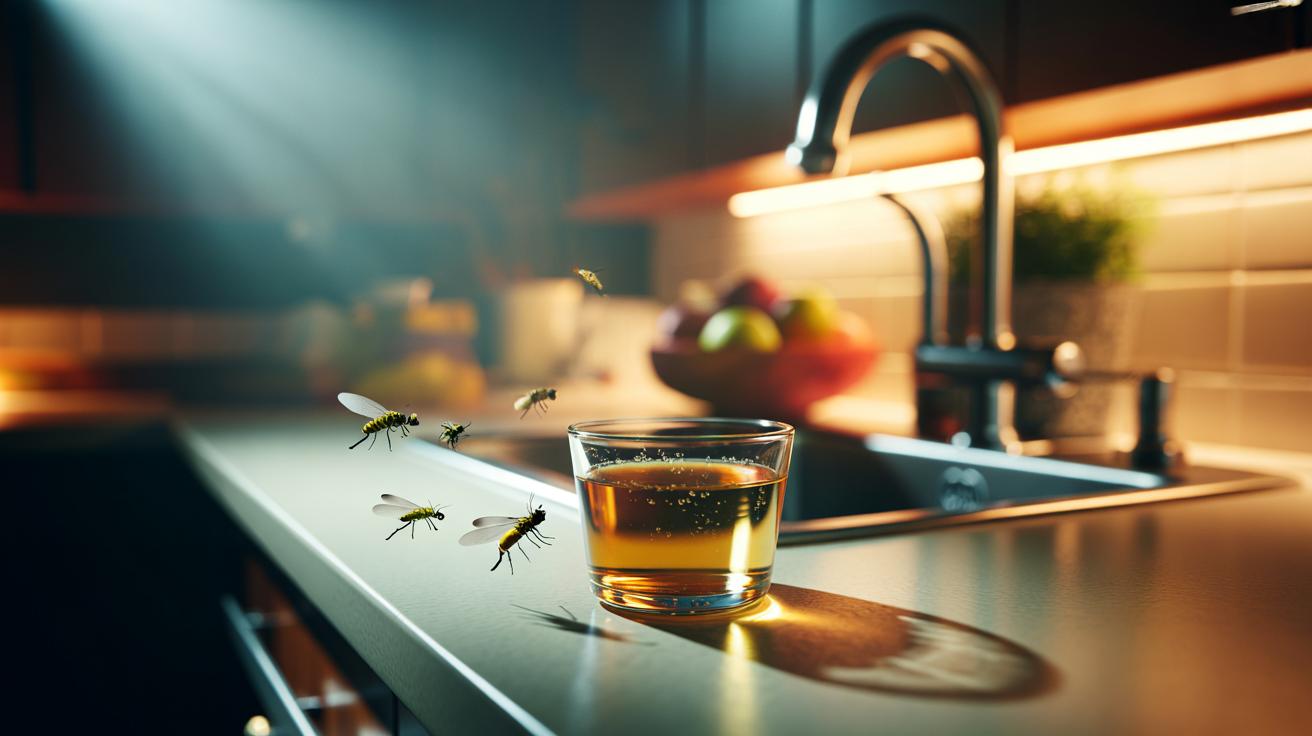
Fruit flies arrive like uninvited guests and multiply with astonishing speed. Luckily, a simple kitchen hack dispatches them while you sleep: a blend of vinegar and washing-up liquid. The scent of fermenting fruit draws them in, while a few drops of soap change the physics at the surface, turning a harmless puddle into a silent trap. By morning, the results are unmistakable. This approach is low-cost, non-toxic, and quick to set up with household staples. Use it as a rapid strike to knock down numbers, then pair with better storage and cleaning to stop the next wave. Here’s how the mix works and how to deploy it like a pro.
How the Vinegar and Soap Mixture Works
Fruit flies are hard-wired to follow the tang of fermenting sugars. Apple cider vinegar carries acetic acid and fruity esters that mimic overripe produce, so the insects home in with precision. On contact, a clean liquid’s surface tension can hold tiny bodies aloft, letting them drink and lift off again. A splash of washing-up liquid is the game-changer: detergents break the cohesive forces between water molecules, flattening bubbles and removing the film that keeps light insects afloat. The moment a fly touches the treated surface, it sinks and cannot recover. That is why a lure becomes lethal only when the soap goes in.
Because the odour plume is steady and the drowning is instant, the trap works constantly, even while the house is quiet. Dusk-to-dawn is when flies forage most aggressively around bins and fruit bowls, so a fresh, warm bait cup left out in the evening does its best work overnight. You need just a few drops of soap; heavy suds aren’t necessary and can even reduce the scent trail if they cap the liquid.
Step by Step: Setting the Overnight Trap
Choose a small glass, ramekin, or jar with a wide mouth. Pour in 120–180 ml of apple cider vinegar (white wine vinegar or red wine also works). Add 2–3 drops of washing-up liquid and swirl to disperse without whipping up foam. Optional: warm the vinegar slightly or stir in half a teaspoon of sugar to intensify the plume. Leave the trap near the source—fruit bowl, compost caddy, or sink—before bedtime and check it first thing. If you have a dense cloud of flies, position multiple cups to saturate the area.
For skittish swarms, stretch cling film over the top and poke a few pencil-tip holes: the scent escapes, flies crawl in, and once they touch the liquid they still sink. Keep the trap uncovered if the room is calm; the soap is usually enough. In the morning, tip the contents down the loo, rinse, and reset with fresh mix. Avoid placing the trap under a strong fan or open window, where the odour disperses and catch rates fall.
Mix Ratios, Variations, and What to Expect
Apple cider vinegar remains the gold standard lure. White vinegar is cheaper but less fragrant; a pinch of sugar or a slice of overripe banana helps. Wine can rival cider vinegar when it’s just turning, while balsamic is often too viscous and sweet, encouraging sticky films. Use minimal soap—just enough to break surface tension without smothering the scent. If catches stall, refresh daily; volatile aromas fade, and a new batch restarts the plume.
| Vinegar/Wine | Vinegar:Water | Soap (per 250 ml) | Extras | Overnight Catch | Notes |
|---|---|---|---|---|---|
| Apple cider vinegar | 1:0 (undiluted) | 2–3 drops | Optional sugar pinch | High | Best all-round; warm slightly for stronger odour |
| White wine vinegar | 1:0 or 3:1 | 2–3 drops | Banana slice | Medium | Boost aroma with fruit scrap |
| Red wine (stale) | 1:0 | 2 drops | None | Medium–High | Effective when lightly oxidised |
| White vinegar | 1:0 | 2–3 drops | Sugar or yeast pinch | Low–Medium | Cheap; needs scent booster |
With a healthy infestation, expect dozens by morning. In lighter cases, several per cup is normal. If nothing appears, relocate the trap nearer the hotspot, remove competing lures (open wine, ripe fruit), and ensure you actually added soap. Too much foam or a breezy windowsill are common reasons for poor results.
Prevention, Hygiene, and Common Mistakes
A trap cuts numbers fast, but prevention keeps them from coming back. Seal or refrigerate ripening fruit; decant bananas, peaches, and tomatoes to the fridge once ripe. Rinse bottles before recycling and empty your compost caddy daily, keeping the lid closed. Scrub sink drains with boiling water and a brush to remove biofilm that breeds larvae. Wipe sticky rings from juice or wine, and don’t leave damp cloths bunched in warm corners. A trap cures the symptom; cleanliness removes the source. Address any forgotten onion, potato, or citrus at the back of the cupboard—the usual culprits behind sudden swarms.
Common mistakes include adding loads of soap (which suppresses scent), placing traps under extractor fans, using odourless vinegar, and covering the top tightly so air can’t carry the lure. Keep pets and children away from open cups even though the mix is low-risk. Refresh the bait every day or two; when the aroma fades, so does your catch. Combine the trap with tidy storage and timely bin days for a lasting fix.
The vinegar-and-soap trap works because it blends irresistible scent with subtle physics, breaking the surface tension that lets tiny insects skate to safety. It’s cheap, swift, and safe to use around the kitchen, ideal for those sudden late-summer explosions of tiny wings. Deploy several cups where activity is highest, then harden your defences with better storage, dry sinks, and a strict caddy routine. By morning, the swarm will be a memory and the cup will tell the story. What twist on the basic recipe—warmer bait, a slice of fruit, or a switch of vinegar—will you try first in your own kitchen?
Did you like it?4.3/5 (30)