In a nutshell
- 🚿 Hard-water minerals cause limescale that narrows nozzles and internal channels, mimicking “low pressure” even when mains is fine; water-saving heads with small orifices clog fastest.
- 🧪 A vinegar rinse works because acetic acid reacts with calcium carbonate, forming soluble salts and CO₂ bubbles that lift deposits; lukewarm solutions speed the process without harming finishes.
- 🛠️ Step-by-step: mix white vinegar 1:1 with warm water, use the bag-and-soak method 30–60 min, lightly brush nozzles, rinse and flush hot; clean the filter screen and refit O-rings with silicone grease.
- ⚠️ Safety and surfaces: do not mix vinegar with bleach, avoid boiling liquids, protect natural stone, limit contact time on delicate coatings; consider stronger but diluted cleaning vinegar for heavy scale.
- 📅 If sputter persists, look beyond the head (restrictors, hose kinks, mixer cartridge) and adopt prevention: monthly quick soaks, nozzle wipe-downs, or install an inline filter or water softener in very hard areas.
Britain’s showers fight a quiet battle against limescale. If your once-bracing spray has dulled to a dribble, the culprit is usually hard-water deposits choking the nozzles and internal channels. A humble vinegar rinse can restore pressure, and the science is as sound as it is simple. Acetic acid dissolves the chalky crust that strangles flow, unclogging jets without harsh fumes or pricey chemicals. The trick lies in using the right dilution, the right contact time, and a light touch on finishes. Handled properly, vinegar revives a tired shower head quickly and safely, saving water, energy, and the cost of a replacement. Here’s how the acid works—and how to do the job properly.
Why Showers Lose Pressure in Hard-Water Homes
Most UK regions grapple with hard water, rich in calcium and magnesium. As hot water evaporates from the shower face, those minerals crystallise into limescale, progressively narrowing spray nozzles and the internal labyrinth that drives modern spray patterns. Even a fine film changes the jet profile: droplets splutter, streams drift off-centre, and the subjective feel is “low pressure” even when the mains is sound. Rubber nozzles intended to “self-clean” can seal over with a chalky rind if you skip regular wipe-downs, and aerating heads can trap gritty particles that the filter or pipework fails to catch.
Design trends compound the problem. Water-saving heads rely on small orifices and restrictors to shape flow; a deposit sized in fractions of a millimetre robs momentum. Internal screens snare silt but clog easily. On older installations, galvanic corrosion sheds metal fines that lodge at the faceplate. Add soap scum and a thin biofilm and you’ve got a layered blockage that no amount of twisting the mixer will cure. If the jets feel gritty or asymmetrical, scale—not pressure—usually deserves the blame.
How a Vinegar Rinse Dissolves Limescale
White vinegar is a dilute solution of acetic acid (typically 5–8%). When it contacts calcium carbonate limescale, the acid reacts to form soluble calcium acetate, water, and carbon dioxide. Those tiny bubbles you see are the reaction at work, lifting the crust while the solution chelates the mineral. The process is selective: it targets carbonates and many magnesium salts without biting into most chrome or stainless finishes during short soaks. Heat helps slightly; lukewarm vinegar accelerates dissolution without damaging seals. Do not use boiling liquids, which can warp plastics and degrade rubber.
Compared with proprietary descalers, vinegar is low-cost, easy to rinse, and kinder to indoor air. It has limits: on long-neglected heads, scale can sit behind the faceplate where acid struggles to reach, and certain plated or lacquered surfaces may dull with prolonged exposure. Keep contact time controlled and use a 1:1 vinegar-to-water mix for delicate finishes. Rinse thoroughly to remove residues that might leave a fleeting odour or interact with soaps. For natural stone surrounds, prevent drips; vinegar etches limestone and marble.
Step-by-Step: The Safe Bag-and-Soak Method
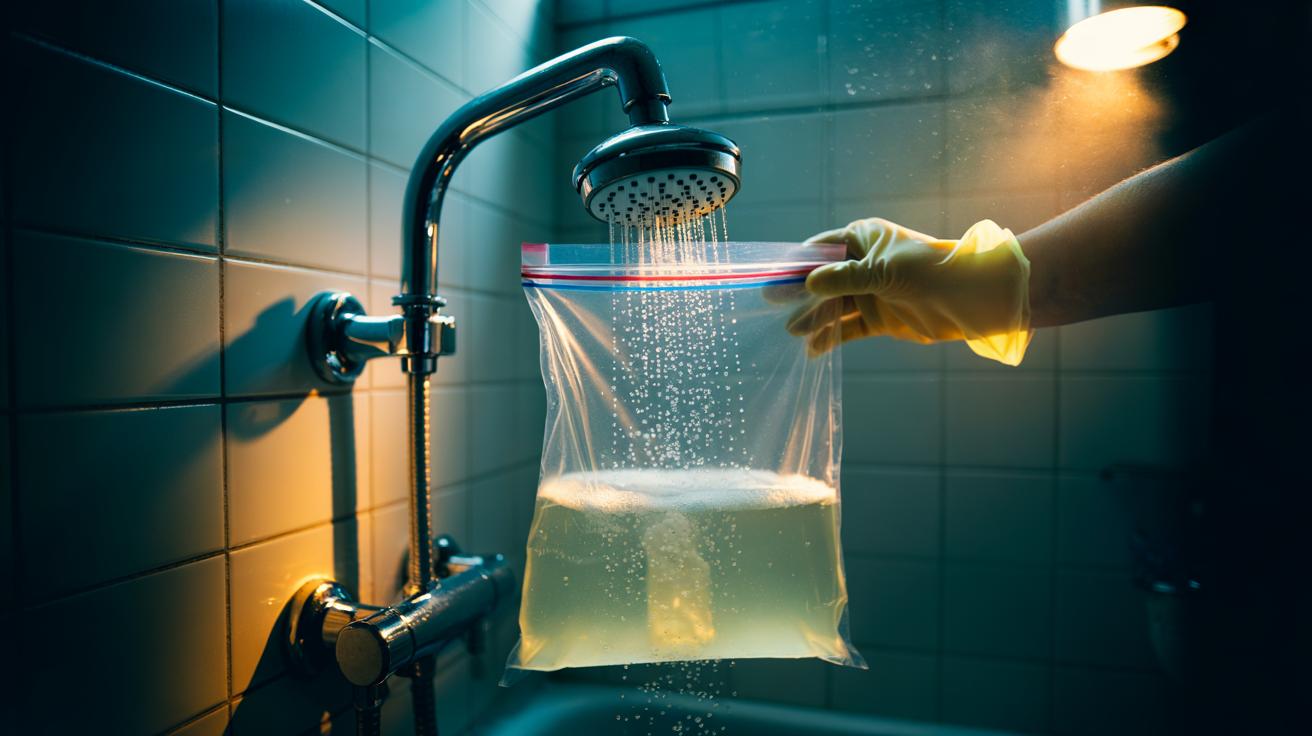
Start by mixing equal parts white vinegar and warm water in a jug. If your shower head unscrews easily, wrap the jaws of a spanner with cloth, remove the head, and drop the face in the solution for 30–60 minutes. For fixed heads, fill a sturdy food bag with the mixture, submerge the face, and tie off with a rubber band so the jets are covered but the arm isn’t immersed. During the soak, you’ll see bubbles; lightly agitate to dislodge loosened scale. Use a soft toothbrush to sweep across the nozzles. If the manufacturer allows, tease stubborn jets with a wooden cocktail stick—never steel, which scratches.
Rinse under running water, then flush the head on full hot for a minute to expel debris. Inspect the filter screen or flow restrictor and swish them in the leftover solution if they’re chalked. Refit any O-rings, lubricating with a dab of silicone grease, and reassemble finger-tight before a final check for leaks. Heavy buildup may need a second, shorter soak. Never mix vinegar with bleach or chlorine-based cleaners—dangerous fumes can form. If you’re working above a stone tray, shield it so drips can’t etch the surface.
| Vinegar Type | Dilution | Soak Time | Surface Caution | Likely Result |
|---|---|---|---|---|
| White spirit vinegar (5%) | 1:1 with warm water | 30–60 minutes | Avoid natural stone; limit on lacquered brass | Restores flow on light–moderate scale |
| Cleaning vinegar (6–8%) | 1:2 with warm water | 20–45 minutes | Test on PVD coatings; rinse promptly | Faster on heavy scale |
| Apple cider vinegar | Undiluted or 1:1 | 45–90 minutes | May leave odour; same stone cautions | Comparable effect, slower |
When to Go Beyond Vinegar: Maintenance, Tools, and Mistakes to Avoid
If your spray still sputters after a careful soak, scale may be lodged deeper than vinegar can reach. Remove the faceplate to clean channels, and rinse the mesh screen where the hose meets the head—a common choke point. Check the hose for kinks and the isolation valve for partial closure. On thermostatic mixers, a clogged cartridge throttles flow; that’s a separate service. In very hard-water postcodes, a gentle proprietary descaler formulated for chrome can finish what vinegar starts. Persistent low pressure across taps points to a supply issue, not the shower head.
Prevention is easier than rescue. After showers, thumb-rub rubber nozzles and wipe the face dry. Schedule a quick 15-minute vinegar rinse monthly in hard-water areas, quarterly elsewhere. Avoid steel wool and abrasive powders; they scar coatings and invite corrosion. Don’t leave heads soaking overnight on delicate finishes, and don’t overtighten when refitting—crushed washers leak. Consider an inline sediment filter or a water softener if scale returns rapidly. Always test a small, hidden spot before a full soak to protect specialty finishes.
Vinegar works because its acidity targets the very minerals that throttle your shower’s performance, dissolving blockages and restoring clean, even spray without drama. Applied with measured contact time, light brushing, and thorough rinsing, it’s a low-cost fix that also trims energy and water waste by returning your head to design efficiency. Shield sensitive surfaces, mind your seals, and keep a regular maintenance rhythm so scale never gets the upper hand. A few mindful minutes each month can save you a replacement head. Will you make the vinegar rinse part of your bathroom routine—and what other low-tech tricks have helped you tame hard water at home?
Did you like it?4.6/5 (22)