In a nutshell
- 🍎 Fruit flies follow fermenting scents; a fresh mist of acetic acid scrambles their “scent map,” making surfaces uninviting. Use apple cider vinegar as a trap, but white vinegar spray as a deterrent.
- 🧪 Mix an effective spray: 2 parts water : 1 part white vinegar + 10–15 drops peppermint/lemongrass oil, 1 tsp ethanol or witch hazel, optional dish soap. Never mix vinegar with bleach.
- 🧴 Spray the hotspots: bin rims, drains, splashbacks, bottle necks, window ledges, and fruit bowls; wipe food-contact areas, leave a light film elsewhere. Do not use on natural stone.
- 🕒 Make timing a habit: spritz after meals and messy prep; pair the spray for perimeter control with a small cider-vinegar trap to thin numbers. Consistency beats intensity.
- ⚠️ Tune and stay safe: adjust scent strength, avoid heavy essential oils around pets, use pH-neutral cleaners on stone, and refresh the mix every two weeks for reliable performance.
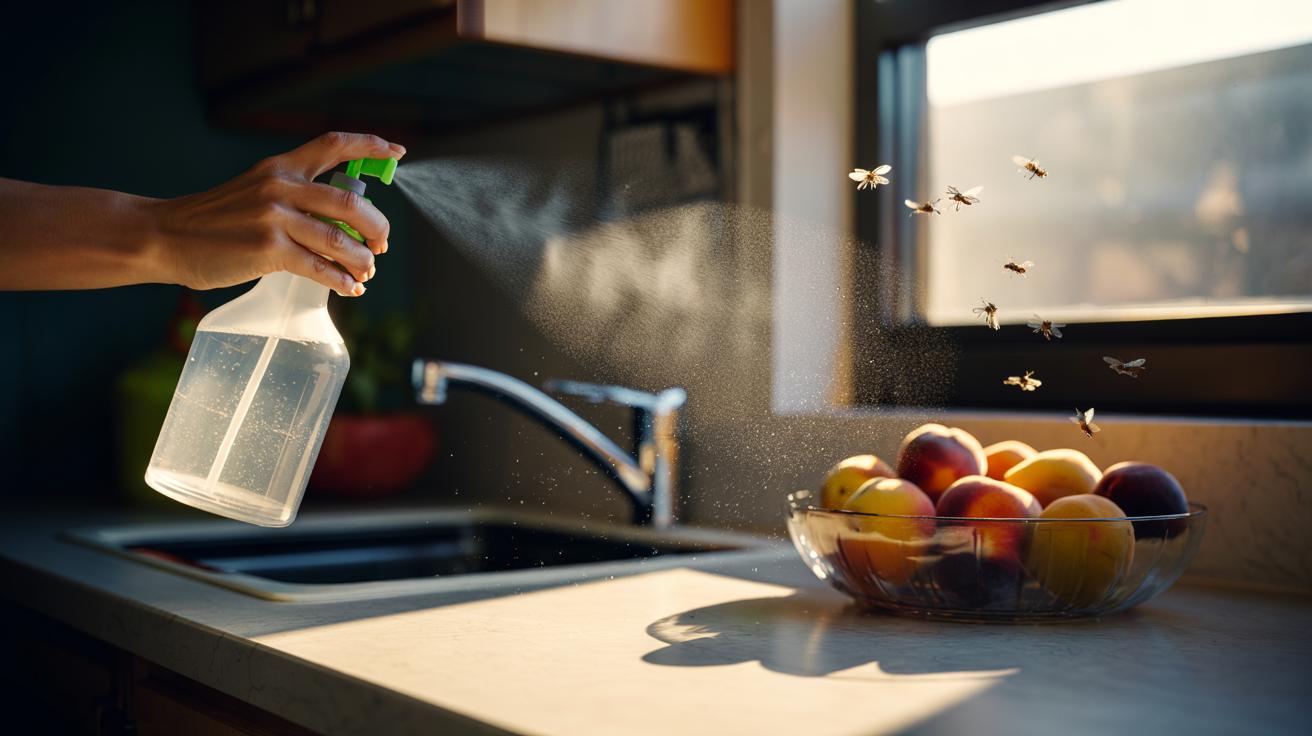
Summer ripens peaches, plums and plans. It also hatches a cloud of fruit flies that orbit your sink like tiny satellites. The fix isn’t a hazmat suit or harsh chemicals; it’s a humble, cleverly tuned vinegar spray. Think of it as housekeeping with bite: it scrubs away the scents that lure flies, lightly acidifies landing zones, and adds botanical notes they dislike. Quick to mix, cheap to refill, and satisfying to use. A well-formulated vinegar spray deters, disrupts, and cleans in one pass. Here’s how it works, how to make it, and where to spray so your kitchen stops advertising “open buffet” to Drosophila.
Why Fruit Flies Hate Vinegar
Fruit flies adore the bouquet of fermentation, yet there’s a twist. They navigate by a web of odors, not a single smell. Strong, freshly aerosolised acetic acid from white vinegar can scramble those cues on surfaces, and when paired with sharp botanical oils it persuades flies to try their luck elsewhere. Spraying countertops, bin rims, and splashbacks removes micro-films of juice and wine, sapping the invisible trail that shouts “ripe.” Break the scent map and you break the swarm’s confidence. That’s the core advantage: hygiene plus targeted olfactory interference.
There’s another angle. Fruit flies land, taste, and decide within seconds. A faintly acidic film is an unwelcoming runway. It isn’t a poison; it’s a nudge. Crucially, the spray distinguishes between attract and repel: apple cider vinegar in a dish is a trap, but white vinegar in a sprayer is a deterrent and cleaner. Use both strategically: traps to thin numbers, spray to harden your perimeter. Control comes from coordination, not a single silver bullet.
How to Mix an Effective Vinegar Spray
Start with white vinegar. It’s inexpensive, high in acetic acid, and less sweet-smelling than apple cider vinegar. For a balanced deterrent-cleaner, mix 2 parts water to 1 part white vinegar in a clean spray bottle. Add 10–15 drops of peppermint, basil, or lemongrass essential oil for a sharper “keep off” message, and 1 teaspoon of ethanol or witch hazel to help disperse oils. Optional: 2–3 drops of mild dish soap if you want better wetting on greasy spots. Never mix vinegar with bleach—this releases toxic chlorine gas.
Shake before each use. Mist, don’t drench. Wipe after 30–60 seconds on food-contact areas; leave a whisper-thin film on non-food surfaces like bin lids. Label the bottle clearly and store it away from direct sunlight. If you prefer a fragrance-free approach, skip the oils and rely on the acidity plus good sanitation. For stainless steel, buff dry to avoid streaks. Always spot-test painted or delicate finishes first.
| Ingredient | Amount | Role | Notes |
|---|---|---|---|
| White vinegar | 1 part | Deterrent + cleaner | High acetic acid; neutral scent compared with cider |
| Water | 2 parts | Dilution | Use cooled boiled or filtered for clarity |
| Peppermint/lemongrass oil | 10–15 drops | Repellent accent | Avoid overuse near pets, especially cats |
| Ethanol or witch hazel | 1 tsp | Solubiliser | Helps disperse oils; optional |
| Dish soap | 2–3 drops | Wetting agent | Optional; improves contact and wipe-down |
Where and When to Use It
Think like a fly. Hit the approach routes: rim of the kitchen bin, recycling and compost caddies, the outside of syrup and wine bottles, splashbacks, window ledges warmed by sun, and the sink lip. Mist around drains, then flush with hot water. Wipe fruit bowls and rotate stock—older fruit underneath, not on top. Do not spray on marble, limestone, or other natural stone—vinegar can etch calcite surfaces. For wooden worktops, spray lightly onto a cloth and buff rather than saturating the grain.
Timing matters. After supper, once washing up is done, spray-and-wipe high-traffic spots. Repeat quickly after juicing, baking, or prepping cocktails. During peak season, keep a small trap—apple cider vinegar plus a drop of soap—near the bin to draw strays, while the vinegar spray protects your prep zones. Store your sprayer under the sink; give it a vigorous shake before each pass. Consistency beats intensity: small, regular sprays prevent big outbreaks.
Upgrades, Variations, and Safety
Tailor the formula to your kitchen. For a greener scent, add a strip of fresh basil or rosemary to the bottle and replace weekly. Sensitive noses? Halve the vinegar for everyday wiping and keep a stronger 1:1 mix for bin duty. If flies spike after a market haul, run a two-step: quick spray, then set a discreet trap by the window. Travelling? Decant 100 ml into a travel sprayer for holiday lets. Remember: the spray deters and cleans; the trap captures.
Safety first. Keep away from eyes. Ventilate if you’re spritzing near the hob. Essential oils can bother pets; avoid diffusing strength around cats and birds. Never combine vinegar with bleach or products containing hypochlorite. Rinse food-contact surfaces before cooking if you’ve left a film. If you have stone worktops, use a pH-neutral cleaner there and reserve the vinegar spray for metal, laminate, tile, and sealed woods. Replace the mix every two weeks for freshness and reliable performance.
A calm kitchen is deliberate, not accidental. Your vinegar spray restores order by erasing the clues that fruit flies follow, while keeping daily cleaning fast and frugal. Pair it with chilled fruit storage, tidy bins, and a modest trap, and those drifting specks vanish from your evening glass of wine. The method is simple, scalable, and thrifty. Clean the scent map, control the swarm. What will your first target be tonight—the bin rim, the fruit bowl, or the sink lip—and how will you tune the mix to suit your home?
Did you like it?4.5/5 (28)