In a nutshell
- 🧪 Understand scent longevity by balancing top, heart, and base notes, using fixatives like vetiver/benzoin, and choosing the right carriers (perfumers alcohol, Augeo/DPG) for controlled diffusion.
- 🧴 Mix-and-make: Room Spray (1–3% EO with Polysorbate 20 and glycerine), Reed Diffuser (Augeo/DPG at 15–20% EO, fibre reeds), and Gel Jar (gelatine + salt) for lasting, tailored fragrance.
- 📊 Focus on ratios, cost, and shelf life: base-heavy blends persist, bulk-buy carriers, and expect weeks of performance; a handy table breaks down loads, longevity, and UK costs.
- 🔒 Prioritise safety and storage: amber glass, clear labels, keep from pets/heat, and cap daily sprays at ≤3% EO; fix cloudiness with more solubiliser and adjust reeds for throw.
- 📝 Apply pro tips for longevity: allow 24–48 hours for maceration, flip reeds weekly, position away from sun/radiators, and layer base notes to anchor bright citruses and florals.
Shop-bought sprays promise “freshness” yet vanish in minutes, leaving only a perfumed shrug. Making your own air freshener turns that around. You choose the scent, the strength, and—crucially—the carrier that controls how long it lingers. Using a few perfumery tricks, you can tame volatility, anchor top notes, and deliver fragrance steadily rather than in a fleeting blast. The goal is gentle, continuous diffusion that smells clean, not cloying. Below, you’ll find practical recipes, realistic timings, and cost-savvy ratios suited to UK homes. From a room spray that resists quick fade to a reed diffuser that ambles on for weeks, here’s how to bottle staying power.
Understanding Scent Longevity: Chemistry Made Simple
Why do DIY fragrances vanish? Volatility. Light citrus oils evaporate first, florals follow, and earthy notes hang on. Balance those layers—top, heart, and base notes—and you instantly gain longevity. Vetiver, patchouli, cedarwood, and resins like benzoin are natural fixatives, slowing the escape of brighter notes. Your other secret weapon is the carrier: alcohol or glycol-based solvents wick scent into the air at a controllable rate. Water helps, but alone it won’t solubilise oils or keep them suspended. Without the right carrier and a fixative backbone, even beautiful blends collapse fast.
For sprays, use perfumers alcohol (widely available in the UK) or a high-proof alternative; add a touch of solubiliser (Polysorbate 20) so oils disperse evenly, and a dab of glycerine to soften diffusion. For reed diffusers, purpose-made solvents such as Augeo Clean Multi or DPG deliver steady release. Keep essential oils in room sprays around 1–3% for safe daily use, higher in diffusers. Long-lasting fragrance is a formula, not a guess: fixatives + correct carrier + right ratio = persistence.
Three Proven DIY Formulas That Go the Distance
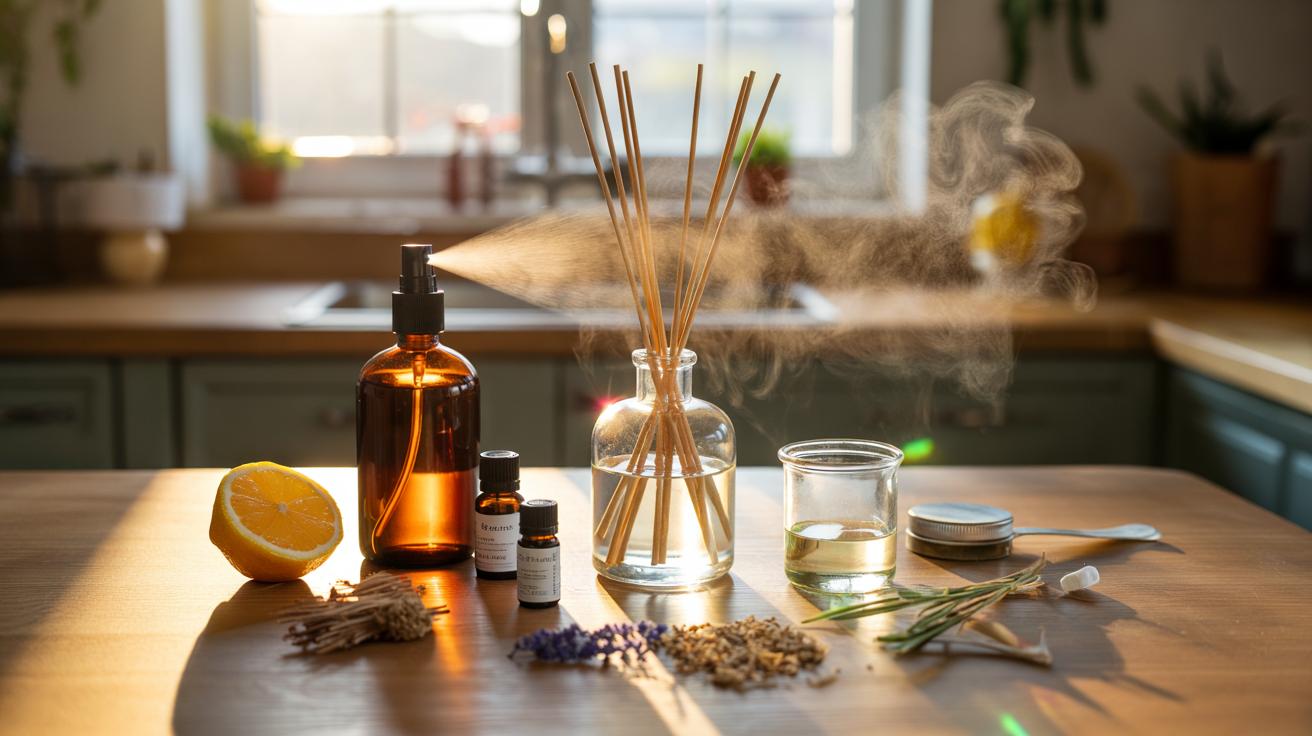
Long-Lasting Room Spray (100 ml): 80 ml perfumers alcohol, 18 ml distilled water, 1–3 ml essential oils, 1 ml Polysorbate 20, 0.5 ml glycerine. Blend oils with Polysorbate 20, stir into alcohol, add water and glycerine, then rest 24 hours. Aim for a base-heavy profile: 50% base (vetiver/cedar/benzoin), 30% heart (lavender/rose geranium), 20% top (lemon/mandarin). Keep EO load under 3% for routine, fabric-friendly spraying.
Slow-Burn Reed Diffuser (120 ml): 95 ml Augeo Clean Multi, 20 ml essential oil blend (or 15 ml for subtler throw), 5–8 fibre reeds. Combine, decant into a narrow-neck bottle, and insert reeds. Flip weekly. Add 5% benzoin resinoid (10% dilution) within the oil portion to anchor brightness. Place away from radiators and direct sun; consistent, mild warmth boosts lift without burning through too quickly.
Clean-Throw Gel Jar: 240 ml water, 2 tbsp powdered gelatine, 1 tbsp salt, 1–2 ml essential oils, 0.5 ml Polysorbate 20. Bloom gelatine in cool water, heat to dissolve, stir in salt and solubilised oils, pour into heat-safe jars to set. Salt slows microbial growth and slightly tamps evaporation. Subtle, steady, and safe on shelves. Great in bathrooms where sprays feel too sharp and diffusers feel too strong.
Ratios, Costs, and Shelf Life at a Glance
Getting the maths right pays back every day. A 100 ml room spray at 2% essential oils uses roughly 60 drops—peanuts in cost if you lean on robust, affordable anchors like cedarwood. Diffusers consume more oil upfront, but amortise beautifully over weeks. Gels sit between: low oil load, moderate duration, friendly on budgets. Think in ratios, not random drops, and you’ll replicate wins instead of chasing accidents.
| Method | Key Carrier | Essential Oil Load | Expected Longevity | Estimated Cost (UK) | Notes |
|---|---|---|---|---|---|
| Room Spray (100 ml) | Perfumers alcohol | 1–3% | 2–3 weeks per bottle | £3–£6 | Quick refresh; store in amber glass |
| Reed Diffuser (120 ml) | Augeo/DPG | 15–20% | 6–8 weeks | £6–£12 | Flip reeds weekly; base-heavy blend lasts |
| Gel Jar | Water + gelatine | 0.5–1% | 3–4 weeks | £2–£4 | Low intensity; great for small rooms |
To cut costs, buy carriers in litre bottles and decant; use reusable glass; and build a core palette of versatile oils. Citrus sings when tethered to vetiver or benzoin. Lavender behaves better with a cedarwood spine. Layering base notes is the single most effective trick for making freshness last beyond the first hour.
Safety, Storage, and Troubleshooting for Real-World Homes
Always label concentrations and keep blends away from flames, pets, and children. Room sprays: avoid direct fabric contact unless tested; some oils stain or sensitise. Pets, especially cats, are sensitive—skip tea tree and go easy on eucalyptus, clove, or cinnamon. For storage, choose amber glass, tight caps, and a cool cupboard; UV and heat brutalise delicate top notes. If a spray turns cloudy, add a touch more Polysorbate 20 and shake; if it separates, you likely exceeded your solubiliser ratio. Diffuser too faint? Swap to fibre reeds, move out of draughts, or raise the room temperature a notch.
Too strong? Reduce oil load by 5% increments, or shorten reed count. Gel going mouldy? Increase salt slightly and use distilled water. Never exceed 3% essential oils in everyday room sprays; for occasional use, 4% is the ceiling for most users. Patch-test surfaces. Date your bottles. And remember: longevity improves after a 24–48 hour maceration, when molecules marry into a rounder, slower-release accord.
Homemade air fresheners can be elegant, thrifty, and surprisingly durable when you respect volatility, choose the right carrier, and anchor your blend with confident base notes. Start small, keep notes, and repeat what works; iteration is the difference between “nice try” and a signature scent. Whether you prefer a bracing citrus hallway or a cosy resinous sitting room, you now have the tools to make it last. Which blend will you test first, and how will you tailor it to your home’s rooms and rhythms?
Did you like it?4.6/5 (27)