In a nutshell
- 🔬 The chemistry: acetic acid in vinegar dissolves alkaline mineral films (limescale, calcium stearate) that form soap scum, preventing crystallisation and keeping glass clearer.
- 🧴 Mixing guide: Use 1:1 vinegar:water for daily prevention, 2:1 for light haze, and undiluted for heavy scale; add 1–2 drops of washing-up liquid per 500 ml to boost wetting.
- 🧽 Application: Spritz warm glass post-shower, allow a 1–10 minute dwell, agitate with a microfibre cloth, rinse, then squeegee; consistency beats intensity for lasting clarity.
- ⚠️ Safety and surfaces: Never mix vinegar with bleach; avoid natural stone, unsealed grout, and delicate metal finishes; ventilate and rinse fittings to prevent dulling.
- 🗓️ Maintenance payoff: A quick daily mist acts as preventative maintenance, cutting scrubbing time; consider a hydrophobic coating once clean to slow new deposits.
Shower doors don’t turn cloudy overnight; they slowly collect a stubborn film of minerals, soap residues, and body oils that light scatters across the glass. The most effective daily defence is a humble vinegar spray that interrupts this chemistry before it hardens. Powered by acetic acid, white vinegar dissolves the mineral ions that let grime anchor to the surface, making wipe-downs faster and preventing that frosted look. Used consistently, a mild acidic mist stops scale and scum from gaining a foothold. Below, we explore why this works at a molecular level, the exact mix to use, and how to apply it like a pro—plus the surfaces you should avoid and the small safety rules that keep cleaning simple and safe.
Why Vinegar Works on Soap Scum
What we casually call soap scum is a mix of hard water minerals (calcium and magnesium), fatty acid residues from soap, and trace skin oils. Those minerals form sticky compounds such as calcium stearate and also deposit as limescale (calcium carbonate). Because these deposits are alkaline, an acid cuts through them efficiently. White vinegar, at around 5% acetic acid, lowers the pH at the glass surface, breaking ionic bonds and converting the deposits into more soluble acetate salts. In practice, this means the film loosens and rinses away instead of gripping the glass.
The best clean happens before heavy build-up sets. A quick spritz after your shower keeps the surface slightly acidic, so minerals can’t crystallise and fats struggle to stick. Acetic acid also disrupts the thin biofilm that makes grime cling, while a touch of washing-up liquid adds surfactants that lift oils. The result is clearer glass, less scrubbing, and a far lower chance of etched-looking haze.
Mixing the Perfect Spray
Use standard white distilled vinegar at 5% acetic acid. For routine prevention, mix 1 part vinegar to 1 part water in a non-metal spray bottle; warm vinegar improves performance. For stubborn deposits, step up to undiluted vinegar or a 2:1 vinegar-to-water blend. Add 1–2 drops of washing-up liquid per 500 ml to improve wetting—no more, or you’ll create residue. If your home has very hard water, consider cleaning vinegar (6–10% acetic acid), but test first and rinse thoroughly to protect finishes.
Label the bottle clearly and store it away from children. Never mix vinegar with bleach, which can release toxic chlorine gas. For a fresher scent, a couple of drops of essential oil are optional, though fragrance is purely cosmetic. Distilled or filtered water helps prevent nozzle clogging. Replace the solution monthly for consistent strength and to keep the sprayer functioning smoothly.
| Situation | Dilution | Dwell Time | Frequency | Tip |
|---|---|---|---|---|
| Daily prevention | 1:1 vinegar:water | 1–2 minutes | After each shower | Finish with a squeegee |
| Light haze | 2:1 vinegar:water | 5 minutes | Every other day | Use microfibre cloth |
| Heavy limescale | Undiluted vinegar | 10–15 minutes | Weekly until clear | Reapply in layers |
How to Use It for Crystal-Clear Glass
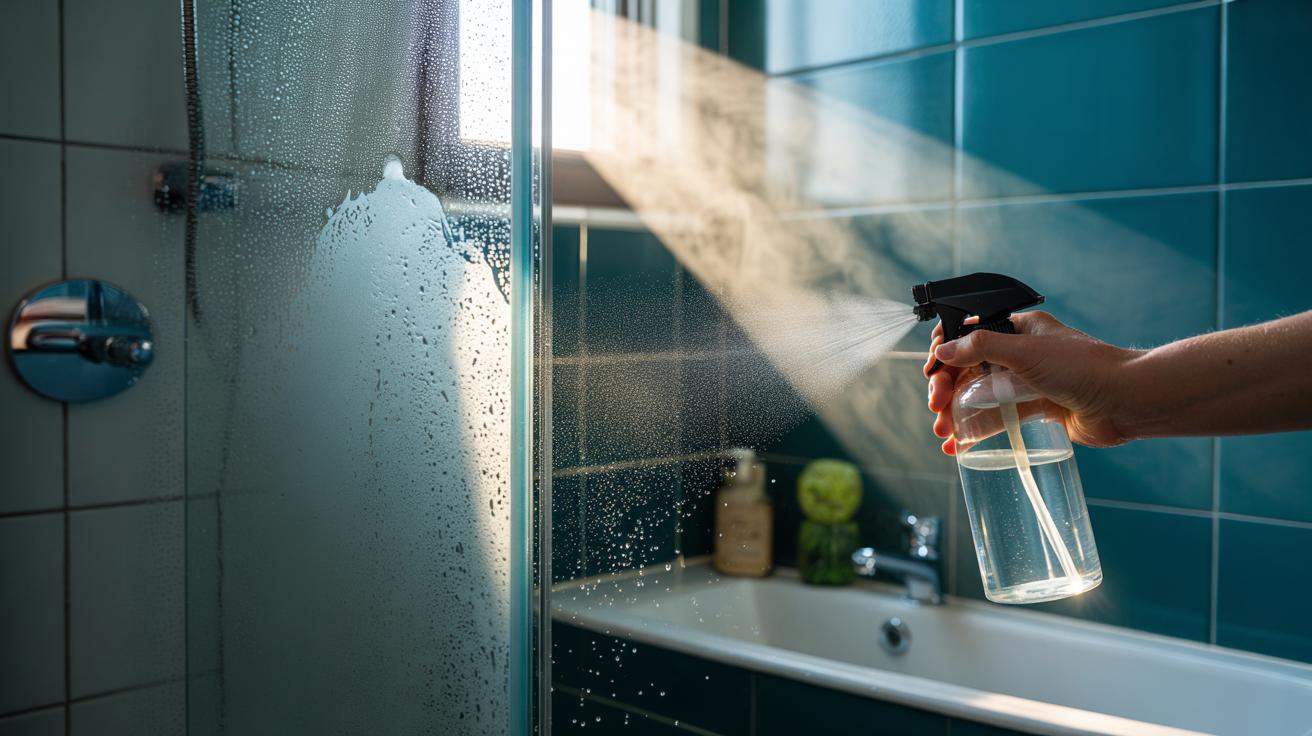
Start when the glass is warm after a shower; the moisture helps spread the solution. Spray a light, even mist of your chosen vinegar solution across the door, paying attention to edges where droplets collect. Allow it to sit—1–2 minutes for maintenance, up to 10 minutes for scale. For stubborn patches, press a vinegar-soaked paper towel onto the area to keep it wet. Agitate gently with a non-scratch sponge or a microfibre cloth, working in overlapping passes.
Rinse with cool water and immediately use a squeegee from top to bottom to remove dissolved minerals and residues. Buff any faint streaks with a dry microfibre. Consistency beats intensity: a quick daily spritz is more effective than occasional heavy scrubbing. Once the glass is pristine, consider a hydrophobic coating or a small amount of glass polish to reduce water beading and slow new deposits. Keep extractor fans running to reduce humidity and drip marks.
Safety, Surfaces, and When to Avoid It
Vinegar is safe on most tempered glass, chrome, and ceramic tiles when promptly rinsed. Avoid use on natural stone (marble, limestone, travertine), stone-composite shower trays, or cement-based, unsealed grout; acids can etch or weaken them. If your enclosure has anodised aluminium frames, test on an inconspicuous spot first and avoid long soaks near finishes such as nickel, brass, or oil-rubbed bronze. Rinse metal fittings after contact to protect against dulling.
Ventilate the bathroom and wear gloves if you have sensitive skin. Do not mix vinegar with bleach or peroxide cleaners; harmful reactions are possible. If a strong odour lingers, switch to a milder dilution or choose a low-odour white vinegar. For glass that resists improvement, the haze may be etching rather than dirt—no household acid will reverse pits in glass; a professional glass polish or replacement may be necessary. Always patch-test and read manufacturer guidance for coated or treated glass.
Vinegar wins because it interrupts the chemistry that bonds minerals and soap residues to your shower door, keeping the surface smooth and easy to wipe. A simple, labelled bottle, a light daily spritz, and a quick squeegee add up to dramatically clearer glass with less effort and fewer harsh products. Think of it as preventative maintenance rather than a chore. If you’ve tested this method, which dilution and dwell time matched your water hardness, and what tricks—like warming the vinegar or adding a drop of washing-up liquid—made the biggest difference in your bathroom?
Did you like it?4.5/5 (30)