In a nutshell
- 🧪 Vinegar steam works by combining warm moisture with mild acetic acid to disrupt hydrogen bonds in starch/PVA adhesives, allowing wallpaper to peel in broad sheets with minimal scraping.
- 🔧 Method: Mix a 1:1 vinegar–water solution, heat to a simmer, score vinyl or painted paper, steam each 1 m² section for 30–60 seconds, then lift gently; re-steam stubborn areas and wipe softened residue with a warm solution.
- 🛡️ Safety and prep: Isolate electrics, cover floors, avoid directing steam into sockets, ensure ventilation, and never mix vinegar with bleach; rinse walls after removal and let them dry about 24 hours before priming.
- ⚖️ Comparison: Vinegar steam is low-cost and low-risk for old plaster; commercial steamers are faster on robust walls; chemical gels tackle paint-blocked layers but come with higher odour and surface risk.
- 🧱 Results and care: Gentle vapour protects lime plaster, reduces gouges and filler work, and speeds redecorating, delivering clean, ready-to-prime surfaces without harsh solvents.
Across Britain’s post-war terraces and Victorian semis, tired wallpaper often outstays its welcome because owners dread days of chiselling. A quieter revolution is brewing on the hob: vinegar steam. By saturating old paper with warm, slightly acidic moisture, it softens and releases the wallpaper adhesive in minutes, preserving the plaster beneath. No heavy scraping is required when the bond is properly hydrated and relaxed. For DIYers nervous about harsh solvents or the environmental toll of chemical strippers, this approach balances thrift with efficiency. Here’s how the method works, why it’s kind to walls, and the safest way to deploy it room by room.
Why Vinegar Steam Works on Wallpaper Adhesives
Most wallpapers were hung with starch-based or PVA glues. These polymers rely on hydrogen bonding and mechanical grip in the paper’s fibres and the wall’s pores. Warm moisture swells those polymers and disrupts the hydrogen bonds. Add diluted acetic acid from household vinegar, and the slightly lower pH helps the adhesive hydrate more readily. Heat opens the microstructure of paper and paint, allowing steam to ferry moisture and acid to the glue line faster. That’s why seams lift first: they’re natural gateways for vapour.
Vinyl-faced papers resist water at the surface, yet they still yield. Score or perforate the coating so steam can penetrate. On painted-over wallpaper, tiny incisions let vapour bypass the paint film. The result is the same: once the adhesive gelatinises, the paper peels in broad sheets rather than ragged strips. Because the bond is relaxed rather than forced, the underlying plaster is far less likely to spall, saving hours of filling and sanding.
How to Create and Use a Vinegar Steam Setup
You need a stainless-steel pot or kettle, white distilled vinegar, clean water, a spray bottle, gloves, and eye protection. Mix a 1:1 solution of water and vinegar; for very stubborn glue, increase to 2:1 vinegar to water. Heat the mixture to a lively simmer so vapour rises. Always test on a small patch behind a radiator or curtain first. For steady delivery, decant hot solution into a heat-safe sprayer and mist the wall, then chase with pot-generated steam held a few inches away. Avoid aluminium cookware, as vinegar can pit it.
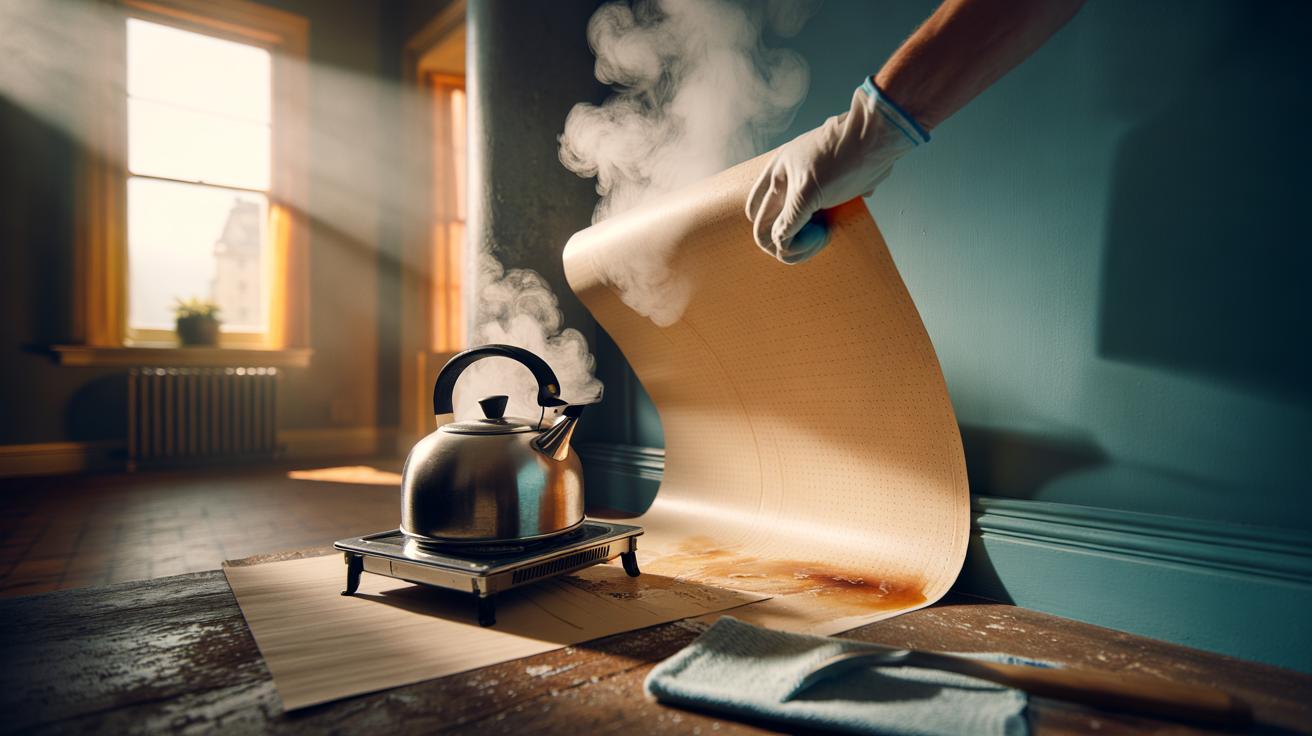
Work in manageable sections, about a square metre at a time. Pre-score vinyl or painted paper. Steam each section for 30–60 seconds, wait another 30 seconds for penetration, then pick a corner and lift gently. Use fingers or a plastic scraper only to guide. Mist and steam again if resistance returns. Wipe softened residue with a microfibre cloth dipped in warm vinegar solution. Never mix vinegar with bleach at any stage, and keep windows cracked for ventilation to temper the tangy odour.
Safety and Preparation for Clean Removal
Preparation prevents damage. Move furniture, sheet the floor, and tape plastic over skirting to catch drips. Isolate electricity to the affected circuit and mask sockets; do not direct steam into outlets or fixtures. Remove switch plates and lightly score around edges to free trapped paper. If walls are lime plaster, limit exposure by working quickly and blotting excess moisture. The goal is saturation of the glue line, not a soaking of the wall.
After the paper is off, wash the wall with warm water and a small splash of vinegar to lift residual paste, then finish with clean water. Where the wall feels slick, a teaspoon of bicarbonate of soda per litre in a rinse bucket helps neutralise odour. Let the surface dry 24 hours before priming. Do not over-wet hairline cracks or blown plaster; consolidate those areas first with a penetrating primer. The reward for patience is a sound, smooth substrate ready for paint or fresh paper.
Vinegar Steam vs Chemical Strippers and Commercial Steamers
Choosing the right method depends on budget, speed, and your wall’s history. Vinegar steam shines for cost-conscious projects and fragile plaster. Chemical gels can bulldoze multiple layers but carry higher odour and surface risk. Commercial steamers are rapid on modern skim coats yet easy to overdo on old lime. The table below captures the trade-offs seen in UK homes.
| Method | Typical Cost (UK) | Speed | Odour/IAQ | Surface Risk | Best Use |
|---|---|---|---|---|---|
| Vinegar Steam | £0.50–£2 per litre | 2–5 min/m² | Mild vinegar | Low | Old plaster, budget jobs |
| Chemical Gel | £10–£20 per litre | 1–3 min/m² | Strong solvent | Medium–High | Multiple paint/paper layers |
| Commercial Steamer | £25–£35 per day hire | 1–2 min/m² | Neutral | Medium | Modern plasterboard walls |
For delicate substrates, gentle vinegar vapour applied patiently beats raw power. If time is critical and walls are robust, a hired steamer wins. Chemical strippers remain a last resort where paint blocks moisture entirely, but protect floors and keep respirators handy.
Used with care, vinegar steam turns a weekend of scraping into a single evening’s tidy peel, with the wall left intact and ready for new life. The science is straightforward: warm moisture and a touch of acidity relax the glue so sheets slide away. Less force means fewer gouges, less filler, and a faster redecorating cycle. Will you build a simple steam station and try a one-metre test, or does your project call for a hybrid plan—vinegar steam on the bulk, then a steamer or gel for the worst corners?
Did you like it?4.5/5 (23)