In a nutshell
- 🧪 Science made simple: soap scum is mineral-bound fatty salts; acetic acid breaks those bonds and added heat accelerates penetration, so residue lifts without hard scrubbing.
- 🔥 Quick method: warm vinegar to about 50–60°C, saturate a microfibre cloth, apply with 2–5 minutes of dwell time, then wipe, rinse, and dry for a clear finish.
- 🛡️ Safety and surfaces: Never mix vinegar with bleach; it’s ideal for glass, ceramic, and chrome, but be cautious with nickel/brass and acrylic, and avoid natural stone and long soaks on unsealed grout.
- 🧰 Smart boosters: add a drop of washing-up liquid for greasy films or use citric acid as an alternative; avoid combining with baking soda at the same time, which neutralises the acid.
- ♻️ Prevention tips: squeegee after showers, switch to synthetic detergents, and do a weekly hot vinegar wipe in hard-water areas to keep buildup at bay.
There’s a reason limescale and soap scum cling to shower glass and taps as if bonded by glue. In hard-water homes, fatty acids from soap join calcium and magnesium to form chalky films that smear and resist ordinary cleaners. Enter the hot vinegar wipe: a low-cost, high-impact trick where heated white vinegar melts mineral-laden buildup without a single hard scrub. By pairing gentle heat with mild acidity, it breaks the chemical grip that keeps deposits stuck. Heat accelerates the reaction and cuts waiting time, turning a tedious chore into a swift, almost hands-off refresh. Here’s the science, the method, and the vital safety rules to make it work brilliantly in a British bathroom.
Why Soap Scum Forms and Why Vinegar Works
The grey haze you see on tiles and glass is chiefly calcium and magnesium salts of fatty acids—think calcium stearate—plus trapped oils and skin residue. In hard water, soap molecules bind minerals to create these insoluble films. White vinegar, typically 5–8% acetic acid, reverses that chemistry. The acid protonates the mineral–soap salts, turning them back into water-soluble components while simultaneously dissolving any attached carbonate scale. With fewer bonds holding the grime together, the film breaks apart and wipes away. The key is giving acid time to penetrate so the bond-dissolving happens before you lift a cloth.
Heat boosts the effect. Warmed vinegar increases molecular motion and softens fatty residues, helping acid reach the mineral nodes faster. That’s why a hot vinegar wipe can appear almost instantaneous compared with a cold spritz. Crucially, the solution’s low pH targets mineral interactions without resorting to abrasive scouring, so you get a clear shine while protecting glass and ceramic finishes from micro-scratches.
How to Make a Hot Vinegar Wipe
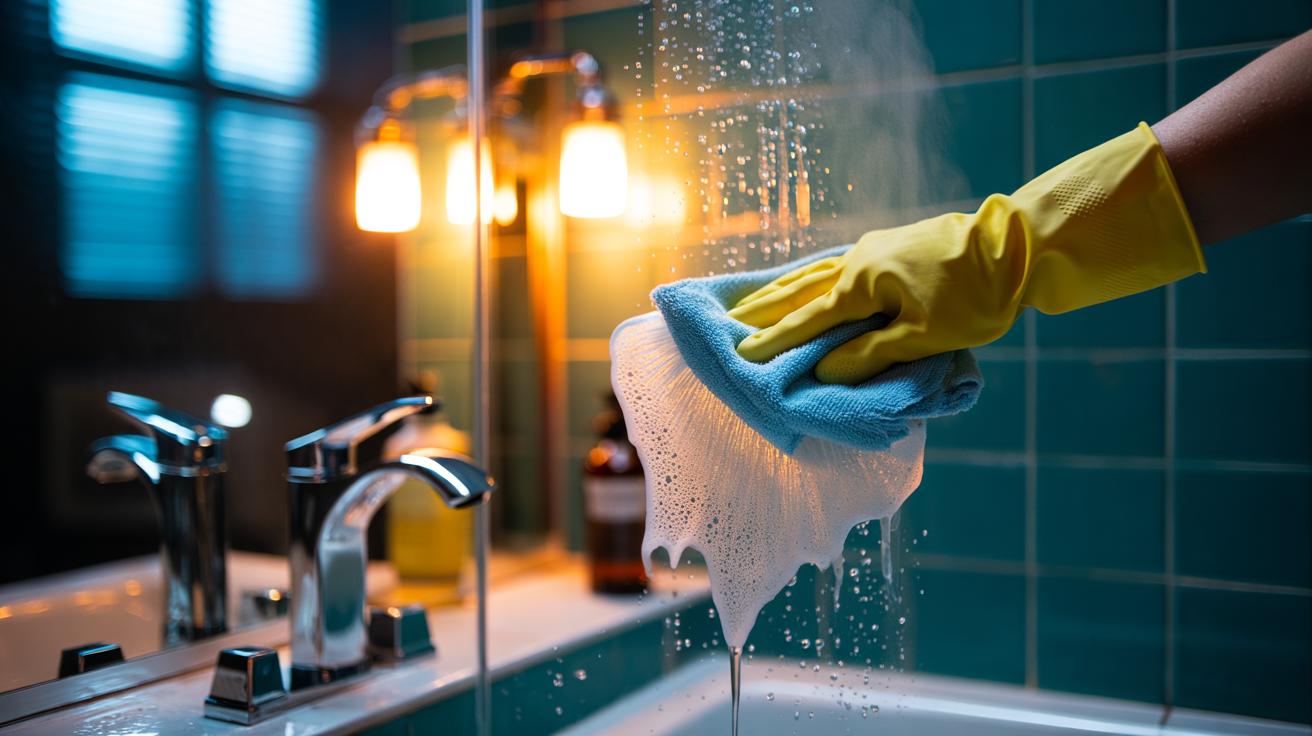
Pour standard white vinegar into a heat-safe jug. Gently warm it to roughly 50–60°C: hot to the touch but not boiling. You can microwave in short bursts or use a pan on low—avoid steam billows. Soak a clean microfibre cloth until saturated, wring lightly, then lay it over the scummy area like a compress. On vertical glass, press the hot cloth to the surface for two to five minutes, re-wetting if it cools. Do not rush: dwell time is what dissolves the bonds so you don’t have to scrub.
Lift the cloth and wipe along the grain of any brushed metal; on glass, use smooth, overlapping strokes. For stubborn edges, pinch the cloth to create a firm “squeegee” line. Rinse with warm water and buff dry to prevent new deposits as droplets evaporate. For taps and tight corners, decant hot vinegar into a spray bottle, spritz lightly, then drape a saturated strip of cloth around spouts and collars. Finish by drying seals and fittings thoroughly to keep them gleaming.
Safety, Surfaces, and When Not to Use It
Acids are brilliant on glass, ceramic, and chrome, but they can etch natural stone and compromise some metallic finishes. Never mix vinegar with bleach—chlorinated gases can form. Ensure good ventilation, wear washing-up gloves, and keep hot liquids away from children and pets. If you’re unsure about a finish, test a discreet patch for 60 seconds, rinse, and check for dulling. Avoid prolonged exposure on rubber gaskets and unsealed grout; quick treatment followed by a rinse is ideal. On plated fixtures (nickel, brass, bronze), limit contact time and dry immediately. The goal is targeted dissolving, not soaking sessions.
| Surface | Use Hot Vinegar? | Notes |
|---|---|---|
| Glass & ceramic tiles | Yes | Excellent for soap scum and limescale haze. |
| Chrome taps | Yes | Short dwell; rinse and dry to a shine. |
| Nickel/brass/bronze | Caution | Brief contact only; test first and dry fast. |
| Natural stone (marble, limestone, travertine) | No | Acid can etch; use pH-neutral stone cleaner. |
| Grout | Yes, briefly | Rinse thoroughly; avoid soaking unsealed grout. |
| Acrylic/plastic screens | Caution | Use warm, not hot; test for clouding. |
Tough Buildup: Boosters and Variations
For greasy films that trap mineral specks, add a couple of drops of mild washing-up liquid to your hot vinegar soak. The surfactant lifts oils while the acid dissolves mineral bonds, a one-two that clears smeary residue. On heavy limescale rims, repeat a short hot compress rather than scouring; each application removes another layer. Citric acid is a credible alternative: dissolve a teaspoon in warm water to make a similar pH solution, especially useful if you prefer a citrus scent. Always rinse and dry after any acid treatment to stop dissolved minerals from re-depositing.
Skip the simultaneous baking soda mix—it neutralises the acid and blunts performance. If you like a fizzy finish, use vinegar first, rinse, then a separate bicarbonate scrub for odour control in drains. To keep surfaces clear between deep cleans, squeegee glass after showers, switch to synthetic detergents that form fewer mineral salts, and run a quick hot-vinegar wipe weekly in hard-water areas.
The hot vinegar wipe is a small domestic revelation: cheap, fast, and grounded in simple chemistry that turns grimy showers and taps into a sparkling advert for clean water. By letting gentle heat and acetic acid break the mineral–soap bond, you free yourself from elbow-grease marathons and protect surfaces from abrasion. Keep safety in mind, pick your surfaces wisely, and finish with a thorough rinse and dry for a streak-free result. Could this five-minute method become your new default for the bathroom—and what tweaks would you try to tailor it to your home’s water and finishes?
Did you like it?4.6/5 (20)