In a nutshell
- 🔬 The chemistry: heated acetic acid and steam soften polymerised grease by lowering viscosity and disrupting bonds, making oven glass grime release with minimal scrubbing.
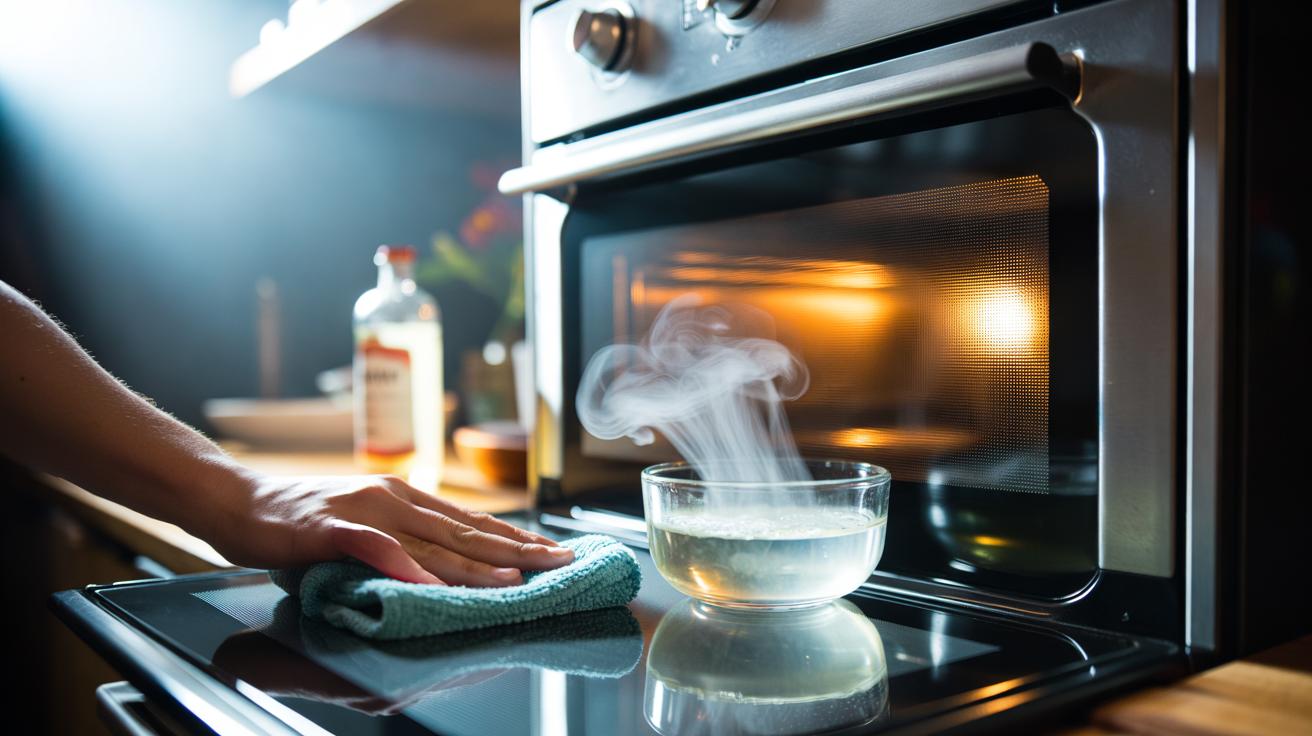
- 🧼 Step-by-step: place a heat-safe dish with a 1:1 vinegar–water mix in the oven, heat to 120–140°C for 10–15 minutes, then wipe warm glass with a microfibre cloth and use a plastic scraper for stubborn spots.
- ⚠️ Safety first: ventilate, wear gloves if needed, avoid flooding gaskets and vents, test coated glass, and never mix vinegar with bleach or chlorine cleaners.
- 📏 Key settings: 1:1 vinegar to water, oven at 120–140°C, total dwell of 20–25 minutes to maximise hot acidic condensation and penetration.
- 🔁 Maintenance: brief, regular steam sessions prevent buildup; reserve bicarbonate of soda for isolated burnt spots and minimise abrasives to avoid micro-scratches.
It’s the kitchen chore we defer until guests are imminent: the oven door, clouded by brown haze and welded-on splatters. Yet a bottle of white vinegar and a little heat can make that glass gleam with surprisingly little effort. When warmed, vinegar’s acetic acid becomes far more persuasive, teaming with steam to soften baked-on grime so it slides away under a cloth. This isn’t a miracle hack but a neat marriage of chemistry and common sense, and it works especially well on the polymerised oils that turn into stubborn varnish. With controlled heat, mild acid loosens grease quickly without harsh fumes or heavy scrubbing.
The Science of Hot Acid and Grease Loosening
Everyday white vinegar is about 5% acetic acid in water. At room temperature it’s a gentle cleaner; add heat and the effect intensifies. Warmth lowers the viscosity of congealed fats, helping them flow. Meanwhile, acetic acid protonates sticky residues and loosens the network of oxidised and polymerised molecules that form a hard film on oven glass. Steam is the quiet accomplice: as it condenses on the cooler door, it delivers latent heat and a continuous film of hot, slightly acidic water, which penetrates the grime and encourages it to release.
Grease on oven glass is not just oil; it’s a stubborn matrix of oxidised lipids, fine food particles, and sometimes mineral deposits. By lowering pH and maintaining heat, vinegar disrupts bonding sites and helps water infiltrate. In practice, the combination of heat, moisture, and mild acidity creates a temporary window where baked-on residues become soft enough to lift without abrasion. The result: fewer scratches, less elbow grease, and a clearer view of your roast.
Step-by-Step Method for Effortless Oven-Glass Cleaning
Gather a heat-safe dish, white vinegar, water, a microfibre cloth, and a plastic scraper for stubborn spots. Remove racks to improve airflow. Place the dish on a low shelf and pour in a 1:1 mix of vinegar and water (about 250 ml each). Close the door. Heat the oven to 120–140°C for 10–15 minutes, then switch it off and leave the door closed another 10 minutes. This creates a blanket of hot, acidic steam that softens residues without resorting to harsh chemicals.
Open the door carefully, keeping your face back from rising vapour. Using the microfibre cloth, wipe the inner glass in overlapping strokes. Most of the brown film should lift on contact. For any clingy patches, re-wet the cloth in the hot vinegar solution and hold it against the spot for 30 seconds, then use the plastic scraper at a shallow angle. Always wipe while the surface is warm but not too hot to touch comfortably.
If a faint smear remains, buff with a clean, dry microfibre cloth for a streak-free finish. Reserve bicarbonate of soda for after the vinegar step, not during it; dab a thick paste only on isolated, burnt specks, allow a brief dwell, then wipe clean. Never mix vinegar with bleach or chlorine-based oven cleaners, and keep windows cracked for light ventilation.
Safety, Materials, and When to Use Alternatives
Vinegar steam is gentle on most oven glass, including doors with pyrolytic or catalytic linings, provided you avoid soaking gaskets and don’t flood electrical vents. If your oven has a removable inner pane, lay it flat on a towel and apply the same method with warm, steamed cloths rather than heating the entire cavity. For etched or pitted glass—damage from years of abrasion—no cleaner will restore clarity, so focus on hygiene and glare reduction.
| Parameter | Recommendation | Why It Matters |
|---|---|---|
| Vinegar:Water | 1:1 | Balances cleaning power with manageable fumes and cost. |
| Oven Heat | 120–140°C, then off | Maximises steam and softening without risking burns. |
| Dwell Time | 20–25 minutes total | Allows hot acid and condensation to penetrate grime. |
Work with good airflow and gloves if your skin is sensitive. If the door has a hydrophobic coating, test a small corner first. Switch to a targeted degreaser only when heavy carbon remains after steaming, and keep abrasives to a minimum to avoid micro-scratches that attract future grime. Short, regular steam sessions prevent buildup, meaning each clean gets easier.
There’s a certain satisfaction in seeing the oven’s inner world reappear, no harsh chemicals required. With heat, moisture, and mild acidity doing the heavy lifting, the vinegar steam trick delivers a clear pane and a clear conscience, while sparing your wrists. It’s affordable, aligns with a low-tox routine, and fits neatly into weekend resets or a quick pre-company spruce-up. Make it a 20-minute habit every few weeks and baked-on haze never stands a chance. How will you adapt this method to your own kitchen rhythm—quick monthly top-ups, or a deeper seasonal refresh with a full door disassembly?
Did you like it?4.5/5 (26)