In a nutshell
- 🔬 The science: Warm white vinegar (5% acetic acid) boosts reaction rate and lowers surface tension to dissolve mineral haze and lift oils without harming the steel’s chromium oxide layer.
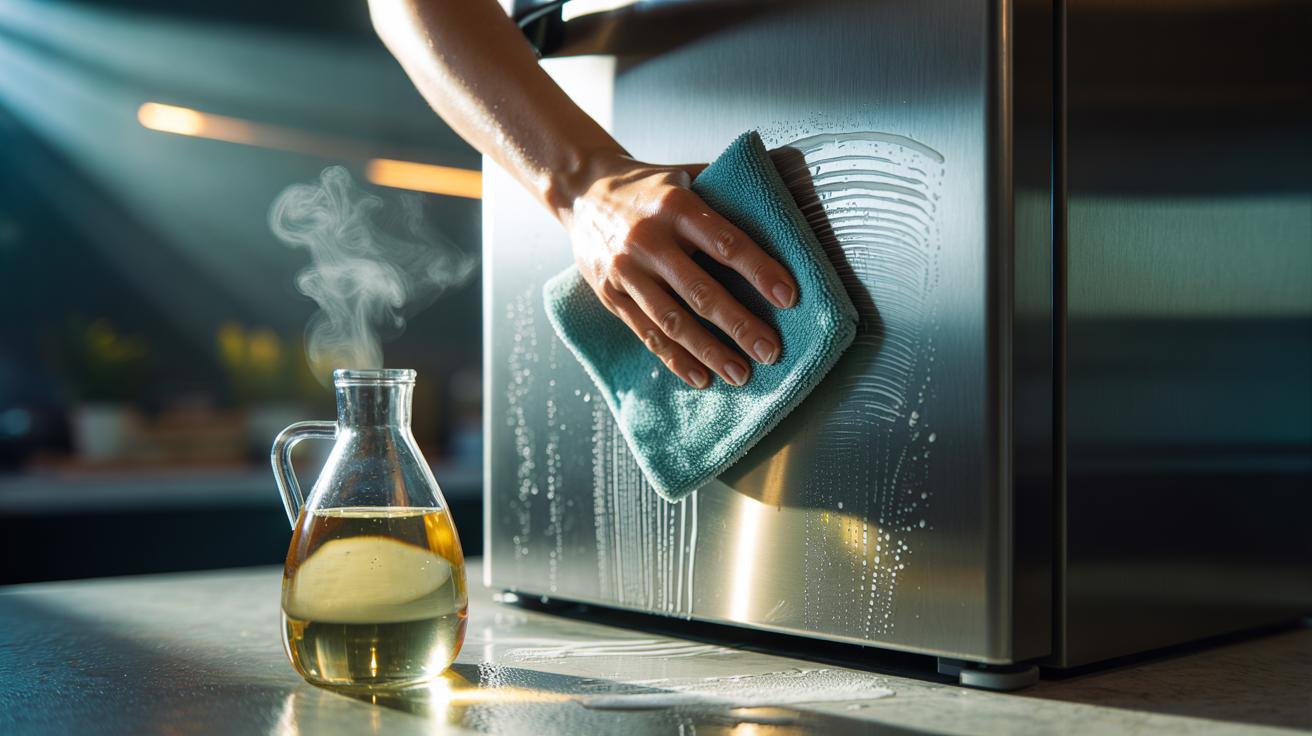
- 🧽 Method: Heat to 45–55°C, wipe with a microfiber along the grain for 60–120 seconds, don’t let it dry, then rinse (preferably with distilled water) and buff; finish with a whisper-thin coat of food-safe mineral oil if desired.
- ⚠️ Safety: Never mix vinegar with bleach; avoid natural stone and unsealed grout; protect control panels and gaskets; use gentle heat, ventilate, and spot-test finishes.
- 🧪 Alternatives & pitfalls: Warm citric acid can substitute; avoid abrasive baking soda on brushed steel and chloride-heavy cleaners that can cause pitting; keep microfibers clean (no fabric softener).
- 💡 Results & tips: Low-cost, gentle, and ideal for hard-water areas; repeat short passes for stubborn limescale; a disciplined rinse-and-dry routine delivers a streak-free, lasting sheen.
Kitchen stainless steel dazzles when it’s clean, yet fingerprints, limescale haze, and detergent smears can dull even the smartest hob or fridge door. A simple trick used by professional cleaners across the UK relies on warm white vinegar. Heating this mild acid a little turns it into a nimble polish that loosens mineral film and lifts oil without harsh abrasives or solvents. Because the vinegar is warm, it acts faster and streaks less, leaving a bright, even sheen. Below, we unpack the science, set out a precise method, flag key safety notes, and share troubleshooting tips so you can revive brushed or mirror stainless swiftly—and keep that glow longer.
Why Warm Vinegar Works on Stainless Steel
Stainless steel’s sparkle depends on a thin chromium oxide passivation layer that resists rust. Finger oils, soap residue, and tap-water minerals mask this layer, scattering light as streaks. White vinegar—about 5% acetic acid—dissolves alkaline deposits like carbonates and lifts soap scum. When gently heated to hand-hot, the acid’s molecules move faster, which increases reaction rate and lowers surface tension, helping it creep under grime. This is why warm vinegar clears films more evenly than cold. Because acetic acid is weak and used briefly, it cleans without etching the stainless or its protective oxide, provided you rinse and dry. Its mild acidity also helps break the bond between oil and steel, so fingerprints release with fewer passes.
The result is a one-two: warm acetic acid softens and dissolves mineral haze, while improved wetting distributes the liquid uniformly, preventing patchy drying marks. The key is control—modest heat, short dwell, and a microfiber cloth that aligns with the steel’s grain. Compared with aggressive chemicals, this gentle, low-odor approach avoids damage, reduces re-soiling, and costs pennies. For households in hard-water areas, it is especially effective, as it tackles lime bloom before it bakes onto warm appliances. Used correctly, warm vinegar restores clarity without leaving a smeary film.
Step-by-Step Method for a Streak-Free Finish
Start with white distilled vinegar. Warm 200–250 ml in a heat-safe jug to about 45–55°C—comfortably hand-hot, not boiling. For sensitive finishes or electronics-adjacent trims, dilute 1:1 with distilled water. Lightly mist or wipe the surface with a clean, damp cloth to lift loose dust. Soak a microfiber cloth in the warm vinegar, wring until just wet, then wipe with the grain using overlapping strokes. Allow a 60–120 second dwell on hazy patches, keeping the area moist. Do not let vinegar dry on the surface. Rinse by wiping with a second cloth dampened in clean water (distilled if your tap water spots easily), then buff dry with a lint-free towel. For a showroom gleam, finish with one whisper-thin drop of food-safe mineral oil spread over a tea-towel and buff along the grain.
| Parameter | Best Practice | Why It Helps |
|---|---|---|
| Vinegar strength | 5% acetic acid; neat or 1:1 dilution | Strong enough to dissolve mineral film without harshness |
| Working temperature | 45–55°C (hand-hot) | Boosts solvency and wetting for even cleaning |
| Dwell time | 60–120 seconds | Softens limescale and soap without drying marks |
| Cloth and motion | Microfiber, wipe with the grain | Prevents micro-marring and streak patterns |
If the surface is very greasy, add a single drop of mild washing-up liquid to the warm vinegar to aid emulsification, then follow the same rinse-and-buff routine. Always finish by drying thoroughly; leftover moisture causes new spotting and can attract dust.
Safety, Materials to Avoid, and Common Mistakes
Never mix vinegar with bleach or chlorine-based cleaners; the reaction releases toxic chlorinated gases. Keep vinegar off natural stone (marble, travertine, limestone), concrete, unsealed grout, and some rubbers, as acid can etch or degrade them. On appliances, avoid saturating seams, control panels, and gaskets. Use gentle heat only; microwaving in a sealed container is unsafe, and boiling vinegar is unnecessary. Wear light gloves if you have sensitive skin, and ensure ventilation. Always spot-test a hidden corner—finishes vary, and some coatings are less tolerant of acids.
Common pitfalls include scrubbing across the grain with abrasive pads, letting vinegar dry in place, and skipping the rinse. Each invites streaks or faint swirls. In hard-water regions, rinsing with distilled water dramatically reduces re-spotting. If you prefer an odourless finish, buff with a clean, dry microfiber until the smell dissipates. Avoid chloride-heavy products on stainless steel; chloride ions encourage pitting corrosion. The gentle route—short contact, rinse, dry—protects the passivation layer while achieving a crisp shine.
Troubleshooting Stubborn Smears and Alternative Acids
For baked-on haze or kettle-like limescale, reheat the vinegar and repeat with a slightly longer dwell, agitating with a soft nylon brush. If greasy fingerprints persist, pre-wash with warm water and a drop of neutral detergent, rinse, then apply the warm vinegar. On mirror-polished steel, use the plush side of a high-GSM microfiber and the lightest pressure to avoid tracks. Distilled water is your friend during the final rinse, especially in hard-water areas. If you see rainbow films after drying, a tiny amount of residue remains—rewipe with a fresh cloth lightly dampened in warm vinegar, then buff promptly.
Prefer a citrus note? A 3–5% citric acid solution warmed to hand-hot works similarly and is gentle on steel, though vinegar remains the thriftier choice. Lemon juice also functions but can be sticky; rinse thoroughly. Avoid baking soda pastes on brushed stainless; the grit can leave arcs. For a lasting finish, apply a barely-there coat of food-safe mineral oil or a stainless-specific polish, then buff with the grain to seal pores and cut future smears. The cleaner the cloths, the cleaner the outcome—wash microfibers without fabric softener to preserve their grab.
Warm vinegar earns its place in the cleaning cupboard because it is swift, economical, and kind to stainless steel’s protective skin. By pairing mild acidity with strategic heat, you dissolve mineral cloudiness and lift oils without resorting to harsh chemicals or heavy elbow-grease. The method hinges on small details—temperature, dwell, cloth quality, and a disciplined rinse-and-dry—that add up to a consistently bright finish. Treat your steel with patience and it will repay you with a deep, even lustre. What surface in your kitchen or workshop will you test first, and how will you adapt the process to your own water, appliances, and routine?
Did you like it?4.5/5 (21)