In a nutshell
- 🧪 A vinegar-window rinse leverages acetic acid to dissolve calcium carbonate and cut surfactant films, neutralising alkalinity and preventing streaks and haze.
- 🧴 Mix and method: use 1:1 vinegar to distilled water (or 2:1 in hard-water areas), apply as a final rinse, squeegee top-to-bottom, then buff edges with a dry microfibre.
- 🌞 Practical tips: work on cool glass, avoid overconcentration, keep cloths detergent-free, use the two-cloth method, and never mix vinegar with bleach; protect marble/limestone from overspray.
- 📊 Evidence and value: vinegar clears mineral and soap films (tabled by deposit type) and costs roughly £0.40–£0.70 per litre versus £2.50–£4.00 for branded sprays.
- 🌿 Sustainability: a low-impact, refillable solution that cuts packaging and chemical load while delivering consistently streak-free glass with simple, repeatable steps.
If your freshly cleaned windows dry with tell-tale streaks or a persistent milky haze, the final rinse is often the culprit. A simple switch to a vinegar-window rinse can transform clarity, because its gentle acidity neutralises alkaline residue and lifts mineral films that ordinary detergents leave behind. Distilled white vinegar—about 5% acetic acid—is inexpensive, widely available in the UK, and safe for most glass. Used correctly, it breaks the cycle of wipe, dry, and disappointment. The secret is not scrubbing harder, but letting acidity do the dissolving. Below, we explain why the method works, how to mix it for your water type, and the professional tricks that keep panes crystal clear without chemical overkill.
Why Vinegar Stops Streaks on Glass
Streaks rarely come from the glass itself; they come from what’s left on it. Tap water carries calcium, magnesium, and bicarbonates that dry into speckled limescale. Household detergents add surfactants that can cling as invisible films. When the sun hits a pane, uneven evaporation exaggerates every smear. Vinegar’s acidity solves both problems: it dissolves alkaline mineral deposits and disrupts soap residue so it can be lifted cleanly. Reduce residue, and you remove the conditions that produce streaks. That’s why a vinegar rinse excels as the final pass after any wash.
Composition matters. Distilled white vinegar is consistent, colourless, and free of fermentation sugars that could smudge. At typical 5% strength, acetic acid is potent enough for deposits yet gentle on glass and most frames. The rinse also lowers drying pH on the pane, limiting new carbonate formation as droplets evaporate. Paired with a clean microfibre and a sharp squeegee, the effect is tangible: a faster sheet-off, fewer drying marks, and a noticeable, neutral brightness to the view.
The Chemistry: Acidity That Cuts Through Cloudy Films
Cloudy build-up is often alkaline. Calcium carbonate from hard water reacts with acids, including vinegar, to form soluble salts and carbon dioxide, which simply wipe away. Acetic acid also breaks weak bonds between glass and surfactant films, allowing you to lift them rather than smear them. Lowering the surface pH for a short window is what unlocks stubborn haze. This is why vinegar is a classic after-rinse even in commercial settings: it corrects the chemistry that makes streaks inevitable, instead of masking them with fragrances or glossing agents.
Different residues respond differently to acidity. Use this quick guide to match problem to fix.
| Deposit/Film | Typical Source | Symptom | Vinegar Effect |
|---|---|---|---|
| Calcium carbonate | Hard water spray, rain splashback | Chalky dots, grey haze | Dissolves to soluble salts; wipes clear |
| Soap/surfactant film | Over-soapy wash water | Smear lines, rainbow sheen | Breaks film; reduces surface tension for clean lift |
| Ammonia residue | Glass sprays | Streaks in sunlight | Neutralises alkalinity; cuts glare streaks |
| Silicone transfer | Frames, sealants | Greasy drag marks | Partial improvement; may need alcohol pre-wipe |
Note the limits: greasy fingerprints and silicone-heavy smudges may require a small pre-wipe with isopropyl alcohol before the vinegar rinse completes the job.
How to Mix and Use a Vinegar Rinse
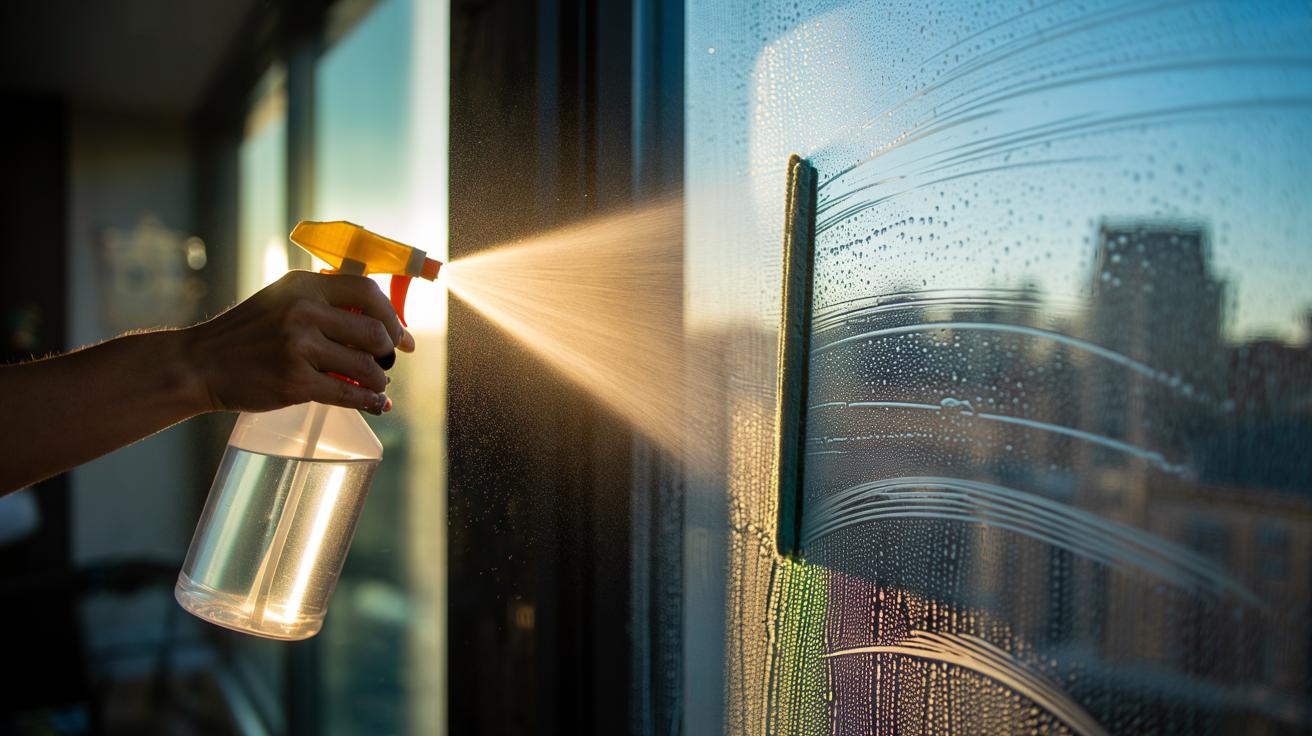
For most UK homes, mix 1:1 distilled white vinegar to distilled or filtered water in a clean spray bottle. In very hard water areas, increase to 2 parts vinegar to 1 part water for the final pass. Wash the glass first with a mild detergent solution, then rinse thoroughly so you’re not asking vinegar to fight soap and soil at once. The vinegar stage is a finisher, not the whole clean. Apply a light mist, squeegee from top to bottom with overlapping strokes, then buff edges with a dry microfibre.
Work in shade or on cool glass to slow evaporation, which helps the acid contact deposits long enough to dissolve them. Use a dedicated lint-free microfibre for the final polish—one that never sees fabric softener, which leaves a film. Avoid marble or limestone sills; overspray can etch natural stone. If odour is a concern, add a strip of lemon peel to the bottle for a subtle scent, or follow with a brief water mist. Never mix vinegar with bleach; that produces hazardous fumes.
Common Pitfalls and Professional Tricks
Overconcentration can backfire. Straight vinegar on a hot day dries too fast, risking tide marks. Too little, and deposits persist. Keep cloths pristine: a microfibre loaded with detergent from last week will reintroduce the very surfactants you’re trying to remove. Pre-rinse frames so grime doesn’t wash back onto the pane. Sunlit glass is the enemy of a flawless finish, so schedule windows for morning or late afternoon when evaporation is slower and more even.
Pros rely on the “two-cloth” method: one slightly damp with your vinegar solution to lift residue, the other bone-dry for the final buff. Use a sharp-edged squeegee; replace rubber as soon as it nicks. For winter work, a splash (up to 10%) of isopropyl alcohol accelerates dry-down without clouding. In coastal homes, rinse salt spray with plain water before the vinegar pass, which prevents crusted edges. Decant small batches weekly—clean bottles prevent microbial growth that can mark glass.
Sustainability and Cost Comparison
Vinegar is a low-impact staple compared with many branded glass cleaners. You’re transporting acetic acid and water, not a cocktail of dyes and polymer glossers, and you can reuse spray bottles. For households fighting limescale, the switch also trims the number of specialist products in the cupboard. One simple acid does the heavy lifting. From a budgeting angle, the numbers are compelling: a litre of distilled white vinegar and a litre of filtered water yield two litres of effective rinse at a fraction of the cost of aerosols.
| Option | Typical UK Cost | Use Rate | Notes |
|---|---|---|---|
| Vinegar rinse (1:1) | £0.40–£0.70 per litre | Light mist | Refillable; minimal packaging |
| Branded glass spray | £2.50–£4.00 per litre | Heavier application | Fragrance, dyes; more plastic |
Environmental caveats still apply: avoid overuse, ventilate while cleaning, and store away from metals that can corrode in acidic atmospheres. Refill from bulk to cut plastic waste, and label bottles clearly to prevent mix-ups. The result is a routine that’s kinder to the planet and to your wallet.
Used as a finishing rinse, vinegar converts a fussy chore into a reliable, streak-free routine by dissolving the residue that causes haze in the first place. Keep the chemistry simple—wash, rinse, acidify, and dry—and the view sharp. With a clean microfibre, a steady squeegee stroke, and the right dilution, your panes will resist glare lines and chalky spots even in hard-water postcodes. The method rewards consistency more than force. Which windows in your home or workplace would benefit most from a vinegar rinse, and how will you adapt the mix for your local water and cleaning habits?
Did you like it?4.6/5 (29)