In a nutshell
- ✨ A simple vodka spray uses ethanol to dissolve oils and evaporate rapidly, delivering a crisp, streak-free finish with minimal residue on glass tables.
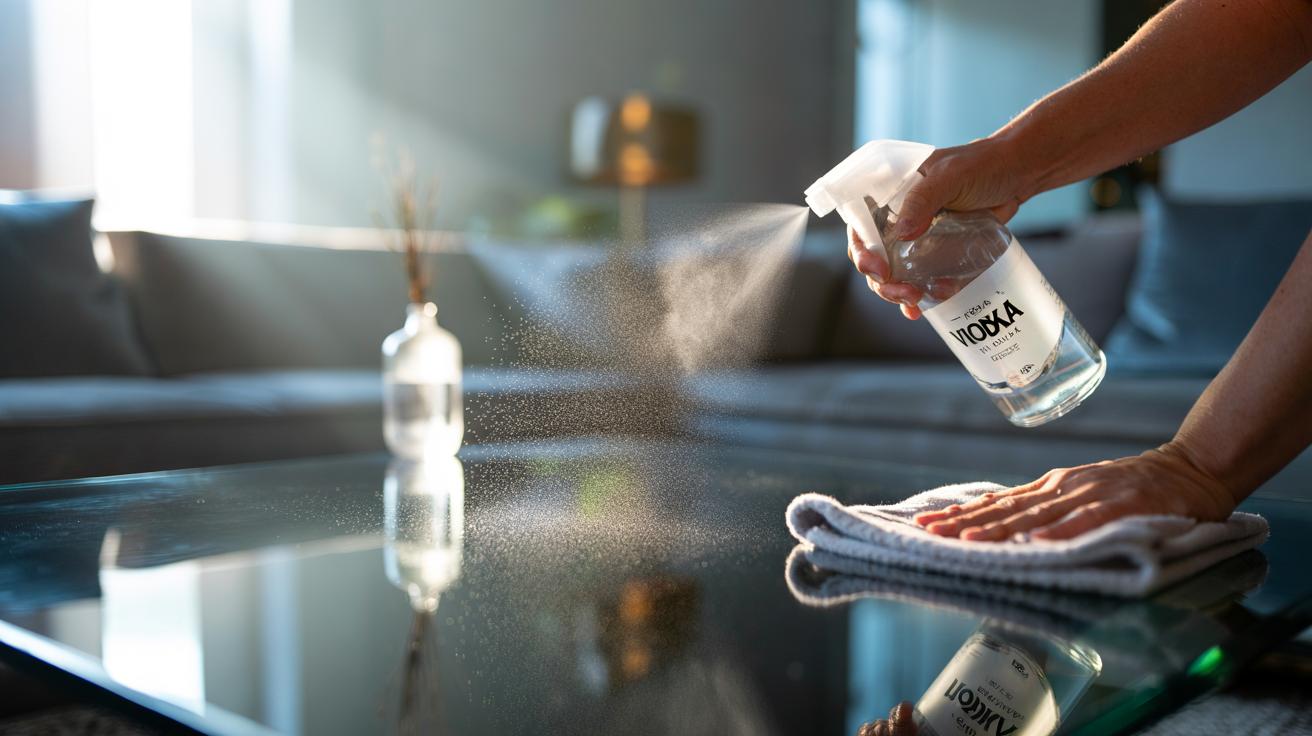
- 🧴 How-to: use unflavoured vodka (often undiluted) in a fine mister, mist lightly, wipe in overlapping “S” strokes with a damp microfibre, then polish dry—this two‑cloth method prevents tide marks.
- 🧪 Science: higher alcohol content dries faster; vodka (~40% ethanol) works well, while isopropyl alcohol (70%) or methylated spirits flash off quicker; manage humidity and switch to deionised water for any dilution to avoid mineral streaks.
- ⚠️ Safety and materials: ethanol is flammable; avoid flavoured/sugary spirits, and spot‑test near lacquered wood, tinted films, and acrylics to prevent damage or crazing.
- 📋 Choices at a glance: vodka (fast, mild odour), IPA 70% (very fast, sharper odour), methylated spirits (very fast, pungent), and white vinegar (slower, good on limescale); technique matters as much as the bottle.
Across Britain’s kitchens and studios, glass tables are unforgiving surfaces that trumpet every fingerprint and splash. An unlikely hero has slipped from the cocktail trolley into the cleaning caddy: the humble vodka spray. Thanks to its high ethanol content, vodka dissolves oily smudges and then vanishes rapidly, leaving a streak‑free sheen without perfumed residue. Choose an inexpensive, unflavoured bottle, decant it into a fine mister, and work with a tight‑weave microfibre cloth for best results. There is solid science behind the sparkle, along with a few sensible precautions to protect finishes and plastics. Treat vodka as a fast‑evaporating solvent rather than a miracle potion, and you’ll achieve a showroom gloss in minutes.
Why Vodka Leaves Glass Streak-Free
Vodka’s cleaning power comes from ethanol, a fast‑evaporating solvent with low surface tension. It lifts skin oils and food residues that water smears, then disperses quickly thanks to its relatively high vapour pressure. Unlike many commercial sprays, plain alcohol contains virtually no soaps, dyes, or fragrance oils that can linger. Streaks are simply microscopic residues that dry into visible lines—reduce the residue, reduce the streaks. While vodka is roughly 40% alcohol, that proportion is often sufficient for glass because microfibre mechanically removes the remaining moisture and particles as the ethanol flashes off.
On a table, the physics favours you: glass is non‑porous and smooth, so contaminants sit on the surface waiting to be dissolved and wiped away. However, ambient humidity and dust matter. In damp rooms, water in the mix dries more slowly, so a second, dry buffing cloth prevents faint tide marks. For large panes, work in sections to keep the evaporating film uniform and avoid re‑depositing lint.
How to Make and Use a Vodka Spray
Decant unflavoured, budget vodka into a clean spray bottle and label it clearly. For small tables, use it undiluted. For slower drying on big surfaces, add up to 20% deionised water; for heavy grease, a single drop of unscented washing‑up liquid per 250 ml helps—but buff thoroughly to avoid a film. Light misting beats drenching: the thinner the liquid layer, the cleaner the finish.
Adopt the two‑cloth method. Spray a fine mist, then wipe with a slightly damp microfibre in overlapping “S” strokes to gather grime. Immediately follow with a dry, plush microfibre to polish away the final moisture. Pay special attention to edges and under‑lighting, where halos reveal missed residue. Rotate to a fresh side of the cloth when it feels draggy; that’s a sign you’re moving soil rather than removing it.
Safety and care: keep away from flames—ethanol is flammable. Test discreetly before using near lacquered wood, tinted films, or delicate plastics like acrylic, which can craze. Avoid flavoured or sugary spirits; they leave a sticky trail that defeats the purpose.
Science Corner: Evaporation, Purity, and Residues
The claim that pure alcohol evaporates perfectly is broadly accurate: fewer solutes mean fewer streaks. But vodka isn’t pure—its 60% water fraction slows drying slightly. Ethanol’s rapid evaporation is driven by its volatility and relatively low enthalpy of vaporisation; as it lifts oils, it thins the liquid layer, encouraging uniform drying. Higher alcohol content generally means faster drying and fewer marks, provided there are no additives. That’s why methylated spirits (denatured ethanol) or 70% isopropyl alcohol can perform even faster, though the odour and surface compatibility differ.
Two factors often blamed for “mystery streaks” aren’t the alcohol at all: dissolved minerals in tap water and residues from previous cleaners. Switch to deionised water for any dilution, and do an initial deep clean to strip silicones or waxes left by older products. In cool, humid rooms, warm the cloth slightly and increase airflow; faster evaporation reduces tide marks and fogging.
| Cleaner | Typical Alcohol % | Evaporation Speed | Residue Risk | Odour | Notes |
|---|---|---|---|---|---|
| Vodka (unflavoured) | ~40% ethanol | Fast | Low | Mild | Cheap, widely available; avoid flavoured versions. |
| Isopropyl alcohol (IPA) | 70% | Very fast | Very low | Sharp | Excellent degreaser; may haze some plastics. |
| Methylated spirits | ~90% ethanol | Very fast | Very low | Strong | Effective but pungent; denaturants vary. |
| White vinegar solution | ~5% acetic acid | Moderate | Low–moderate | Tart | Good on limescale; can leave scent and faint film. |
| Distilled water | 0% | Slow | Very low | Neutral | Best for final buff with microfibre. |
Used with a light touch and the right cloth, a vodka spray is a pragmatic, low‑residue route to crystal‑clear glass. It leverages the clean evaporation of alcohol yet avoids the heavy perfumes and surfactants that often cause streaks. Respect the flammability, skip sugary spirits, and remember that technique—thin misting, two‑cloth wiping, and quick buffing—matters as much as the bottle you choose. The payoff is a fast, consistent shine that flatters every room. Will you retire the blue stuff for a bar‑cart staple, or do you have a different zero‑streak secret worth putting to the test on your own glass table?
Did you like it?4.5/5 (29)