In a nutshell
- 🔥 The warm-bowl soak uses heated water to lower viscosity, boost solubility, and loosen sticky grime from oven racks, making light scrubbing sufficient.
- 🛁 Setup: submerge racks in a lined basin or tub at roughly 60–70°C, soak 30–120 minutes (longer for heavy carbon), and let time and heat do most of the work.
- 🧪 Additives: choose a dishwasher tablet (enzymes + alkali), washing soda for grease, or bicarbonate of soda for gentler cleaning; avoid harsh caustics.
- 🧰 Technique: flip racks mid-soak, use a non-scratch pad or nylon brush, and spot-treat stubborn areas with a bicarbonate paste; rinse hot and dry to prevent spots.
- ♻️ Safety & sustainability: protect chrome-plated steel, avoid soaking telescopic runners, ventilate, and dispose of grey water responsibly with phosphate-free detergents.
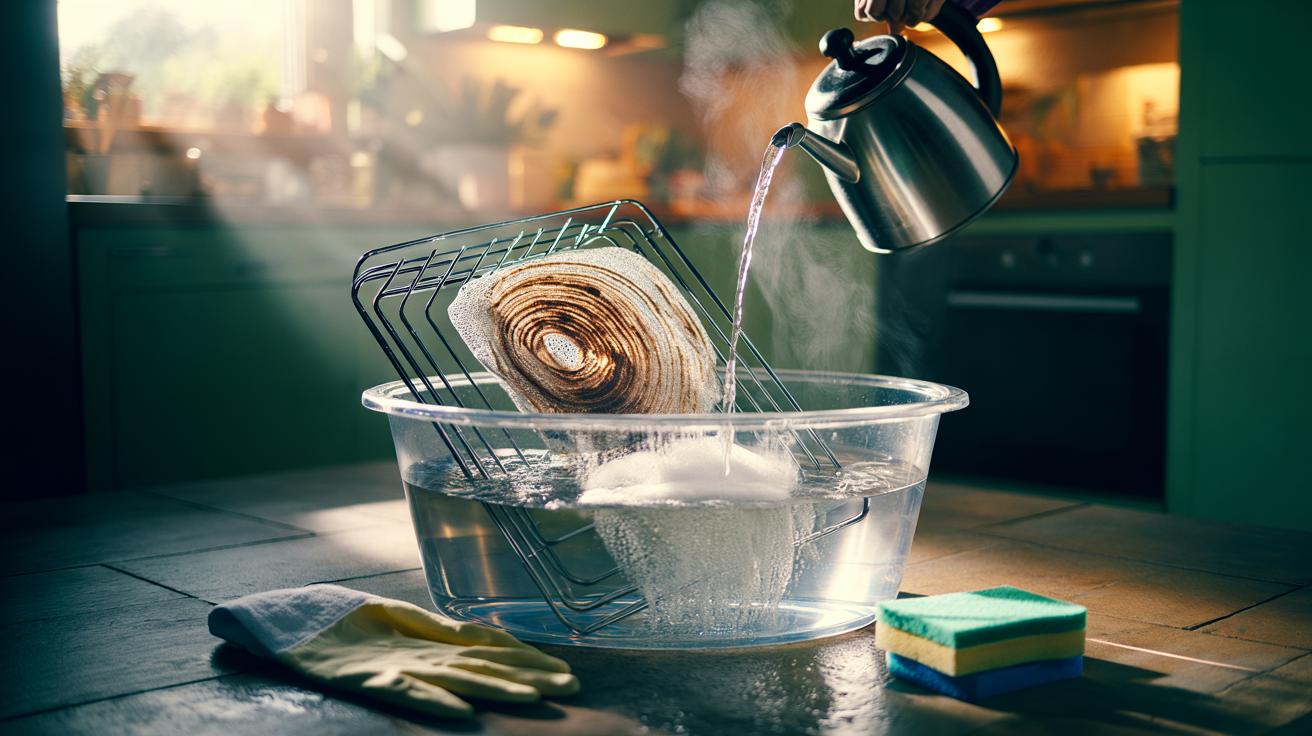
Few household chores bring such quiet satisfaction as sliding a gleaming set of oven racks back into place. The simplest route there isn’t elbow grease but a warm-bowl soak that lets heated water do the heavy lifting. Hot water loosens sticky grime—baked-on fats, sugars, and splatters—from the chrome bars, so a light scrub is all that’s required. Set a sturdy basin in the bath or on the kitchen floor, line it with a towel, and let time and temperature go to work. Heat softens stubborn residues and frees them from metal before you touch a sponge. Paired with a mild alkaline booster, the method is fast, frugal, and kind to most finishes.
The Science of Heat and Solubility
Grime on oven racks is a cocktail of polymerised grease, caramelised sugars, and protein-rich splashes that have cross-linked under high heat. Raise the water temperature and several things happen at once: viscosity drops, solubility increases, and surfactants can find and surround oily soils. Hot water also expands the metal fractionally, weakening the mechanical grip that residues maintain along the bars and joints. Heat is not simply warmer water; it’s an activator that accelerates the chemistry of clean. This is why a soak at 60–70°C often releases months of buildup that cold water won’t touch.
Alkalinity completes the picture. Mild alkalis such as sodium bicarbonate and carbonate promote emulsification, converting stubborn fats into washable films. Enzymes in dishwasher tablets target protein and starch residues, speeding breakdown without harsh abrasion. Chelators in detergents capture metal ions, preventing redeposition. Keep the water hot—not boiling—to protect chrome plating and rubber seals. The sweet spot is hot enough to mobilise grease, gentle enough to preserve the finish.
Setting Up the Warm-Bowl Soak
Choose a vessel that fully submerges the racks: a plastic storage box or the bathtub lined with an old towel to prevent scratches. Fill with hot tap water, then top up with a little kettle-boiled water to reach roughly 65°C—steamy but not scalding. Add one dishwasher tablet or two tablespoons of washing soda plus a squeeze of washing-up liquid. Slide the racks in, ensuring even coverage. Time is your ally here—let heat and chemistry loosen the bond while you do something else. For light soil, 20–40 minutes suffices; for heavy carbon, plan two to four hours.
Halfway through, flip the racks to expose shadowed corners. Wear gloves and use a non-scratch pad to whisk away the softened film; a nylon brush gets into the joints. Rinse with hot water, then dry with a microfibre cloth to banish spots. If residue lingers at the ends, target those areas with a paste of bicarbonate and water, leave for ten minutes, then rinse again. Let the racks cool before returning them to a warm oven to flash-dry and prevent streaks.
| Water Temp | Dwell Time | Additive | Notes |
|---|---|---|---|
| 50–55°C | 1–4 hours | Bicarbonate + washing-up liquid | Gentle soils; safe for frequent cleans |
| 60–70°C | 30–120 minutes | Dishwasher tablet | Enzymes tackle starch/protein; good all-rounder |
| 60–65°C | 90–180 minutes | Washing soda (sodium carbonate) | Stronger on grease; rinse thoroughly |
Additives That Boost the Soak
Bicarbonate of soda is the pantry hero: mildly alkaline, it lifts odours and loosens browned sugars without stripping finishes. Washing soda ups the alkalinity and cuts through polymerised fat faster, but demands a thorough rinse to avoid a chalky film. A dishwasher tablet offers a tidy blend—alkali, enzymes, and surfactants—ideal when you want set-and-forget convenience. For a finishing touch, a scrunched ball of aluminium foil used as a gentle pad can dislodge nubs along the rack’s underside. Pick the least aggressive helper that earns a clean result.
If burnt-on carbon persists, make a paste with bicarbonate and a little hot water, dab it on, and leave for 15 minutes before a light scrub. Oxygen bleach (sodium percarbonate) is effective for discolouration but avoid mixing with other chemicals. Never combine bleach with ammonia or unknown cleaners. Keep metal wool and harsh caustics for industrial grates; they risk scratching chrome and inviting rust. A routine warm soak after big roasts prevents the kind of buildup that needs drastic measures.
Materials, Safety, and Environmental Notes
Most domestic racks are chrome-plated steel and tolerate hot, mildly alkaline soaks. Avoid long immersions for racks with telescopic runners or ball bearings: manufacturers often pre-grease these, and soaking can strip lubrication. For enamelled trays, hot soapy water is typically safe; for bare aluminium accessories, keep alkalinity low to prevent blackening. Test a small area if you’re unsure of the finish. Protect baths and sinks with an old towel, wear washing-up gloves, and mind scald risks when topping up heat. Ventilate the room; steam carries odours from dissolved grease.
Be thoughtful about disposal. Let solids settle, skim them into the bin, and pour the cooled grey water down the drain with plenty of fresh water to follow. Choose phosphate-free detergents where possible and use only what you need—hot water already does most of the work. If you’re on a water meter, batch clean multiple items in one session. Small tweaks—lower chemical load, smarter heat—deliver a cleaner oven and a lighter footprint.
A warm-bowl soak works because it harnesses simple, reliable physics: heat, time, and mild alkalinity combine to release sticky grime without frantic scouring. Set the temperature right, choose a sensible additive, and let the process unravel the bonds that cooking has baked into place. The technique is gentle on chrome, pragmatic in a flat, and kinder to the planet than repeated sprays and scrapes. When you let hot water do the heavy lifting, cleaning becomes a quiet pause rather than a Saturday slog. What’s your go-to soak formula—and which small tweak has made the biggest difference in your kitchen clean-ups?
Did you like it?4.6/5 (29)