In a nutshell
- 🔥 Warm-soak science: Gentle heat softens thermoplastic binders, lowers viscosity, and enables capillary action to lift residues while protecting bristle tips and ferrule adhesives.
- 🛠️ Step-by-step: Scrape crusts, soak bristles-only at 45–55°C for acrylics, use a warm water-bath to nudge odourless mineral spirits/citrus restorer for oils, then comb, rinse, condition, reshape, and dry flat or hanging.
- 🧪 Match liquid to paint and bristle: Warm water + mild detergent for acrylic/latex; OMS or citrus-based restorer for oil/alkyd; keep temperatures lower for natural bristle and slightly higher for synthetics.
- ⚠️ Safety first: Warm solvents indirectly, ventilate, keep away from ignition sources, wear gloves, label containers, and dispose of residues at proper collection points.
- 🧯 Care vs replacement: Maintain by conditioning and wrapping to preserve flags; replace when the ferrule is loose, the heel stays clogged, or fibres lose spring and shape.
Old paintbrushes that feel like hedgehogs can often be coaxed back to life with a measured warm-soak. This is less about brute dissolving power and more about persuading hardened paint films to relax their grip. Gentle heat lowers viscosity, opens micro-cracks in the residue, and invites cleaning agents to flow into the bristle bundle. For water-based paints, warmth reactivates thermoplastic binders; for oils, it accelerates solvent action without brutalising fibres. Patience and moderate heat are your allies; boiling or scorching is not. With a bowl, a kettle, and a mindful eye on temperature, you can revive tools that once seemed beyond redemption, extend their service life, and keep a few quid in your pocket while cutting waste.
The Science of Heat and Dried Paint
The secret lies in how heat affects polymer chains and residues wedged deep within the bristles. Many water-borne paints are thermoplastic; warmth softens their film, nudging it closer to its practical glass transition, so the crust becomes flexible rather than brittle. That flexibility lets capillary action and mild detergents slide into the ferrule’s tight spaces, lifting particles without shredding the fibre tips that create a smooth finish. Too much heat, though, can distort the very bristles you’re trying to save.
Brush anatomy matters. Natural bristle (hog, ox) behaves like hair: scales open with heat and high pH, risking swelling and curl. Synthetics (nylon, polyester) tolerate warmth better but can kink if water exceeds safe limits. The ferrule often contains glue; old animal glues fail with hot water, and modern epoxies soften at high temperatures. Keep liquid below a simmer and never pour boiling water directly onto the bristle head. The goal is a controlled softening, not a hot bath that melts bonds or warps the profile.
Step-by-Step Warm-Soak Method
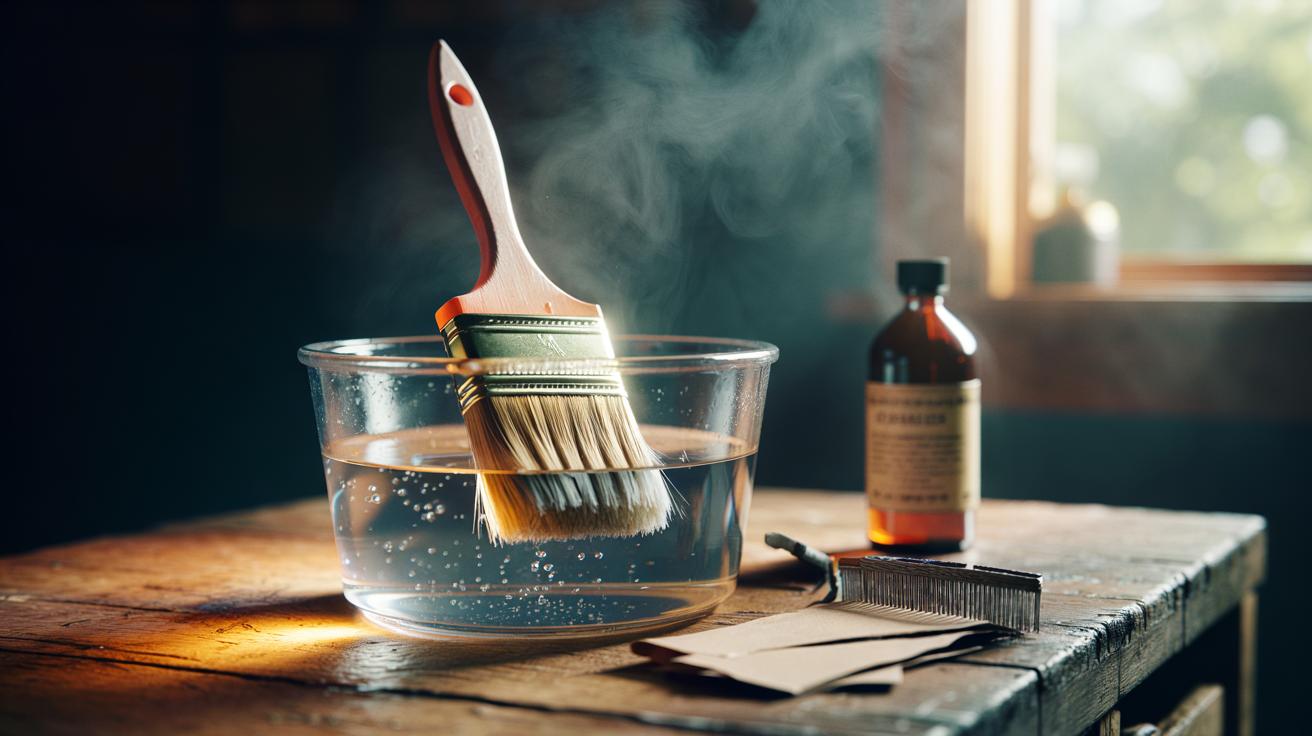
Begin by scraping off crusts with a plastic scraper and teasing the tips with a brush comb. Stand the brush in a jar so the liquid covers only the bristles and just kisses the edge of the ferrule. Add warm water at 45–55°C for acrylics, with a drop of washing-up liquid. Always submerge bristles downward; do not soak the handle, which can swell and split. Let it rest for 15–30 minutes while the softened film loosens.
For oil or alkyd residues, place a sealed jar of odourless mineral spirits or citrus-based restorer in a warm water bath to nudge the solvent’s temperature without direct heating. Massage the bristles against the jar wall, then comb from heel to tip. Never heat solvents on the hob or with an open flame. Rinse thoroughly: warm water for acrylics, a fresh solvent rinse for oils, then a mild soap wash to finish.
Condition the fibres with a touch of hair conditioner (natural) or brush soap (synthetic). Reshape to a clean edge, wrap in paper to hold the profile, and dry flat or hanging. Do not dry bristles-up while saturated; water creeps into the ferrule and loosens the plug, shortening the brush’s working life.
Choosing the Right Liquid and Temperature
Match the liquid to the paint and the bristle. For acrylic/latex, warm water with a mild detergent works best; for oil/alkyd, use odourless mineral spirits or a citrus ester restorer, warmed indirectly via a water bath. Natural bristle prefers slightly lower temperatures; synthetics tolerate a bit more heat but still dislike extremes. Test your process on one tired brush before committing the whole kit.
| Paint Type | Bristle Type | Soak Liquid | Temperature | Typical Time |
|---|---|---|---|---|
| Water-based (Acrylic/Latex) | Synthetic (Nylon/Polyester) | Warm water + mild detergent | 45–55°C | 15–40 minutes |
| Water-based (Acrylic/Latex) | Natural Bristle | Warm water + brush soap | 40–50°C | 15–30 minutes |
| Oil/Alkyd | Synthetic | Odourless mineral spirits (in water bath) | Ambient–40°C | 20–60 minutes |
| Oil/Alkyd | Natural Bristle | Citrus-based restorer (in water bath) | Ambient–35°C | 20–60 minutes |
Specialist brush soaps and eco restorers add lubricants that preserve flags and tips. Avoid strong alkalis on natural bristle. Do not mix chemicals, and never trap vapours in a sealed jar you intend to warm. If a brush is historic or high-end, test a tiny area first and keep notes on what temperature and dwell time deliver softness without splaying.
Safety, Care, and When to Replace
Control heat, ventilation, and contact. Wear gloves, keep windows cracked, and store liquids away from ignition sources. Solvents are flammable and produce invisible vapours; use the water-bath method to raise temperature safely and keep lids on between checks. If you smell a strong solvent odour, step back, ventilate, and reset your setup. Label jars clearly, and dispose of residues at a proper collection point rather than down the drain.
After revival, treat the tool well: rinse, condition, and dry horizontally. Wrap the head in paper to hold a crisp line, then hang once surface moisture has gone. Retire a brush when the ferrule is loose, the heel is clogged beyond combing, or the fibres have lost their flags and spring. The warm-soak can rescue many tools, but not every pensioned-off brush earns a second career. Balance your time against the price of a replacement and the precision you need on the next job.
Handled with care, the warm-soak method transforms a stubborn relic into a supple, reliable brush without brutal chemicals or needless waste. By understanding how heat loosens dried bristles—and by respecting limits on temperature, time, and solvent choice—you protect the profile that lays down clean, even coats. The real craft is in restraint: enough warmth to soften, enough patience to let the chemistry work. Which brush in your kit deserves a gentle revival tonight, and how will you tune heat and time to bring it back?
Did you like it?4.5/5 (28)