In a nutshell
- 🫧 Warm suds science: Surfactants form micelles that emulsify fats and loosen sugars; a short dwell time lets foam lift residue, while microfibre cloths capture suspended particles.
- 🧊 Prep to protect: Avoid thermal shock by letting cold glass warm before washing; choose pH‑neutral washing-up liquid, skip abrasives/solvents, cushion shelves in the sink, and check manuals for dishwasher suitability.
- 🧽 Gentle, effective method: Mix about 1 tsp per 1 litre in 35–40°C water; dwell 3–5 minutes, wipe in overlapping passes, use a plastic scraper for crusted sugar, then rinse thoroughly and dry lint‑free.
- 📊 Ratios and tools: Light dilution, warm rinse, microfibre plus soft brush; keep separate wash/dry cloths, and if streaks appear, reduce soap and extend rinsing for a clear, residue‑free finish.
- 🛡️ Hygiene and odour control: After raw-meat spills, use an EN 1276 food‑safe sanitiser; never mix bleach with acids; wipe seals, finish with a mild bicarbonate solution, and clean little and often to prevent smells.
It’s the quiet domestic alchemy every tidy household relies on: warm water, a squeeze of washing-up liquid, and the kind of buoyant lather that coaxes a dull, sticky fridge shelf back to clarity. In kitchens across the UK, gentle suds do the heavy lifting—softening congealed sauces, lifting milk rings, and cutting through dressing slicks without scratching plastic trims or tempering the glass. Use warmth, patience, and light agitation, not brute force. This is the restoration ritual that respects materials and preserves hygiene, a satisfying reset that also keeps flavours honest and odours in check. Here’s how that soft foam works, how to prepare shelves safely, and how to get the gleam without risking a crack or a smear.
Why Warm, Soapy Lather Works
At the heart of washing-up liquid are surfactants—molecules with a water-loving head and oil-loving tail. When whisked into warm water, they form micelles that wrap around greasy residues, from mayonnaise to butter smudges, and emulsify them into rinseable droplets. Warmth matters because heat loosens lipids, softens congealed fats, and speeds the break-up of sticky sugars from juice spills or jam. Letting the lather sit for a few minutes often saves more effort than vigorous scrubbing. That brief dwell gives surfactants time to creep beneath grime and lift it wholesale. Proteins from dried milk or egg relax in warmth, while micro-bubbles carry away loosened particles. The result is controlled cleaning: effective on stains yet kind to silicone trims, clear polystyrene bins, and tempered glass. Add a microfibre cloth for mechanical edge—its split fibres grab particles the foam has already suspended.
Preparing Shelves Without Damaging Them
Preparation is as important as the wash itself. Begin by clearing the fridge and removing shelves and bins carefully, noting their orientation and supports. Do not rush cold glass into hot water—thermal shock can shatter tempered panels. Let shelves sit at room temperature for 10–15 minutes. Line a sink or bathtub with a folded towel to cushion edges, then draw warm—not scalding—water. A mild, pH-neutral washing-up liquid suits most plastics and seals. Avoid abrasive pads, solvent-heavy degreasers, or gritty powders that can haze clear plastics and scratch glass. If labels or sticky tape linger, use your soapy solution first, reserving isopropyl alcohol for last resorts and testing on a discreet corner. When in doubt, check the fridge manual for dishwasher suitability—many glass shelves dislike high heat and harsh cycles. A soft brush or old toothbrush readies itself for grooves, frames, and drain channels where drips often congeal.
Step-By-Step: From Suds to Sparkle
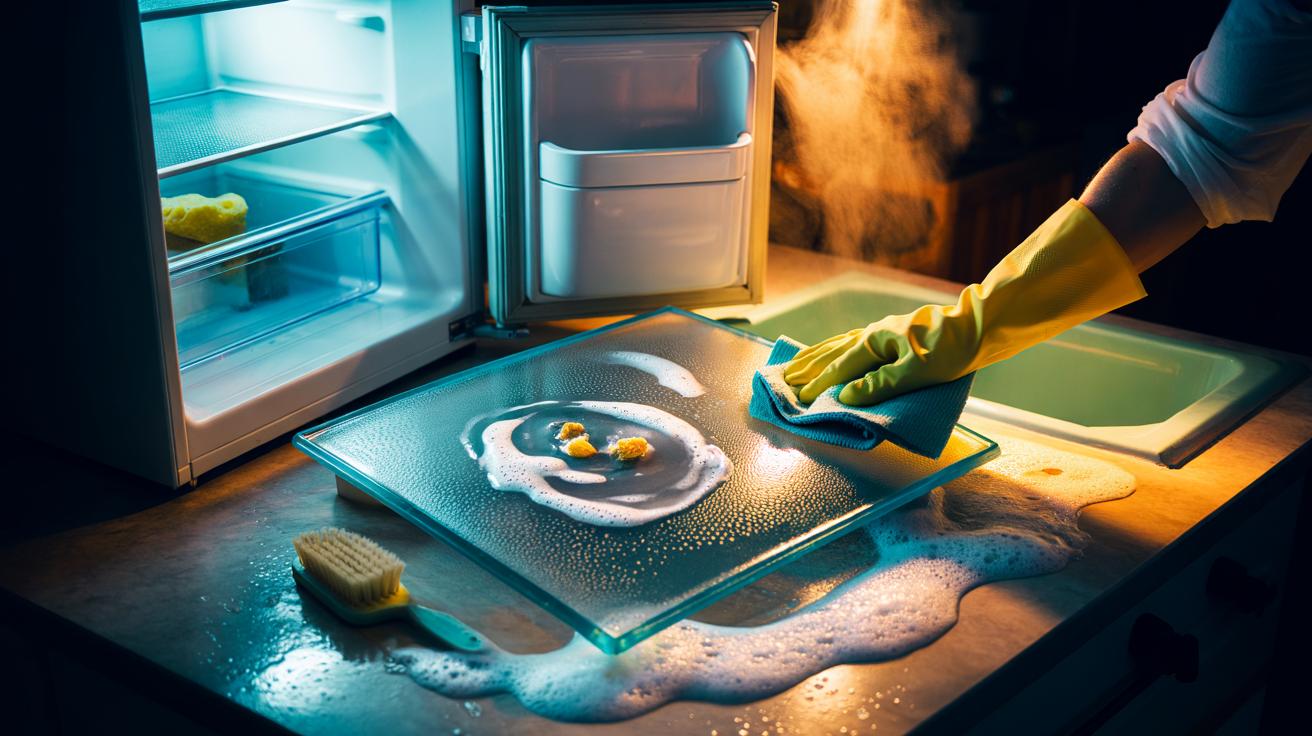
Mix a small bowl or sink of warm water with a modest squeeze of washing-up liquid—foam should feel silky rather than billowing. Submerge the shelf if possible, or lay it flat and ladle foam across the surface. Allow a 3–5 minute dwell on dried spills so the lather can do the loosening. Sweep a microfibre cloth in overlapping passes, then switch to a soft brush for seams, rims, and underneath lip edges where residue hides. For stubborn sugar crusts, reapply warm foam and use a plastic scraper held flat, letting the suds glide the blade. Rinse with clean warm water until no slick remains. Dry thoroughly with a lint-free cloth to prevent water spots, standing the shelf on edge for airflow. While the shelves dry, wipe the fridge interior with the same warm suds, then rinse and dry so returning shelves meet a clean cabinet.
Ratios, Temperatures, and Tools at a Glance
Consistency and restraint keep finishes pristine. A light dilution, moderate heat, and gentle tools are enough to dislodge everyday residues without wear. Think spa treatment for shelves, not workshop degrease. Use the guide below to keep conditions in the sweet spot for most domestic fridges and materials, from tempered glass to clear bins and seals. These are working ranges, not absolutes; if in doubt, start milder and extend dwell time rather than turning up the heat or pressure. Keep one cloth for washing and a separate, dry one for final buffing to a streak-free finish.
| Aspect | Recommended Setting | Notes |
|---|---|---|
| Water temperature | 35–40°C (warm) | Loosens fats without shocking glass |
| Soap-to-water ratio | 1 tsp per 1 litre | Enough surfactant for stable lather |
| Dwell time | 3–5 minutes | Extends action on dried spills |
| Tools | Microfibre cloth, soft brush | Avoid abrasives and scouring pads |
| Rinse | Warm, running water | Clear all suds for residue-free finish |
| Drying | Lint-free towel + air | Prevents spots and streaks |
If streaks appear, the common culprit is over-soaping—reduce the dose and extend the rinse. A quick final buff with a barely damp cloth, followed by a dry polish, restores that showroom clarity.
Hygiene, Odours, and Food Safety
Warm suds do more than shine; they remove the food films that harbour odours. Sugars from fruit leaks and proteins from meat juices can seed smells if left behind, so complete rinsing is non-negotiable. Always rinse off detergent before shelves return to food contact. For a hygiene boost after raw-meat spills, follow with a food-safe sanitiser certified to EN 1276, respecting label dilutions and contact times. Never mix bleach with acids like vinegar. To tame lingering odours, wipe with a mild bicarbonate solution after the wash, then rinse. Keep seals clean with the same warm lather and a soft brush; residue trapped in folds is a frequent source of whiffs. Before restocking, let the cabinet and shelves dry fully, then set a small open pot of bicarbonate inside to absorb new odours. Clean little and often—light, regular washes beat heroic rescues.
Gentle foam succeeds because it partners chemistry with care: surfactants lift, warmth loosens, and soft fibres finish the job without scarring the materials that keep food safe. By favouring mild heat, patient dwell, and thorough rinsing, you restore clarity while nipping odours in the bud. The reward is a fridge that looks fresher, smells neutral, and keeps flavours true. Will your next clean be a sprint after a spill or a swift weekly ritual that never lets grime take hold? What small changes—a softer brush, a cooler wash, a longer dwell—could make your shelves gleam with less effort next time?
Did you like it?4.4/5 (25)