In a nutshell
- 🧪 Chemistry: combo of white vinegar (acid) + washing-up liquid (surfactant) breaks down limescale, clearing glass and chrome in about 60 seconds for light buildup.
- 🧴 Recipe: 250 ml warm vinegar + 250 ml water + 1–2 tsp detergent; or 1 tbsp citric acid in 500 ml water; label bottle and adjust contact time 60 sec–5 min.
- 🧽 Method: Warm the area, spray evenly, wait, agitate corners, rinse thoroughly, then squeegee and buff with a microfibre for a streak-free finish.
- ⚠️ Safety & surfaces: Never mix with bleach; avoid natural stone; limit dwell on plated finishes; ventilate and don’t let solution dry on glass.
- 💷 Cost & upkeep: Around £0.20–£0.40 per 500 ml, low-waste and effective; daily “mist, rinse, squeegee” prevents heavy scale and preserves shine.
Britain’s hard water leaves a tell-tale film on shower screens and taps, but a simple home fix is cutting through the problem in record time. The so-called washing-up liquid shower spray blends everyday ingredients to break down limescale and soap scum fast, reviving glass and chrome with minimal effort. The method has spread through households because it’s cheap, low-fuss, and kinder to surfaces than harsh acids when used correctly. This spray can dissolve fresh limescale in as little as 60 seconds when deposits are light and you rinse promptly. Here’s how it works, what to mix, and the safe steps for turning a cloudy cubicle into a clear, streak-free finish—without a cupboard full of specialist products.
How the 60-Second Spray Works
The secret is a smart pairing: mild acid plus a surfactant. White vinegar brings acetic acid that reacts with calcium carbonate, the mineral behind limescale, breaking it into soluble salts and releasing a little fizz. Washing-up liquid supplies surfactants that lift greasy soap residue and body oils, letting the acid reach the mineral crust. Warmth speeds the process, so using warm vinegar or a shower run with hot water beforehand improves results. On fresh limescale, this combo can visibly clear glass and brighten fixtures in around 60 seconds; thicker deposits may need a few minutes.
The chemistry is gentle on most bathroom materials when contact time is controlled. Surfactants reduce streaking and help the solution cling to vertical glass, while the mild acidity avoids the pitting risk associated with stronger descalers. Rinsing with plenty of water neutralises the acid and flushes loosened residue. The result: quick clarity on screens, doors, tiles, and chrome—often with less elbow grease than scrubbing alone.
What You Need and Why It Works
Build the spray around pantry staples and a clean bottle. For everyday maintenance, mix 250 ml warm white vinegar, 250 ml water, and 1–2 teaspoons washing-up liquid. The vinegar dissolves scale; the detergent lifts grime and helps the spray coat surfaces evenly. Prefer fragrance-free? Choose an unscented detergent. Sensitive to vinegar smell? Swap in 1 tablespoon citric acid crystals dissolved in 500 ml warm water, plus 1 teaspoon detergent; it’s odour-light and equally effective on limescale. Label the bottle clearly and keep the solution away from children and pets.
Contact time is the lever you pull. For light haze, 60 seconds is often enough; for chalky rims or shower-door tracks, extend to 3–5 minutes before rinsing. Always spot-test on new fixtures. The mixture is inexpensive, quick to make, and beats many branded sprays on cost-per-clean—especially in hard-water areas where daily misting keeps buildup at bay.
| Item | Quantity/Ratio | Purpose | Notes |
|---|---|---|---|
| White vinegar | 250 ml (warm) | Dissolves limescale | Do not use on natural stone |
| Washing-up liquid | 1–2 tsp | Surfactant to lift soap scum | Unscented reduces lingering aromas |
| Water | 250 ml | Dilutes for sprayability | Warm improves action |
| Citric acid (alternative) | 1 tbsp in 500 ml water | Mild acid descaler | Odour-light substitute for vinegar |
| Contact time | 60 sec–5 min | Breakdown phase | Shorter on chrome to protect finish |
| Tools | Spray bottle, microfibre, squeegee | Apply, wipe, dry | Soft brush for corners |
| Approx. cost | £0.20–£0.40 per 500 ml | Low-cost routine | Refill from pantry staples |
Step-By-Step: From Cloudy Screen to Gleam
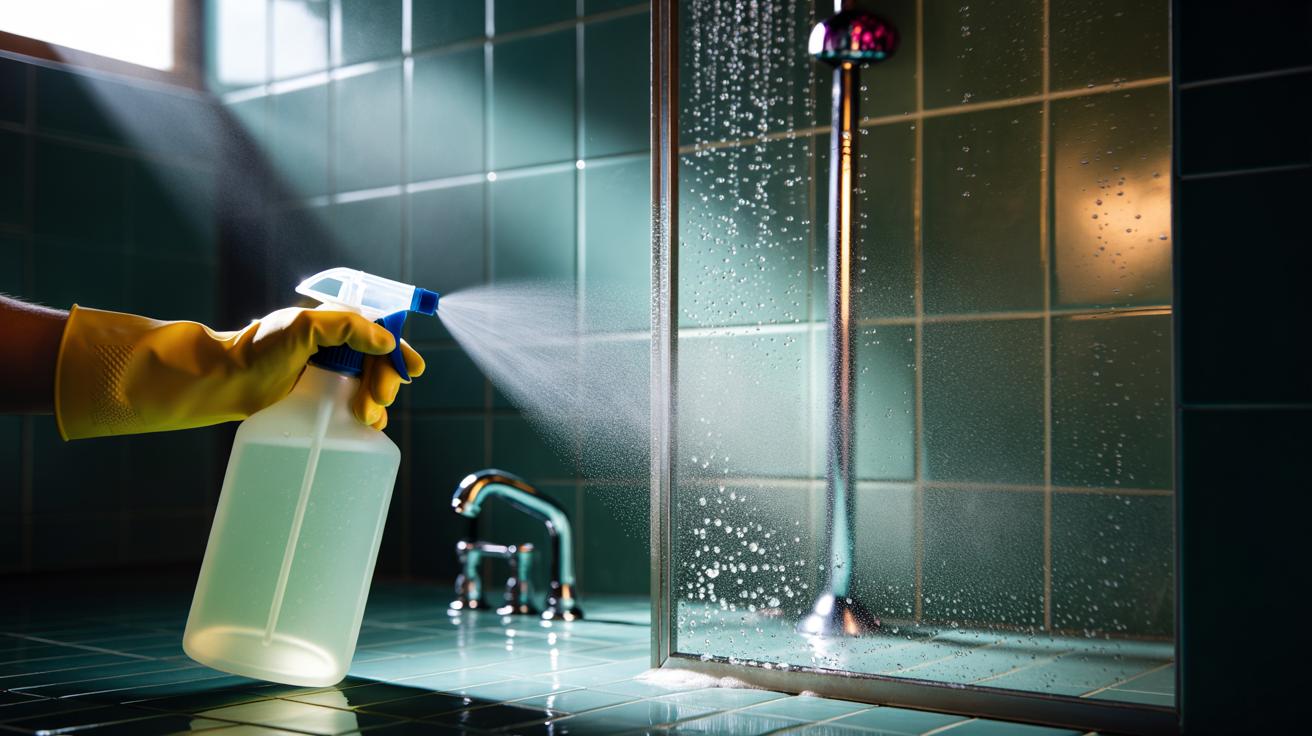
First, run the shower briefly on warm to soften deposits. Mist the glass, tiles, and metalwork until evenly coated but not dripping. Wait 60 seconds for a light haze; watch for faint fizzing on chalky patches. For stubborn rims and tap bases, leave up to 3 minutes. Agitate corners and tracks with a soft brush. Do not let the solution dry on the surface—top up with a light mist if needed. Wipe with a damp microfibre cloth, then rinse thoroughly with clean water.
Squeegee the glass from top to bottom and buff fixtures with a dry microfibre to stop new spots forming. On heavy scale, repeat once more rather than extending dwell time excessively. For shower heads, remove and soak the faceplate in the same mix for 10–15 minutes, then rinse. Keep a small bottle in the bathroom for a quick daily spritz after showers; that habit prevents the chalky buildup that demands harsher products.
Safety, Surfaces, and Common Pitfalls
Acidic cleaners and bleach are a dangerous duo. Never mix vinegar- or citric-acid-based sprays with bleach or bleach-containing products. Rinse the area first if you’ve used a bleach cleaner recently. Avoid natural stone like marble, limestone, and travertine; acids can etch and dull the surface. Limit contact time on plated finishes and unlacquered brass to protect sheen. If in doubt, do a patch test in a low-visibility spot and check the manufacturer’s care guide for your enclosure and taps.
Do not store the spray in metal containers; choose plastic or glass and label clearly. Keep away from eyes and wear light gloves if you have sensitive skin. Another common mistake is letting solution dry on glass, which can leave streaks—mist lightly and work in sections instead. Finally, ventilation matters: open a window or run the fan to disperse vinegar aroma quickly, leaving only the crisp shine of revived chrome and clear screens.
Cost, Sustainability, and Everyday Upkeep
Branded descalers promise speed, but the homemade approach wins on both price and plastic. A 500 ml batch typically costs under 40p, refilled from bulk white vinegar and a small squeeze of washing-up liquid. There’s less packaging to discard, and you needn’t juggle separate products for screens, tiles, and taps. Add a reusable microfibre cloth and a squeegee, and maintenance becomes a two-minute routine rather than a weekend chore—especially in hard-water postcodes across the South and East.
For prevention, adopt a “mist, rinse, squeegee” rhythm after the last shower of the day. That habit limits crusty rings and keeps the magic “60 seconds” claim realistic for quick refreshes. Softer water? You can dilute the vinegar slightly and still get excellent clarity. Prefer a scented bathroom? Add a few drops of essential oil to the detergent, not the vinegar, to avoid curdling. The payoff is a reliably sparkling enclosure, day after day.
In a landscape of pricey bathroom potions, the humble washing-up liquid and vinegar combo offers a nimble, low-waste fix for limescale that truly can work in a minute when buildup is light. Used with care—short contact times, thorough rinsing, and a quick squeegee—it protects glass and chrome while keeping costs down. Consistency is the real secret: little and often beats occasional battles with heavy scale. Will you mix up a bottle and try the 60-second routine, or do you swear by a favourite commercial descaler for your shower?
Did you like it?4.5/5 (26)