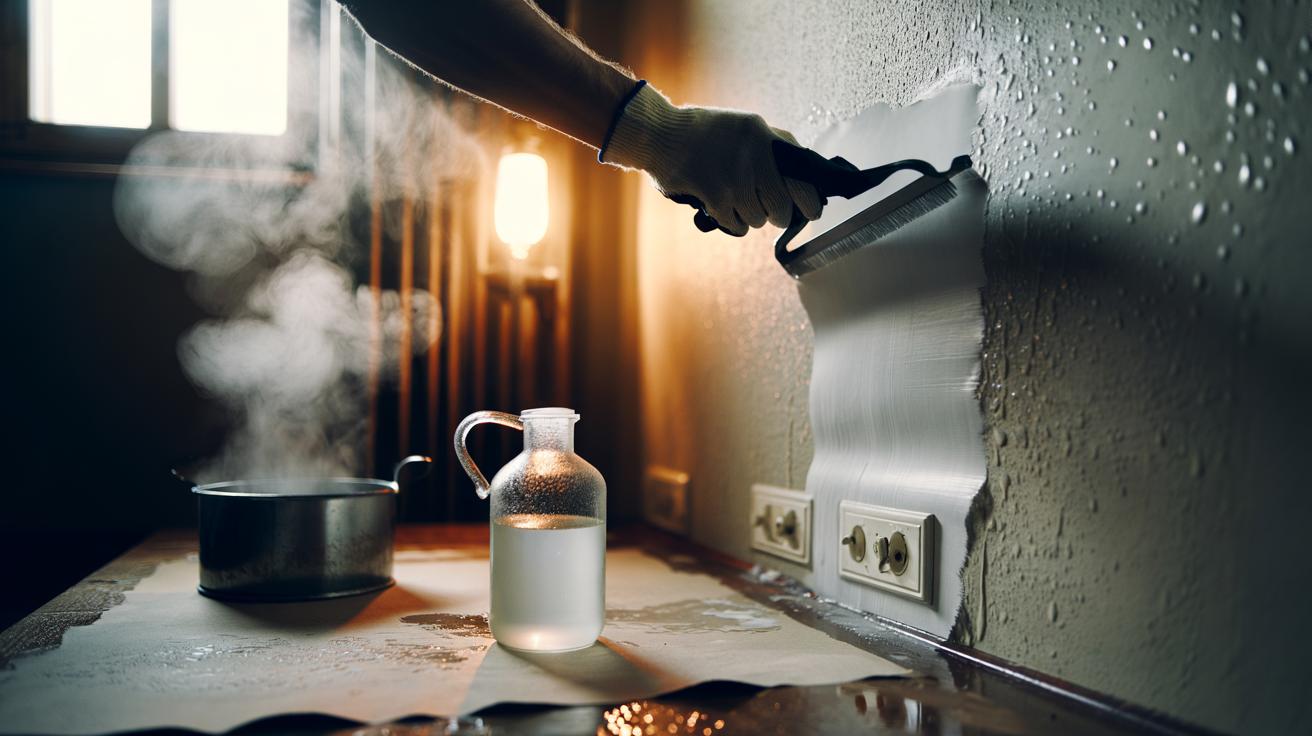
In a nutshell
- 🧪 The chemistry: steam delivers latent heat while mild acetic acid disrupts hydrogen bonding in starch/cellulose paste, so old wallpaper loosens in minutes.
- ⚙️ Method: mix 1:2 vinegar to just-boiled water with a drop of washing-up liquid, soak to a glossy sheen, allow 5–10 minutes dwell, and scrape at a low angle—keep the surface wet throughout.
- 🔧 Tough coverings: for vinyl-coated or painted papers, lightly score or peel the top layer to open channels, then extend dwell time for faster penetration.
- 🧰 Tools & safety: use a 100–150 mm scraper, heat-resistant gloves, and ventilation; re-wet every 3–5 minutes, protect electrics, and never mix vinegar with bleach.
- 🧼 Finish: wash residual paste with warm vinegar water, rinse clean, let walls dry, then lightly sand and prime—an inexpensive, low-fume alternative to hired steamers.
Old wallpaper that clings like barnacles can be persuaded to fall away with a jug of just-boiled water and a splash of white vinegar. This simple, low-cost trick leverages steam and mild acetic acid to relax stubborn paste so it slides off in wide, satisfying sheets. It spares you harsh solvents, expensive steamers, and hours of gouging at the plaster. With a little prep and patience, you’ll move from soak to scrape in minutes, not days. Think precision and timing, not force: keep the paper wet, let the chemistry work, then lift cleanly. Here’s the science, the method, and the kit that makes it fast, safe, and reliable.
Why Vinegar and Steam Work So Quickly
Most wallpaper adhesives are starch- or cellulose-based, sometimes blended with PVA. These polymers hold through hydrogen bonding and mechanical grip in the paper’s fibres and the wall’s pores. When you flood the surface with near-boiling water, the condensing steam delivers a surge of latent heat. That heat softens the paste’s polymer network while water acts as a plasticiser, lowering viscosity so bonds relax. Add white vinegar and you slightly acidify the mix: mild acetic acid helps disrupt hydrogen bonding and dissolves mineral residues that make old paste crusty and resistant.
Physics does the heavy lifting. Hot vapour penetrates micro-gaps, then dumps heat as it condenses, driving moisture deeper than a cold spray ever could. On vinyl-coated papers, a glossy layer slows ingress; light scoring opens channels so heat and moisture reach the backing swiftly. The crucial truth is simple: heat plus moisture undermines the paste in minutes; the vinegar hastens penetration and clean-up rather than replacing the steam. That synergy is why a kettle often beats a hired steamer in a small room.
Step-by-Step Method for Fast Wallpaper Removal
Protect floors and skirting, then isolate electrics at the consumer unit if you’ll work around sockets. Mix 1 part white vinegar with 2 parts just-boiled water in a heat-safe bucket or sprayer; add a teaspoon of washing-up liquid per litre to reduce surface tension for better wetting. For vinyl-coated or painted paper, lightly score—do not gouge—so the solution can travel. Soak a manageable area from top to bottom until it looks glassy-wet. Wait 5–10 minutes, topping up any dulled patches so they never dry. Continuous wet sheen equals rapid bond failure.
Begin at a seam or bottom edge, easing a wide scraper beneath at a shallow angle. Work with the bond, not against it—lift, don’t pry. Re-soak stubborn zones and extend dwell time rather than forcing the blade. Once the paper is off, wash residual paste with warm vinegar water, then a clean rinse. Let walls dry fully before filling or priming. Wear heat-resistant gloves, ventilate well, and never mix vinegar with bleach-based cleaners.
Ratios, Timings, and Tools at a Glance
If you prefer numbers to guesswork, these guidelines keep the process brisk and controlled. The mix should be hot enough to steam on contact yet safe to handle with gloves. Keep a rotation: soak, scrape adjacent, return to re-wet the first area. Watch the surface—shine means active penetration; dullness means re-soak. For thick anaglypta or multiple layers, peel any loose top sheet first, then treat the backing paper as normal. A small, steady workflow beats drenching an entire wall and racing against evaporation.
| Task | Spec / Ratio | Time Guide | Notes |
|---|---|---|---|
| Mix | 1:2 vinegar to just-boiled water | Immediate use | For very stubborn paste, try 1:1 |
| Wetting | Flood to glossy sheen | Re-wet every 3–5 min | Add a drop of washing-up liquid |
| Dwell | Keep surface wet | 5–10 min | Longer for multiple layers |
| Vinyl papers | Score or peel top layer | +5 min | Create micro-channels for steam |
| Scraper | 100–150 mm filling knife | Slow, steady passes | Low angle to protect plaster |
| Clean-down | Warm vinegar rinse, then water | 10–15 min | Removes paste haze |
| Safety | Gloves, ventilation | Throughout | Cover sockets; no bleach mixes |
These numbers are guides, not shackles. Trust the signs: softened seams, a slackened pull, paste turning creamy under the blade. If resistance returns, it’s almost always dryness. Keep the paper shiny-wet; dryness is the enemy of speed. With the right rhythm, the wall sheds its skin cleanly, ready for a light sand and a breathable primer before your next finish.
Using near-boiling water with a dash of vinegar turns a dreaded strip-out into a measured routine anchored in heat transfer and gentle chemistry. It’s inexpensive, low-fume, and effective on everything from flaky 1970s florals to recent liners. The keys are surface prep, relentless wetting, and patience with dwell time, not brute force. Once the last strip drops away, you’re left with sound walls that clean easily and dry quickly, ready for the next chapter of the room. What space in your home is crying out for liberation—and what fresh texture or colour will you choose to replace the tired paper?
Did you like it?4.5/5 (23)