In a nutshell
- 🧪 Acetic acid in white vinegar dissolves salts and lowers surface tension, loosening fingerprint residues on stainless steel while the paper towel lifts softened oils without scratching.
- 🧼 Method: use white distilled vinegar (neat or 1:1 with water), lay a damp paper towel for a short dwell time (2–3 minutes), wipe with the grain, then rinse and dry buff for a streak-free finish.
- 🛡️ Stainless safety: brief acid contact won’t harm the chromium oxide passive layer; avoid prolonged soaking, keep liquid out of seams, and patch-test discreetly on sensitive finishes.
- ⚠️ Precautions: never mix vinegar with bleach, keep acids off natural stone and delicate seals, improve ventilation, and use microfiber to reduce streaking on polished steel.
- 🔄 Alternatives: tackle heavy grease with dish soap, quick prints with isopropyl alcohol, limescale with citric acid, and periodic refreshes with a dedicated stainless cleaner.
Fingerprints on stainless steel splashbacks, fridges, and kettles are the quiet saboteurs of a pristine kitchen. A bottle of cheap white vinegar and a sheet of kitchen roll can restore that showroom gleam in minutes, and the trick is rooted in chemistry, not folklore. The mild acidity in vinegar loosens salts and residues that anchor smudges, while the paper towel lifts softened grime without scratching. Used correctly, it’s fast, safe, and strikingly effective. As homes embrace brushed-metal finishes across appliances, taps, and handles, simple, low-cost routines matter. Here’s how acetic acid earns its keep, why stainless survives the treatment, and when to choose a different approach.
How Mild Acids Lift Fingerprints from Stainless Steel
Human fingerprints are a cocktail of skin oils, salts, amino acids, and moisture. On stainless steel, salts and trace minerals help those oils cling, scattering light and making smears visible. Vinegar’s acetic acid (around 5%) gently dissolves the mineral fraction and lowers surface tension, letting water creep under the smudge. The wipe then removes oils mechanically, which is why the humble paper towel matters. Brief contact with household vinegar will not strip the protective chromium-oxide film that makes stainless “stainless”. That passive layer reforms in air, provided exposure isn’t prolonged or aggressive.
Think of vinegar as a selective softener rather than a heavy degreaser. It excels at undoing the bonds between salts, light grime, and the steel surface, especially on brushed finishes where micro-grooves trap residue. It won’t cut baked-on grease alone, but it preps the scene: after a short dwell, oils lift readily with a with-the-grain wipe. Rinsing with clean water prevents streaks, while a dry buff restores the metal’s crisp, even reflectivity.
The Vinegar-and-Paper-Towel Method, Step by Step
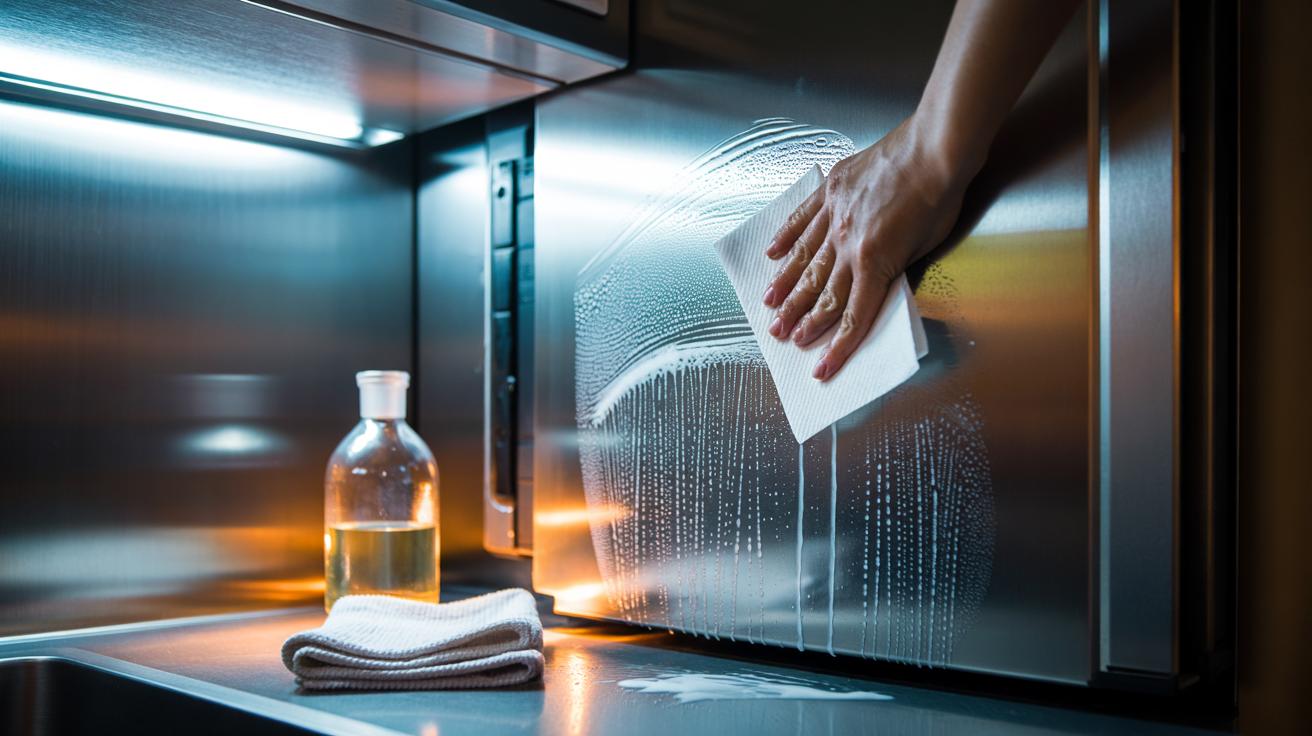
Start with white distilled vinegar. For routine prints, mix 1:1 with water; for stubborn smears, use it neat. Lightly spray or dampen a paper towel and lay it flat on the steel so it makes full contact. Allow 2–3 minutes of dwell time—just enough for the acid to loosen residues. Do not flood edges or seams where liquid can creep inside panels. Remove the towel and wipe in the direction of the grain using gentle, even strokes. This preserves the uniform look of brushed steel and limits micro-marring.
Follow with a clean, damp microfiber to lift any remaining film, then dry thoroughly. A single drop of mineral oil on a microfiber can be buffed in to add a whisper-thin barrier that resists new prints. Avoid abrasive pads and gritty paper towels. Never mix vinegar with bleach or chlorine-based cleaners—this can release toxic gases. If you’re cleaning near natural stone worktops, mask the area; acids etch marble and limestone. Always patch-test on a discreet section of the appliance door or panel.
Safety Tips and Material Compatibility
Stainless owes its durability to a tight, self-healing chromium oxide layer. Household vinegar won’t harm it with short exposure, but prolonged soaking under saturated towels can invite uneven etching or water spots, especially in areas with hard water. Rinse and dry thoroughly to stop the acid’s action. Keep acids off porous stones, cementitious grout, and certain rubber seals; these materials can swell or etch. If in doubt, apply vinegar sparingly to the towel rather than spraying directly onto the surface.
Watch the finish. Mirrored or highly polished steel shows streaks more readily; use a finer microfiber and shorter dwell times. For brushed steel, always wipe with the grain. In coastal homes or where salt air is common, promptly dry after cleaning to limit chloride-related staining. Good ventilation, light nitrile gloves, and distilled water for the final rinse reduce streaking and skin irritation. If the steel looks rainbowed or hazy after cleaning, flush with water and rebuff; the film is typically residual mineral deposit, not permanent damage.
Alternatives, Comparisons, and When to Upgrade Your Routine
Vinegar is a brilliant first responder, yet it isn’t universal. For heavy kitchen grease, dish soap—a surfactant—outperforms acids; use it first, then switch to vinegar for the finishing pass. Fresh prints vanish with isopropyl alcohol, which evaporates quickly and leaves minimal residue. For limescale halos around taps, a targeted citric acid solution can be slightly more effective than vinegar. When fine scratches or cloudy “ghosting” persist, a dedicated stainless cleaner with polishing agents may be the right upgrade.
Choose the lightest tool that solves the problem and stop as soon as the surface looks uniform. That habit protects the passive layer, saves time, and avoids buildup. Keep separate cloths for washing, acid steps, and drying to prevent cross-contamination. If your appliance manual warns against acids, follow the manufacturer’s advice—some coatings or printed logos need gentler care.
| Method | What It Removes | Finish Impact | Main Risks | Best Use |
|---|---|---|---|---|
| Vinegar (5%) | Salts, light oils, water marks | Brightens, low residue | Etching on stone; streaks if not dried | Daily prints, tap halos |
| Dish Soap | Grease, cooking films | Neutral; needs rinse | Smearing if under-rinsed | Cooker hoods, splashbacks |
| Isopropyl Alcohol | Fresh fingerprints, inks | Streak-free, fast dry | Flammable; can dry seals | Handles, screens, controls |
| Citric Acid | Limescale, mineral rings | Clarity on hard-water stains | Etches stone; overuse dulls sheen | Taps, sinks, edges |
| Stainless Cleaner | Smears, fine haze | Polished finish, protective film | Build-up if overapplied | Monthly reset, deep refresh |
In the end, the vinegar-and-paper-towel tactic succeeds because it plays to stainless steel’s strengths: a resilient passive layer and a surface that rewards tidy, with-the-grain care. With short dwell times, a rinse, and a dry buff, you reclaim that crisp metallic glow without spending a fortune or loading cupboards with specialty sprays. Keep vinegar for prints, soap for grease, and alcohol for quick touch-ups, then polish only when needed. The simplest kit often delivers the sharpest shine. How will you adapt this routine to the different finishes and problem spots across your kitchen and utility spaces?
Did you like it?4.4/5 (28)