In a nutshell
- 🍋 How it works: citric acid lowers pH and chelates calcium/magnesium, dissolving limescale mineral film so glasses regain sparkle.
- 🔎 Diagnose first: distinguish mineral film from detergent haze and irreversible etching; a warm citric acid soak that clears haze confirms it’s removable.
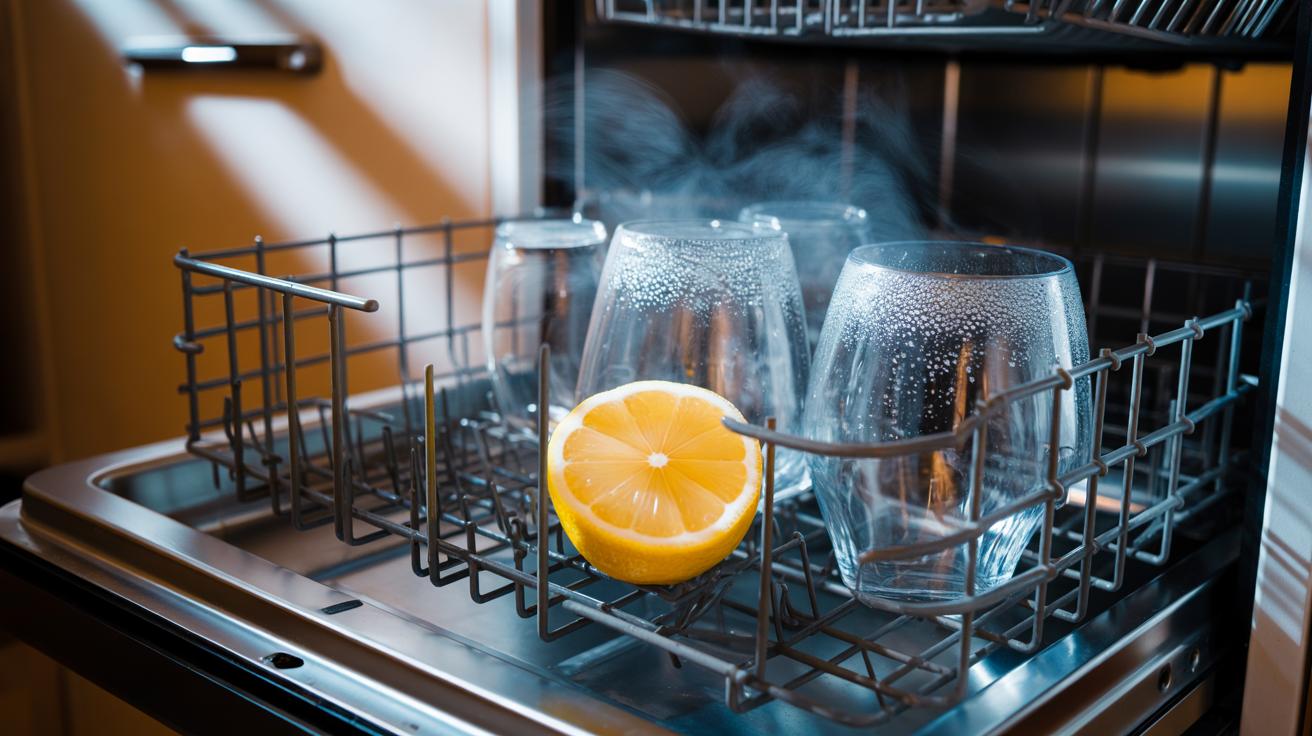
- 🧩 Method and settings: place a half lemon cut-side up on the top rack or in the cutlery basket; run 50–60°C with normal detergent; keep rinse aid and dishwasher salt properly set.
- ⚠️ Risks and limits: lemon won’t fix etched glass; keep aluminium and carbon steel knives out; use measured descalers for deep machine cleaning.
- 🌍 UK context: hard-water homes benefit most—maintain filters, avoid detergent overdosing, and use citrus sparingly as a polish alongside core water-softening steps.
It’s the kitchen hack that refuses to die: pop a slice of lemon into the dishwasher and your cloudy tumblers emerge gleaming. In a country where hard water is a daily nuisance, the trick sounds like alchemy. It isn’t. The magic is chemistry—more precisely, the mild bite of citric acid working on mineral film. Lemon won’t cure every type of cloudiness, but used wisely it can lift deposits that detergent and rinse aid often miss. The key is knowing whether you’re battling limescale, leftover detergent, or permanent etching, then deploying the citrus where it helps rather than harms.
Why Glasses Go Cloudy in Hard-Water Britain
If your glassware looks foggy straight from a hot wash, you’re usually seeing a film of calcium and magnesium salts left by hard water. These minerals precipitate at high temperatures and cling to the microscopic textures of glass, creating that stubborn veil. Detergent residue is another culprit, especially with overdosing or a weak rinse. Not all cloudiness is the same: mineral film feels slightly gritty and improves with acid, while detergent haze feels slick and responds to thorough rinsing and the right rinse aid.
The third category is etching—actual damage to the glass surface caused by prolonged high heat, high alkalinity, or inadequate water softening. Etched glass looks milky even when dry and won’t improve with any treatment. UK households in chalky regions are particularly prone to mineral film if they neglect dishwasher salt. If cloudiness improved after a soak in warm water with a pinch of citric acid, it was mineral film, not etching. That diagnostic step saves both disappointment and wasted effort.
How Lemon Acid Works Inside the Dishwasher
Citric acid from lemon lowers local pH inside the machine, helping to dissolve alkaline mineral deposits. It does this in two ways: it protonates carbonate and bicarbonate (the basis of limescale), making them more soluble, and it chelates metal ions like calcium and magnesium, loosening their grip on glass. This is why a simple slice can cut through the grey veil that defeats neutral rinses. The effect complements, rather than replaces, detergent enzymes and surfactants. Where enzymes remove food soils, acid tackles the inorganic film that makes clean glasses look dull.
Placement matters. A half lemon in the cutlery basket or top tray allows water to leach acid gently across the cycle. Avoid squeezing juice directly into the dispenser; it can alter detergent performance. For stubborn build-up, a second slice mid-load can help. Lemon does not repair etched glass, and heavy use is unwise with reactive metals. Proper rinse aid and correctly set dishwasher salt remain the backbone of prevention; the citrus is a targeted assist.
Step-by-Step Method and Best Practices
First, confirm you’re tackling mineral film: soak a cloudy glass in warm water with a teaspoon of citric acid crystals for ten minutes. If it clears, proceed. Cut a fresh lemon in half; place one half cut-side up in the cutlery basket or secure a thick slice on the top rack. Load glasses with space between them. Choose a standard 50–60°C programme with your usual detergent and rinse aid. The aim is a mild, even acid presence—not a lemon bath. After the cycle, inspect and, if needed, repeat once. Dry with the door ajar to limit condensation marks.
Use the lemon trick occasionally—weekly in hard-water hotspots or monthly in softer regions. Keep knives and aluminium items out when using acid; 18/10 stainless steel is typically fine, but cheap coatings can pit. Maintain the basics: keep the filter clean, top up dishwasher salt to the hardness setting, and don’t overdose detergent. Good hydraulics, correct chemistry, and a little citrus go further than any viral hack.
| Option | What It Does | Best For | Watch-outs |
|---|---|---|---|
| Lemon slice | Mild acid dissolves mineral film | Cloudy glasses, light limescale | Avoid with carbon steel knives, aluminium |
| Citric acid powder | Stronger, consistent descaling | Heavy build-up on glass and machine | Follow dosage; keep from delicate metals |
| Rinse aid | Improves sheeting, reduces spotting | Preventive clarity and quick drying | Adjust dose to stop streaks |
| Dishwasher salt | Softens water to stop limescale | Hard-water areas across the UK | Set hardness correctly in the machine |
When to Skip the Lemon: Risks, Limits, and Alternatives
If a test soak doesn’t shift the haze, you’re likely facing etching, and no amount of acid will restore clarity. In that case, lower wash temperature, ensure the softener is set to local hardness, and replace damaged glasses. Be cautious with reactive metals: aluminium, carbon steel, and some decorative finishes can dull or pit in acidic conditions. Remove prized knives and vintage glass from any experimental cycle. Also note that citrus oils in peel can leave a scent that not everyone loves; a clear-water rinse programme afterwards removes it.
For deep cleaning the machine, run an empty cycle with a measured citric acid cleaner or a manufacturer-approved descaler rather than stuffing in extra fruit. Check your supplier’s instructions for dishwasher salt and keep rinse aid topped up for the long game. If your postcode sits in a very hard-water band, consider a whole-house softener. The lemon trick is a smart, occasional polish—not a substitute for proper water management.
The lemon-in-dishwasher trick earns its reputation because mild acid chemistry cuts through the mineral film that makes clean glasses look tired. Treat it as a tactical boost alongside the fundamentals: the right detergent dose, reliable rinse aid, and correctly set dishwasher salt. Use citrus sparingly, keep reactive metals out, and verify results with a quick soak test so you don’t chase the impossible fix of etched glass. Clarity comes from prevention first, polish second. Where does your home sit on the hard-water map—and what combination of steps will you try to make your glasses truly sparkle?
Did you like it?4.4/5 (20)