In a nutshell
- 🧼 Vinegar steam loosens microwave splatters as hot vapour condenses on cool walls, delivering latent heat that softens dried sauces and grease for effortless wiping.
- ♨️ Follow a quick routine: 250 ml water + 2–3 tbsp white vinegar (acetic acid) in a microwave-safe glass, heat 3–5 minutes at 800–1000 W, then let stand 2–3 minutes before a full wipe-down.
- 🧪 The science: heat lowers residue viscosity, vinegar reduces surface tension and disrupts bonds, and mild emulsification lifts fats—no harsh fumes or abrasion needed.
- ⚠️ Prioritise safety: use a stable vessel, avoid sealed containers, watch for superheating, open the door away from your face, and handle with gloves; tackle odours with a brief bicarbonate wipe and ventilation.
- 🕒 For upkeep, do a weekly 2-minute steam, clean gaskets and the ceiling, and prevent mess with a vented cover, gentler power, and stirring—keeping cleans quicker and interiors protected.
When your microwave looks like a Jackson Pollock after a week of reheats, there’s a simple, science-backed rescue: vinegar steam. This kitchen staple turns into a cleaning ally the moment heat meets moisture. As the microwave warms a bowl of water and vinegar, vapour floods the cavity, loosening stubborn splatters that seemed fused to the walls. The process is quick, low-cost, and kinder than harsh chemicals, yet it still tackles odours and grease. With the right ratio and a short rest period, you can wipe away residue in seconds. Acetic acid in vinegar does the chemistry; heat and humidity do the heavy lifting.
Vinegar Steam Method Explained
The technique relies on a neat interplay of physics and chemistry. Microwaves excite water molecules in a vinegar solution, generating humid heat that permeates dried-on sauce and grease. As condensation forms on cool interior surfaces, it transfers latent heat directly to grime, softening it. At the same time, the acetic acid in vinegar helps break down lipid films and food sugars that have browned or polymerised. Gentle, even heat plus a mild acid is enough to undo days of splatter without scrubbing.
Think of it as pre-soaking your microwave. The vapour works into micro-cracks of residue, reducing adhesion so cloth fibres can lift debris in one pass. Because steam surrounds every surface, it reaches corners, the ceiling, and the door gasket where crumbs collect. Steam penetration is the reason this method feels effortless: it loosens, then you lift. A minute or two of contact time is usually all that’s needed for everyday mess.
Vinegar also assists with odour control. Aromatic compounds from heated foods cling to interior plastics and coatings; a brief steam cycle helps release them. Open the door cautiously after heating to avoid a faceful of hot vapour and let the cavity vent for a moment. Finish with a soft microfibre cloth and, if needed, a tiny dab of washing-up liquid for the turntable ring.
Step-by-Step Routine and Ratios
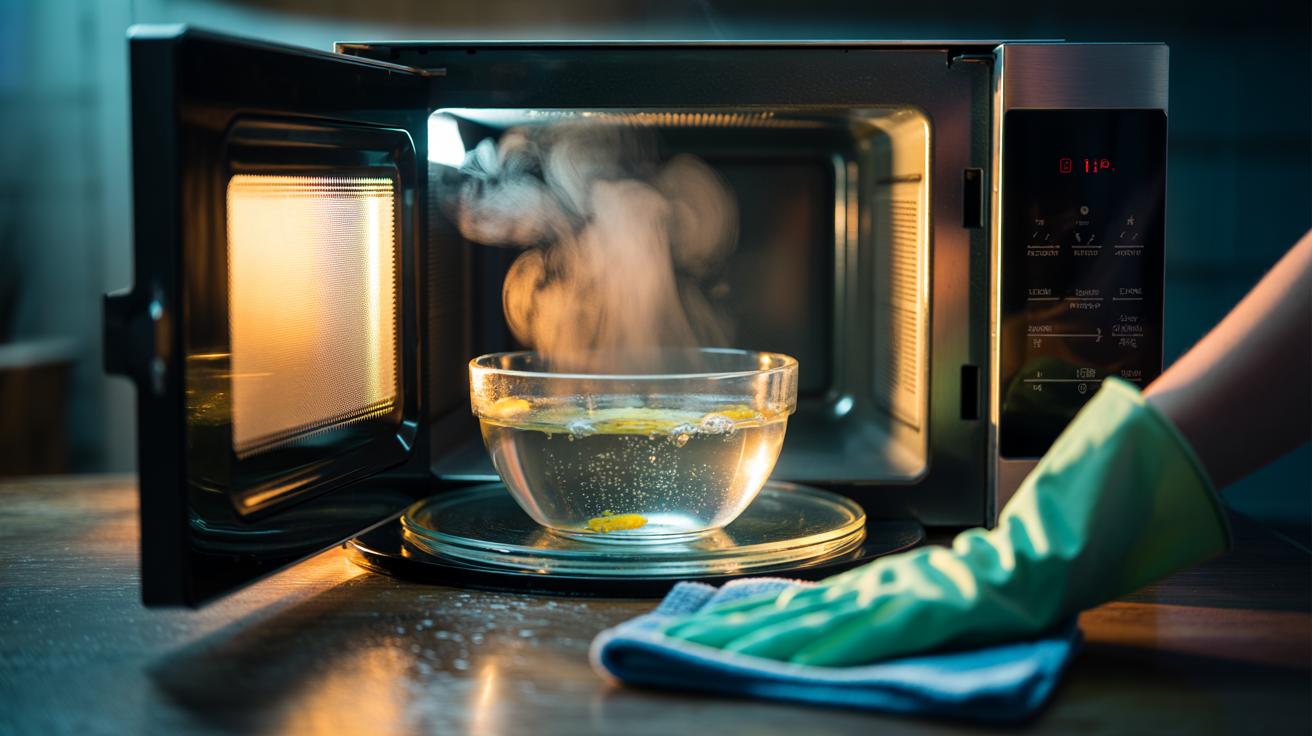
Start with a microwave-safe glass bowl or jug. Mix 250 ml water with 2–3 tablespoons of white vinegar. Place it on the turntable and heat on high for 3–5 minutes, depending on wattage. Always let the bowl stand inside for at least 2 minutes after the timer stops so the steam can continue working and the liquid settles. Carefully remove the bowl, then wipe walls, ceiling, door, and turntable with a damp cloth. For baked-on spots, touch the area with a warm, wrung-out cloth for a few seconds, then lift. Optional: add a lemon slice for a fresher scent, but vinegar alone does the job.
| Item | Quantity/Setting | Notes |
|---|---|---|
| Water | 250 ml | Enough to generate sustained steam |
| White vinegar | 2–3 tbsp | 5–8% acetic acid typical household strength |
| Microwave power | 800–1000 W | Heat 3–5 min; longer for lower wattage |
| Stand time | 2–3 min | Essential for steam penetration |
If your machine is very dirty, repeat once with fresh solution. Dry surfaces to prevent streaks, then clean the door seal with a cotton bud dipped in the mix. Do not use sealed containers, and avoid metal trim. A reusable microwave cover during cooking will drastically reduce future splatter, cutting cleaning time to under a minute.
Why Heat Loosens Splatters: The Science
Grime in a microwave is a cocktail of starches, proteins, and fats. When food overheats, sugars caramelise and oils can partially polymerise, creating tacky films that cling to enamel and glass. Steam reverses some of this by raising the temperature of residues to a point where their viscosity drops and they swell with moisture. As water condenses, it releases large amounts of latent heat directly onto the residue, softening it without mechanical abrasion. This targeted heat delivery is why a light wipe suddenly works.
Acetic acid contributes by disrupting ionic and hydrogen bonds in dried sauces and reducing surface tension, helping moisture creep underneath the splatter. It also mildly emulsifies grease so it lifts cleanly. The combination of heat, humidity, and a weak acid is powerful yet gentle on most interiors. No harsh fumes, no scratched coatings, and far less elbow grease than abrasive powders.
There’s also a materials angle: interior walls warm more slowly than the vapour, encouraging condensation precisely where you need it. That microfilm of hot water acts like a temporary soaking layer, loosening the boundary between residue and surface. Give the steam time to work, and you transform stuck-on grime into wipe-away moisture.
Safety, Odour Control, and Maintenance
Safety first: use a wide, stable vessel and keep the liquid volume sensible to avoid boil-overs. Stir before heating if you’re wary of superheating, and handle the bowl with oven gloves. Open the door slowly and angle your face away to avoid hot steam. If your microwave has a humidity sensor, start with a shorter cycle to prevent auto-shutoff from interrupting the steam build-up.
For stubborn smells—fish, curry, or reheated takeaways—follow the vinegar steam with a wipe using a teaspoon of bicarbonate of soda dissolved in warm water. Rinse and dry. Keep the door ajar for a few minutes to vent. Clean the air filter on combination models according to the manual. Regular airing prevents odour molecules from embedding in plastics.
Make it routine: a weekly two-minute steam after Sunday lunch keeps splatter from setting hard. Wipe the gasket and the ceiling each time; those are the usual culprits. Preventive measures pay off—use a vented cover, reduce power for saucy foods, and pause to stir. The less violent the reheat, the fewer explosions you’ll need to clean. This steady approach extends the life of the interior coating and keeps the kitchen smelling fresh.
Vinegar steam is the rare household trick that earns its reputation: swift, inexpensive, and anchored in real chemistry. Heat energises moisture; steam loosens the grip of dried food; a mild acid helps break it apart. With a couple of minutes’ patience and a single cloth, the microwave goes from spattered to spotless, and lingering odours recede. Adopt the method weekly and you’ll avoid heavy scrubbing entirely. What tweaks—different ratios, citrus additions, or timing—will you try to tailor the routine to your microwave and cooking habits?
Did you like it?4.5/5 (20)