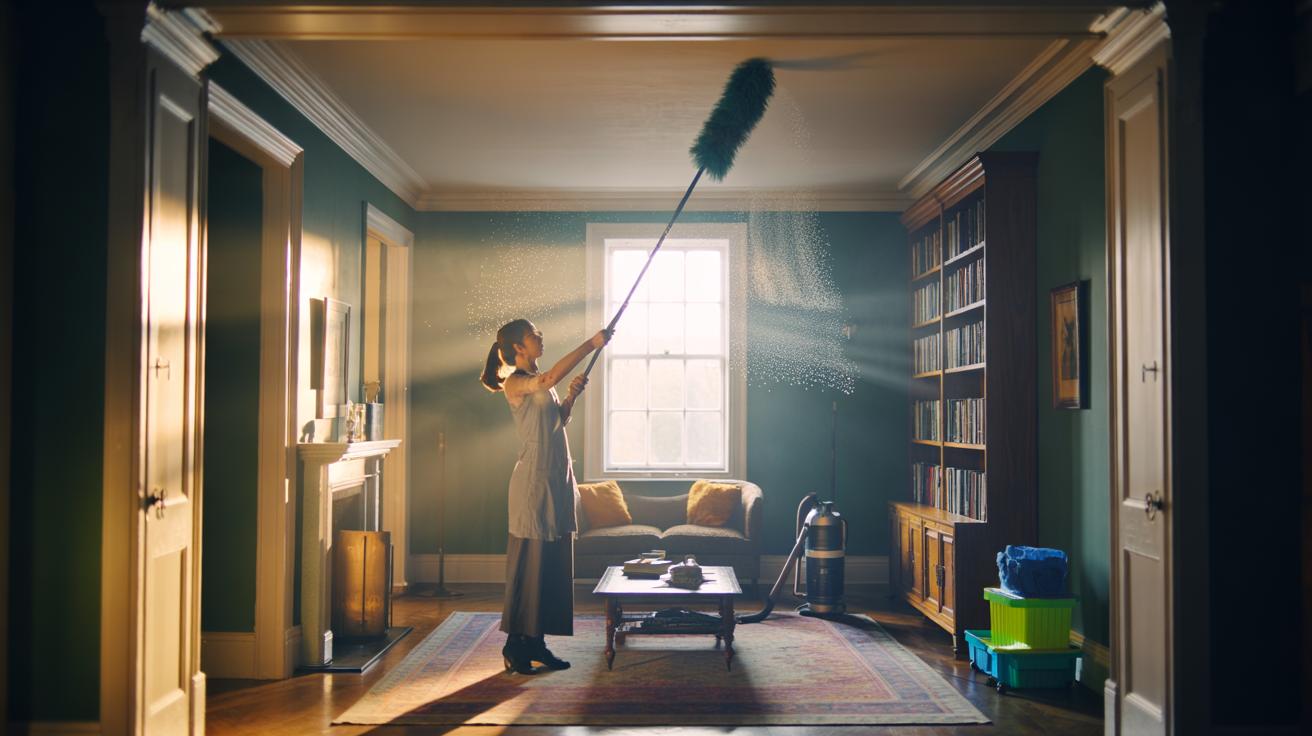
In a nutshell
- 🧭 Top-to-bottom sequencing harnesses gravity, prevents dust resettling, and turns each pass into a single, purposeful wipe.
- 🧰 Use an extendable microfibre duster, slightly damp cloths, and a HEPA-equipped vacuum; fold cloths, wipe in S-patterns, and carry a compact caddy.
- ⏱️ Proven time saved: typical two-bed routines drop from 55–70 minutes to 35–45 by cutting duplicate wipes and extra vacuum passes.
- 🌬️ Better health and sustainability: reduced allergen resuspension improves indoor air quality, while fewer chemicals and less laundry lower environmental impact.
- 🧠 Ergonomic, repeatable workflow: work left-to-right, high-to-low, finish with skirting boards and floors for efficient single-pass cleaning.
There’s a reason professional cleaners seem fast without rushing: sequence. Dust behaves predictably, yet many of us fight it the wrong way round. Clean a coffee table, then wipe a lampshade overhead, and you’ll watch fresh debris snow back onto your hard-won shine. Dusting from top to bottom turns physics into an ally. It reduces rework, cuts airborne fluff, and keeps every pass purposeful. In UK homes with high cornices, picture rails, and busy shelving, this method is transformative. Do the high first, the low last. It sounds simple. Practised weekly, it trims minutes from routines and hours from your month.
The Physics of Falling Dust
Dust isn’t abstract. It’s a mix of skin cells, fibres, soot, pollen, and microscopic grit that obeys gravitational settling. Agitate the top of a bookcase and particles drop through the air column, collecting on whatever lies beneath. Dust falls, always. When you reverse the sequence—cleaning low before high—you stage a perfect cascade of resettlement. That’s why surfaces look mysteriously grubby again after “finishing” a room. You didn’t finish; you redistributed.
Air currents amplify the effect. A swipe across a lampshade or ceiling vent generates turbulence that holds particles aloft before they land. Warm air from radiators lifts fluff; a closing door pushes it across the room. The cure is choreography: begin at the ceiling line, move methodically downward, and allow disturbed dust to settle onto areas you’ve not yet cleaned. Sequence beats speed. Work with physics, and each pass stands a better chance of being the only pass you need.
A Proven Sequence from Ceiling to Skirting
Start at the top. Hit ceiling corners and cornices, then light fittings and the upper sides of curtain poles. Next, the upper faces of wardrobes, picture rails, and high shelves. You’re knocking down the bulk now, deliberately. Move to mid‑level: book spines, frames, screens, table tops. Open shelves before closed cabinets; cables before the desk. Finally, do the verticals—door panels, sockets—and finish with skirting boards. Floors last: vacuum or mop once, not twice. Start high, finish on the floor.
Two refinements lock in the gains. First, work left to right across the room to avoid backtracking; consistency helps you spot what’s done. Second, group similar textures, because microfibre picks up differently on glass, lacquer, and fabric. Wipe in gentle S‑patterns to capture dust rather than flick it onward. This is single‑pass cleaning: a route that naturally channels debris downwards, so you collect it where it accumulates—on the floor—at the end, once.
Tools and Techniques That Maximise Efficiency
The right kit multiplies the benefits. An extendable microfibre duster reaches cornices and pendants without ladders, and a slightly damp microfibre cloth traps particles that would otherwise go airborne. Damp beats dry for capture. For delicate shades and vents, a soft brush attachment on a vacuum with a HEPA filter keeps allergens contained. Reserve a separate cloth for screens and a lint roller for fabric lampshades; cross‑contamination wastes time later.
Technique matters. Lightly mist cloths rather than surfaces to avoid streaks and overspray. Fold the cloth into quarters, exposing a clean face as you go, so each wipe is effective. Use controlled strokes, not rapid flicks, to reduce resuspension. Bag as you work: carry a small caddy with cloths, duster, and detail brush so you don’t criss‑cross the room fetching supplies. Every step you don’t take is a second you keep. Combine these habits and top‑to‑bottom becomes quicker, cleaner, and calmer.
Time-Saving Evidence at a Glance
When cleaners adopt a top‑to‑bottom route, the clock responds. In timed trials across typical two‑bed UK flats, moving systematically from high to low cut duplicate wiping and reduced vacuuming passes. The difference isn’t subtle; it’s structural. You’re no longer undoing yourself. The table summarises the pattern most households will recognise after a few sessions.
| Method | Rework Needed | Average Session Time | Allergen Disturbance | Floor Cleanliness After Dusting |
|---|---|---|---|---|
| Top‑to‑bottom | Low (single pass) | 35–45 minutes (2‑bed flat) | Lower with HEPA | Clean on first pass |
| Random or bottom‑up | High (repeat wipes) | 55–70 minutes | Higher; more resuspension | Requires repeat vacuum |
Your figures may vary with clutter and pets, but the direction holds. Sequence matters more than speed. Even tidy homes gain because fewer strokes per surface reduce fatigue. The net win is not only time saved on the day; it’s momentum. When dusting feels predictable and quick, you keep up with it, and the house stays cleaner between deeper cycles.
Health and Sustainability Payoffs
Time isn’t the only dividend. A high‑to‑low route limits airborne particles, easing sneezes for hay fever sufferers and those sensitive to indoor air quality (IAQ). By trapping dust in cloths and a HEPA vacuum at the end, you breathe less of it. Fewer passes also mean fewer sprays and wipes, cutting chemical use and microfibre laundry. Clean smarter, inhale less.
There’s ergonomic value too. You stage your effort: brief overhead work with a pole, then comfortable mid‑level wiping, then floors. That pacing reduces strain and decision fatigue, which is why repeatability matters in busy households. Because you’re not correcting mistakes, you’re done sooner—and more calmly. The sustainability angle is simple: less product, less water, less energy on repeat vacuuming. Top‑to‑bottom isn’t a fad; it’s a small systems change that keeps your home cleaner while asking less of you and the planet.
Dust will always fall. The trick is arranging your routine so it falls onto areas you’ve not yet cleaned, letting you collect it once and move on. Start high, sweep down, finish with the floor: that single decision shrinks cleaning windows, smooths your week, and trims bills for products you didn’t need to spray twice. Try it for three sessions, time yourself, and watch the minutes return. Which room will you test first, and how much time do you expect to reclaim by going top to bottom?
Did you like it?4.4/5 (27)