In a nutshell
- 🧪 Acetic acid in white vinegar lowers rinse pH, contracts fibres and reduces dye migration, preserving depth and clarity of colour.
- 💧 Tackles hard-water minerals (calcium, magnesium) and detergent residue that cause greying, revealing the fabric’s true tones without optical brighteners.
- 🧺 Practical routine: use distilled white vinegar (120–250 ml in the rinse drawer) or 60–120 ml per 5 L for hand-rinse; choose gentle cycles, cool water, and re-hang to dry.
- ⚠️ Safety and care: never mix vinegar with bleach, patch-test delicate fabrics (silk, wool, viscose), limit soak times, and avoid coloured vinegars; smell disperses as fabric dries.
- 🌈 Maintenance tips: apply a vinegar rinse every 2–3 washes, steam or re-hang slightly damp to reduce UV fading and creasing, keeping curtains bright and fresh.
British windows endure traffic film, cooking vapours, and our famously hard water. Curtains take the brunt. Colours dull, edges grey, and that once-vivid pattern seems to sigh. There’s a simple, inexpensive fix hiding in your cupboard: white vinegar. It isn’t folk magic. It’s chemistry, quietly doing the heavy lifting to keep dyes steady and fibres supple. Used properly, vinegar helps fabrics release grime while locking in colour, not leaching it. You’ll also dodge residue from modern detergents that can leave a cloudy cast. No fancy kit required. Just measured amounts, the right timing, and a gentle rinse that lets the colours breathe again.
The Chemistry: How Vinegar Protects Dyes
At the heart of household vinegar is acetic acid, a mild acid that nudges rinse water toward a slightly acidic pH. Most laundry detergents are mildly alkaline. That’s great for breaking down grease, but it can also swell fibres and encourage dye migration, especially in richly pigmented curtains. Vinegar’s acidity helps the fibre surface contract, reducing the movement of dye molecules back into the wash liquor. Think of it as closing the door after cleaning: the soil goes, the colour stays. This gentle pH shift is why colours often look clearer and deeper after a vinegar rinse.
There’s more going on. In many UK regions, hard water deposits tiny loads of calcium and magnesium onto fabric. Those minerals cling to fibres and scatter light, making colours appear grey. Acetic acid disrupts that bond, letting minerals and detergent residues rinse away. By stripping the film that dulls fabric, vinegar reveals the dye as it was intended. Crucially, it does this without the aggressive behaviour of optical brighteners that can distort natural tones. The result is not artificial brightness, but the fabric’s true colour profile.
Practical Method: How to Wash Curtains with Vinegar
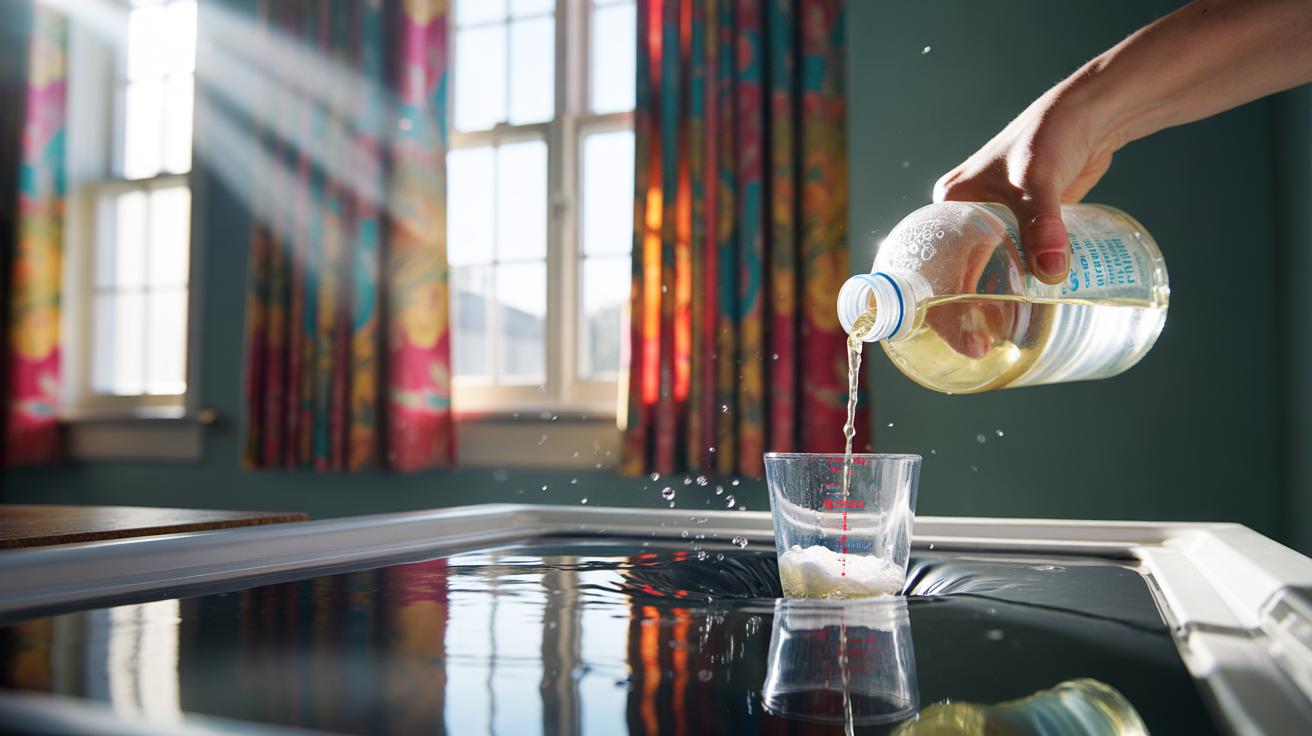
First, choose distilled white vinegar only; avoid malt or balsamic, which can stain. For machine washing, load curtains loosely. Select a delicate cycle and a cool-to-warm temperature suited to the fabric care label. Use a modest dose of your usual detergent. Then, pour 120–250 ml of white vinegar into the fabric softener drawer so it enters during the final rinse. For hand washing, dissolve detergent, launder gently, rinse, then add 60–120 ml vinegar per 5 litres of water for a finishing bath, soaking for 10 minutes before a final, brief cold rinse. Do not exceed recommended amounts; precision keeps fibres happy.
| Fabric Type | Vinegar Amount | Water Temp | Notes |
|---|---|---|---|
| Cotton/Linen | 150–250 ml per machine rinse | Cold–30°C | Great for hard water; limits greying |
| Polyester/Blends | 120–200 ml per machine rinse | Cold–30°C | Helps remove static without softeners |
| Viscose/Rayon | 100–150 ml (rinse) | Cold | Gentle cycle; avoid wringing |
| Silk/Wool | 60–100 ml (hand-rinse) | Cold | Patch test; brief soak only |
After rinsing, press water out with a towel. Line-dry indoors away from direct sun to minimise UV fading. Steam to drop creases, or re-hang slightly damp to let gravity assist. Frequency? Use a vinegar rinse every second or third wash, or after exposure to cooking or smoke. Small, regular interventions maintain colour; shock treatments rarely do.
Addressing Concerns: Smell, Safety, and Fabric Care
Worried about the scent? Don’t be. The characteristic vinegar smell disperses as the fabric dries; ventilation accelerates it. On safety, the golden rule is simple: never mix vinegar with bleach. Combining acids with chlorine bleach releases toxic gas. In a normal rinse drawer, diluted vinegar is safe for modern washing machines and helps limit limescale on internal parts. If your area is classed as very hard water, this mild descaling is a bonus, reducing the film that blunts colours. Patch-testing is wise: dampen an inconspicuous hem, apply the vinegar solution you intend to use, blot, wait, assess.
Fabric sensitivity varies. Silk, wool, and some acetate weaves prefer cooler water and shorter contact times; keep vinegar modest and rinses quick. Heavily embellished or interlined curtains may respond better to hand rinsing. Avoid coloured vinegars, and don’t soak for hours: the benefit comes from targeted pH control, not prolonged acidity. If dyes are inherently unstable, vinegar won’t perform miracles, but it will minimise further bleed and clean away the haze that disguises richness. The aim is clarity, not coercion: let the dye speak for itself.
Bright curtains change a room. They reflect more light, tie colours together, and signal care without shouting. Using white vinegar is thrifty, low-tech, and elegantly effective: it clears residues, counters hard water, and helps dyes behave. Nothing fussy, nothing perfumed. Just a measured rinse that restores what your fabric already owns. The caveats are simple—no bleach, correct dosage, heed the label—and the results are consistently visible. Once you’ve seen the lift, it’s hard to go back. Which set of drapes will you revitalise first, and what will their true colour reveal about the room you want to live in?
Did you like it?4.4/5 (26)