In a nutshell
- 🧠 The brain prefers minimal effort: energy economy makes big goals costly; dopamine rewards small wins and temporal discounting favours immediate actions.
- ⚙️ Micro-habits beat big goals by reducing friction; start tiny (one sentence, 30-second stretch) so action precedes motivation via a reliable habit loop.
- 🛠️ Design habits to stick: make them specific, brief, and anchored to cues; remove friction in advance; use tiny celebrations; prioritise consistency before intensity.
- 📊 Practical blueprint: cues, micro-actions, and instant rewards (e.g., floss one tooth, open workout app) show how environment design turns intentions into action.
- 📈 From marginal gains to identity: keystone micro-habits compound over weeks, shifting self-image—proof you’re the person who shows up, not a sporadic hero.
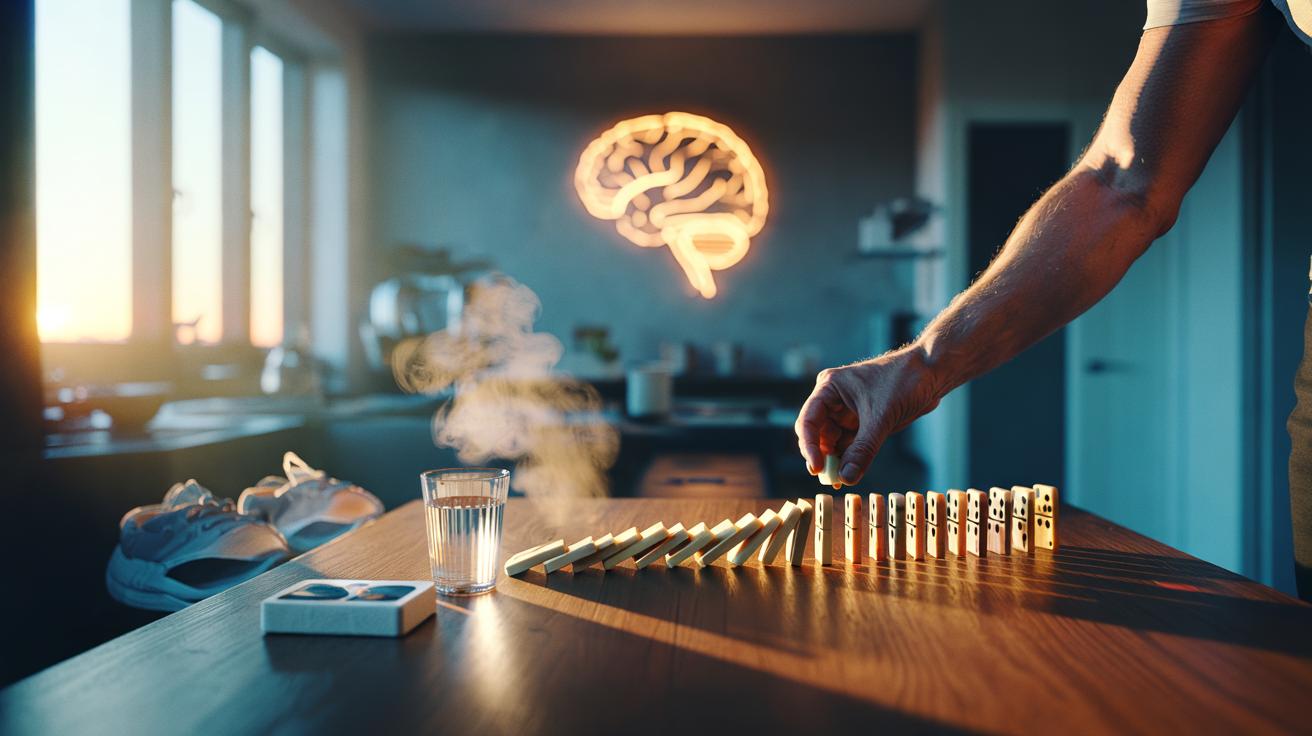
Big goals have glamour, but our brains are built for small, repeatable wins. Micro-habits—actions so easy they feel almost trivial—slip past resistance, build momentum, and compound into meaningful change. Instead of marathons, think meters: a sip of water after waking, opening the document before coffee, one slow breath before sending an email. Each tiny step signals safety and progress, creating a loop of effortless repetition. When effort drops below a psychological threshold, you stop arguing with yourself and start acting. That’s the quiet power of designing behaviour for the mind you actually have, not the willpower you wish for.
Your Brain’s Bias for Minimal Effort
The brain is a master of energy economy. The prefrontal cortex, responsible for planning and self-control, is metabolically expensive; it tires quickly under high cognitive load. In contrast, the basal ganglia automates repeated behaviours, turning them into low-energy routines. Your nervous system prioritises the path of least resistance because conserving energy once kept us alive. This bias explains why ambitious targets often stall at the starting line: the perceived “activation energy” is too high. Micro-habits lower that threshold, converting friction into flow. Each completion triggers a small dopamine pulse tied to reward prediction, reinforcing the behaviour and making it likelier next time.
There’s also a timing issue. Our brains discount distant rewards, a quirk known as temporal discounting. A year-long transformation feels abstract; a 20-second action delivers immediate certainty. Micro-habits exploit this by offering instant evidence of progress. Small wins shrink threat signals and keep attention anchored to the present task, so you act again tomorrow.
Why Micro-Habits Outperform Big Goals
Big goals create what psychologists call friction costs: uncertainty about where to begin, fear of failure, and the drag of context-switching. Ambition swells expectations; the start becomes intimidating. Micro-habits sidestep this by defining the smallest viable step—write one sentence, stretch for 30 seconds, read three lines. Once the action begins, motivation tends to follow, not precede. This flips the usual script: act first, then feel motivated. The reward is certainty, not spectacle. You gather frequent proof that “I am the kind of person who shows up”, which is more durable than a rush of inspiration.
Micro-habits also work better with the way attention actually functions. Sustained focus emerges from momentum, not pressure. By keeping each step crystal clear and low effort, you reduce mental negotiation and free up working memory. The result is a reliable habit loop: cue, micro-action, tiny reward. Over time, these loops chain together into meaningful outcomes without the emotional toll of constant self-control.
Designing Micro-Habits That Stick
Effective micro-habits are specific, brief, and anchored to an existing routine. Use strong context cues (“after I boil the kettle…”) and version your target down until it feels almost laughably easy. If you can’t do it when tired, stressed, and busy, it isn’t yet a micro-habit. Pair each action with a tiny celebration—a breath, a nod, a tick on a tracker—to reinforce the brain’s reward system. Crucially, remove friction in advance: place trainers by the door, keep a glass on the bedside table, pin the draft document to your desktop. Environment design beats motivation.
| Component | Micro Version | Friction Removed | Instant Reward |
|---|---|---|---|
| Cue | After brushing teeth | Set phone on airplane mode overnight | Quiet clarity |
| Action | Floss one tooth | Floss by the mirror | Tick on habit tracker |
| Action | Open workout app | Shortcut on home screen | Green checkmark |
| Action | Write one sentence | Document pre-opened | Save sound + timestamp |
Design for consistency first, intensity later. Once the behaviour is automatic, gradually extend duration or difficulty in tiny increments, preserving the low-resistance feel.
From Marginal Gains to Identity Change
Britain’s sporting mantra of marginal gains illuminated a simple truth: small, sustained improvements aggregate into disproportionate results. The same logic applies to everyday life. During an NHS shift, a micro-habit might be one mindful breath before charting. On a crowded commute, it could be reading a single paragraph. For remote workers, it’s opening the task list before emails flood in. Consistency beats intensity because identity is built by repeated votes, not rare heroics. Each micro-action says, “This is who I am,” and the brain updates the self-image accordingly.
Keystone micro-habits multiply their impact. Hydrating early improves energy; a two-minute tidy reduces visual noise and decision fatigue; setting clothes out at night cuts morning dithering. These aren’t grand gestures, yet they change the slope of your day. Over weeks, the compound effect becomes visible: steadier mood, clearer focus, and goals reached almost by accident. The story shifts from pressure to proof.
Big ambitions deserve respect, but the daily mechanics that realise them must be gentle, specific, and repeatable. When effort is minimised and cues are obvious, action becomes the default. Micro-habits convert intentions into identity, making progress feel inevitable rather than heroic. If you design your environment and scale tasks to the smallest reliable unit, momentum will carry you further than motivation alone ever could. Which single micro-habit—30 seconds or less—could you anchor to something you already do tomorrow morning, and what tiny reward will tell your brain to return for more?
Did you like it?4.5/5 (28)