In a nutshell
- 🧩 The toilet roll tube puzzle taps natural foraging, sniffing, and problem-solving to deliver powerful canine enrichment that calms busy minds and eases boredom.
- 🔧 Easy build: fill tubes with high-value treats, fold ends, and scale to an adjustable difficulty using shoeboxes, muffin tins, or paper “lids.”
- 🛡️ Prioritise safety: avoid tape/staples and perfumed cardboard, supervise to prevent ingestion, manage calories by feeding part of the daily ration through the game.
- ♻️ Smart, budget-friendly and eco-conscious: upcycle clean tubes, rotate scents, and tidy quickly—perfect for daily, low-cost enrichment.
- 🎯 Keep it fresh with clever variations: jackpot parcels, two-stage puzzles with tennis balls, quick-freeze smears, and scent layering for multi-dog households.
British dog owners know the struggle: a restless pet on a rainy afternoon, a wallet wary of pricey gadgets, and a recycling bin brimming with cardboard. Enter the humble toilet roll tube, transformed into a treat puzzle that channels your dog’s curiosity, sniffing instincts, and shredding urges—without wrecking your living room. In minutes, you can build an eco-friendly game that’s mentally taxing, budget-light, and endlessly customisable. Because brain-work saps energy, a simple puzzle can settle even high-octane dogs far faster than another lap round the block. With nothing more than tubes, kibble, and a dash of creativity, you can create a boredom-busting activity that’s safe, enriching, and surprisingly durable.
Why a Toilet Roll Tube Puzzle Works Wonders for Dogs
At its heart, this puzzle appeals to a dog’s evolutionary toolkit: foraging, sniffing, and problem-solving. Dogs use up to 300 million olfactory receptors to hunt for aroma-rich rewards, and the cardboard adds just enough friction to make the game engaging. Sniffing lowers pulse rate and fosters calm, turning a frantic afternoon into focused exploration. Tearing paper also provides species-appropriate “deconstruction” without costly toys, letting your dog perform satisfying, safe destruction in a controlled setting.
The magic is in the variable difficulty. Loose tubes with a sprinkle of kibble give beginners an easy win; folded “pillow” ends demand more persistence; a box packed tight with tubes lifts the challenge again. That adjustable gradient keeps the activity rewarding while stretching patience and resilience. The result is canine enrichment that taps mental stamina, builds confidence, and reduces attention-seeking behaviours—especially helpful for adolescents and rescue dogs settling into new routines.
How to Build the Toilet Roll Tube Treat Puzzle
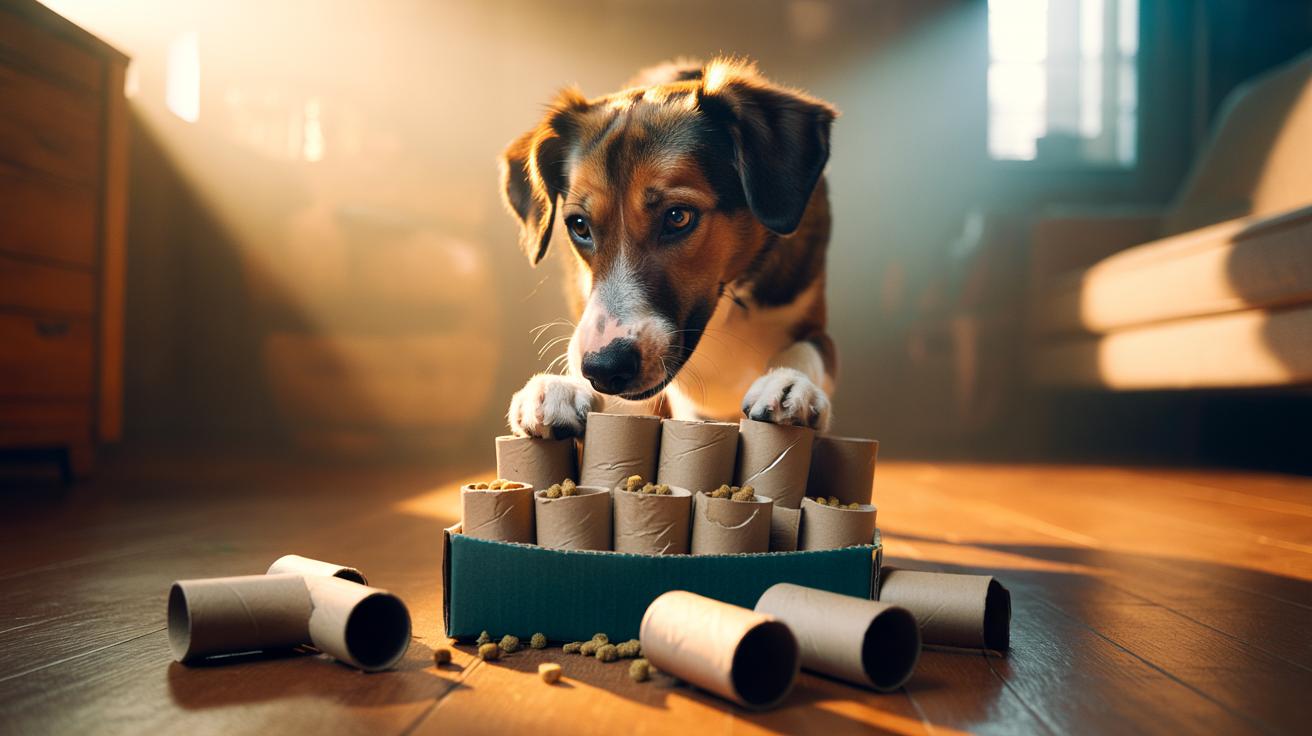
Start simple. Drop a few pieces of high-value food into an open tube; present it on the floor and let your dog roll, paw, and sniff. Next, lightly crimp one end so the treats don’t fall out at once. When your dog gets the hang of it, crimp both ends for a “pillow” parcel, or stand multiple tubes upright in a shoebox or muffin tin, sprinkle in kibble, and top some tubes with scrunched paper as “lids.” Keep difficulty just above your dog’s current skill so success stays frequent and frustration remains low.
Skip tape and staples; friction and simple folds are enough. Rotate aromas—kibble, tiny cheese cubes, or dried sprats—to keep the scent profile novel. For strong chewers, limit softening by offering fewer, firmer tubes per session. Below is a quick reference to help you gather materials and set expectations.
| Component | Use | Notes |
|---|---|---|
| Toilet roll tubes | Holds and hides treats | Clean, dry, scent-free |
| High-value treats or kibble | Motivation and reward | Small pieces; low fat if frequent |
| Scrap paper or cloth | Increase difficulty as “lids” | Avoid inks, staples, tape |
| Shoebox or muffin tin | Holds multiple tubes upright | Creates a grid-style puzzle |
| Prep time & difficulty | 2–5 minutes; easy | Great for daily enrichment |
Training Tips, Safety, and Clean-Up
Introduce the game with easy wins and cheerful praise. If your dog freezes, loosen folds or partially reveal a treat to prompt sniffing. Feed a portion of the daily ration through the puzzle to manage calories; weight control starts with portioning, not trimming the fun. Always supervise the first sessions to ensure your dog shreds, sniffs, and spits rather than swallows cardboard. If your pet tends to ingest non-food items, keep tubes larger and folds lighter, and end the game before fatigue reduces impulse control.
Safety is simple: no glue, tape, or staples; avoid heavily printed or perfumed cardboard; remove soggy scraps promptly. For sensitive stomachs, stick to plain kibble or vet-approved treats. A quick sweep returns your living room to normal, and the remnants can go in the recycling if clean and dry. Store a small stash of tubes in a cloth bag, and refresh the challenge with new scents or different parcel shapes every few days.
Clever Variations to Keep the Challenge Fresh
Once your dog masters the basics, ramp up the novelty. Pack a shoebox tightly with tubes and hide two or three “jackpot” parcels among decoys. Create a “bouquet” by standing tubes in a bottle rack, or turn a muffin tin into a two-stage puzzle by covering tube tops with tennis balls. Varying scent, access, and density keeps the puzzle exciting without costing you a penny. On hot days, smear a teaspoon of wet food inside a tube, freeze briefly, and offer outdoors for mess-friendly enrichment.
Try scent layering: a few pellets of kibble plus a pinch of crushed dried herb like parsley to create a more complex trail. For multi-dog homes, run turns to prevent resource guarding, or set up distant stations with equal pay-offs. Add a “release” cue—“Find it!”—to build impulse control, and finish with a simple sniff-and-scatter so the session ends on a confident, successful note.
With cardboard ingenuity and a handful of treats, the toilet roll tube puzzle offers sustainable enrichment that costs pennies, calms busy minds, and saves your furniture from bored jaws. It’s fast to build, easy to clean up, and endlessly adaptable to your dog’s mood and skill level. Small, daily doses of mental work can transform household harmony and boost your dog’s wellbeing. Ready to give it a go tonight—or to tweak the design for tomorrow’s challenge? What variation will you try first, and how will you tailor the difficulty to suit your dog’s unique style?
Did you like it?4.3/5 (22)