In a nutshell
- 🎨 Coloured hair loses shine as dyeing lifts the cuticle, raises porosity, and strips protective lipids (including 18-MEA), so strands scatter light; overnight balance of humectants and emollients restores slip and depth.
- 🥑 Avocado’s monounsaturated fats (notably oleic acid, phytosterols, vitamin E) smooth the shaft; 🍌 banana’s humectant sugars help retain moisture—together they enhance colour vibrancy by improving light reflection, not altering dye.
- 🧪 Recipe & method: Mash half an avocado + one small banana + 1 tsp light oil + 1 tbsp aloe/water; blend smooth, apply to damp mid-lengths–ends, cap overnight; in the morning emulsify with conditioner, then rinse and sulphate-free shampoo; weekly on coarse hair, fortnightly on fine.
- ⚠️ Safety & tweaks: Patch test; avoid if sensitive to banana/avocado; for fine hair reduce fats or use squalane; add plain yoghurt for a gentle pH nudge; rotate with bond-building care, use UV filters, silk pillowcases, and monthly gentle clarifying.
- ✨ Expected results: Softer feel, fewer snags, smoother cuticle, and richer-looking colour with better tone retention; consistency beats intensity for long-term gloss and manageability.
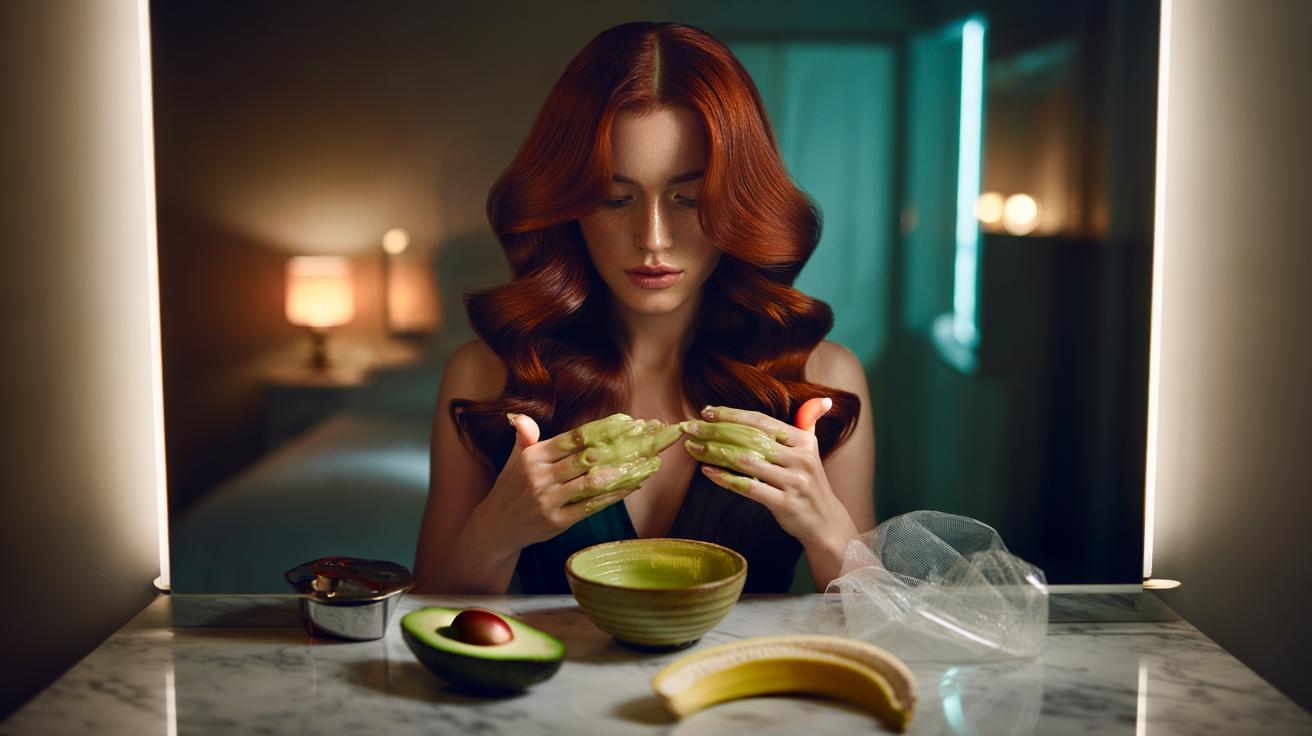
Home remedies rarely earn a second glance in beauty journalism, yet the humble banana–avocado blend is quietly rehabilitating coloured hair across Britain. Rich in plant fats and natural humectants, this kitchen mask works like an overnight top-up of what dyeing regularly strips away: lipids, moisture, and surface smoothness. When mixed to a silky paste and sealed under a cap, the treatment helps flatten the raised cuticle, reducing light scatter and deepening tone. Wake up to hair that reflects light more evenly, feels supple, and shows truer colour. Below, the science, the method, and the safety notes—because a glossy finish should never come at the expense of scalp health.
Why Coloured Hair Loses Its Shine
Colour processing lifts the hair’s cuticle to deposit pigment, but that same lifting increases porosity. Porous fibres leak moisture and lose their native lipid layer, particularly the 18-MEA coating that gives natural hair its slip. Without that fatty shield, dyed hair becomes rougher, and rough surfaces scatter light instead of reflecting it. Add heat tools, hard water, and UV exposure, and you have a perfect trifecta for fading tone, brittle feel, and a matte finish that no glossing serum can truly disguise.
What coloured hair needs most is not just water, but a balance of humectants and emollients that can stay put long enough to re-lubricate the fibre. Overnight is the sweet spot for reinstating softness and helping colour look saturated again by morning. Plant-derived fats align along the damaged cuticle, lowering friction, while gentle sugars help hold moisture in the cortex, so pigments appear deeper and more dimensional.
The Science of Fats: Banana and Avocado to the Rescue
Avocado is naturally high in monounsaturated fats—notably oleic acid—plus phytosterols and vitamin E. These emollients can coat the hair shaft, decreasing roughness so the cuticle lies flatter. That smoother surface behaves like a mirror, enhancing colour vibrancy. Banana, meanwhile, brings humectant sugars and a touch of silica; together they help hair hold water, boosting elasticity and shine. The duo mimics a lightweight lipid barrier while trapping hydration where dyed hair needs it most.
Crucially, these fats do not “fix” dye molecules; instead, they improve the optical conditions that let your colour read as richer. Think of it as re-oiling a squeaky hinge: pigments haven’t changed, but the medium around them performs better. With consistent use, many report reduced tangling, fewer snapped ends, and a softer hand feel—key indicators that your investment in salon colour will go further between appointments.
How to Make and Apply the Overnight Mask
Mash half a ripe avocado and one small banana into a smooth cream. For slip, add one teaspoon of lightweight oil (sweet almond or grapeseed) and a tablespoon of aloe gel or filtered water to thin. Blend until lump-free to prevent residue. A silky texture ensures even coating and easier morning rinse-out.
| Ingredient | Key Fats/Actives | Benefit for Colour |
|---|---|---|
| Avocado | Oleic acid, phytosterols, vitamin E | Smooths cuticle, enhances shine |
| Banana | Humectant sugars, trace silica | Retains moisture, boosts elasticity |
| Light oil | Light emollients | Improves spread, seals hydration |
Work through damp, detangled hair mid-lengths to ends; lightly skim roots if dry-prone. Clip up, cover with a shower cap, then a microfibre wrap. Sleep on an old pillowcase. In the morning, emulsify with conditioner before shampooing once with a gentle, sulphate-free formula. Use weekly for coarse or high-porosity hair; fortnightly for fine hair to avoid weight.
Safety, Variations, and Maintenance Tips
Always patch test on the inner arm and behind the ear; those with latex–fruit cross-reactivity should avoid banana, and avocado-sensitive readers should skip accordingly. If your hair is very fine, reduce avocado to two tablespoons and swap oil for a drop of squalane to keep lift. For brass-prone blondes, stir in a teaspoon of plain yoghurt for a pH nudge without harsh acids; it supports cuticle tightening and bounce without stripping tone.
To maintain results, rotate this mask with a weekly bond-building treatment if you bleach, and use a UV filter spray on sunny days. Clarify gently once a month to prevent build-up dulling the finish. Sleep on silk, turn down your heat tools, and wash with cool water to keep the cuticle calm. Consistency beats intensity: small, regular lipid top-ups protect colour better than occasional heavy treatments.
For coloured hair in need of quick revival, the banana–avocado mask is a low-cost, high-reward fix that leans on the fundamentals: restore lipids, trap moisture, smooth the cuticle, and the colour will sing again. It is not a miracle dye booster; it is a strategic surface reset that makes your existing shade look expensive. Try it for two weeks, take a photo under the same light, and judge the sheen and softness. What tweaks—oil choice, timing, or additions—will you experiment with to tailor the mask to your hair’s needs?
Did you like it?4.5/5 (23)