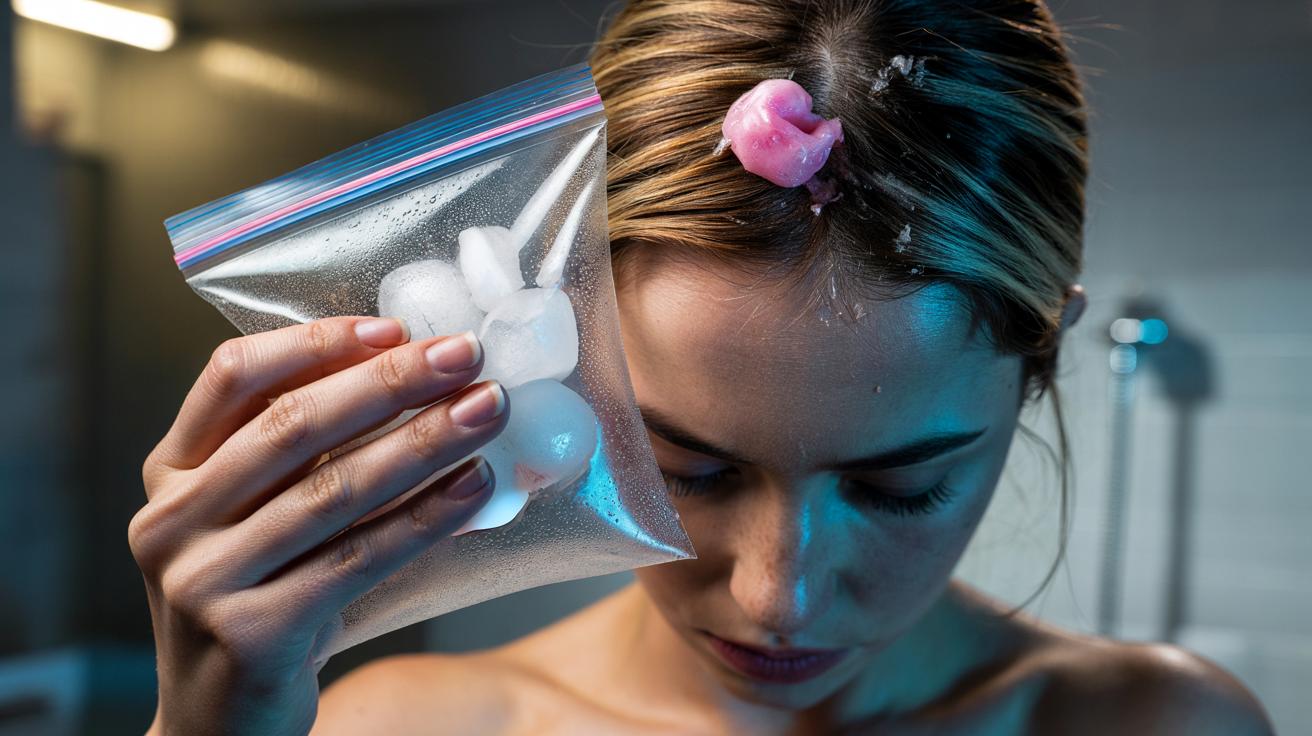
In a nutshell
- ❄️ Freezing works because gum is a viscoelastic polymer; chilling pushes it toward its glass transition, collapsing adhesion so it turns brittle while hair remains resilient.
- 🧊 Follow the ice cube trick: isolate the section, press ice in a zip bag for 5–10 minutes, then chip hardened gum with a spoon or fingernail and comb from ends inward—no scissors.
- 🪮 Aftercare: apply a little conditioner or light oil to lift residue, then shampoo and detangle; reserve oils for after freezing, and re-ice to remove stubborn specks.
- ⚠️ Safety and myths: protect the scalp with a cloth, take breaks, and avoid solvents and heat; peanut butter and WD‑40 are messy, irritating, and unnecessary.
- 💇 Seek help when gum is near roots, tangled in extensions/wigs, heavily matted, or hair is fragile; professionals can pair freezing with targeted detangling creams.
Few domestic mishaps inspire more panic than discovering a wad of chewing gum welded to your hair. Instinct says reach for scissors, yet losing length is rarely necessary. The quick, clean fix is disarmingly simple: the ice cube trick. By chilling gum until it stiffens, you can crack it free in neat flakes, leaving strands intact. No harsh solvents, no sticky peanut butter, no salon emergency. Cold reverses the gum’s stickiness long enough for a controlled escape. With a couple of cubes, a sandwich bag, and patience measured in minutes, you can undo the mess at home and walk away unscathed.
Why Freezing Works on Chewing Gum
Chewing gum is a viscoelastic polymer: pliable and tacky when warm, rigid when cold. Drop its temperature and the gum approaches its glass transition, the point at which molecular movement slows and the material behaves like brittle plastic. The sticky oils and plasticisers that help gum cling lose mobility, so adhesion to the hair cuticle collapses. Hair, built from tough keratin, doesn’t undergo the same transformation at household-cold temperatures, which is why the strands stay resilient while the gum hardens. Cold makes gum brittle, not hair, turning a gluey lump into something that can be chipped away.
This temperature shift also reduces surface tack and shear strength, which means flakes separate instead of smearing further. A brief chill won’t harm healthy strands; at most, they feel stiffer until they warm. By exploiting this physics, the ice cube trick swaps a sticky battle for a clean mechanical release—no chemicals, no heat, and no thinning shears.
Step-by-Step: The Ice Cube Method
First, isolate the section with a clip so you can work calmly. Seal a few ice cubes in a small food bag to prevent drips and press the packet onto the gum. Keep the cold on the gum only, holding steady for 5–10 minutes, until it turns hard to the touch. Do not reach for scissors. When it’s firm, use a fingernail or the edge of a spoon to chip from the gum’s surface outward, nudging flakes away from the hair. If it softens, reapply the ice and continue. Finish by easing a wide-tooth comb through the section from ends toward the gum to lift the last crumbs.
Be gentle and patient. Short sessions of pressure, then rest, protect the scalp from overchilling. Work in good light, and keep a tissue handy for the tiny hardened pieces. The goal is to fracture the gum, not pull at the roots. If a strand seems trapped, refreeze rather than tug.
| Item | Purpose | Tip |
|---|---|---|
| Ice cubes in zip bag | Chills gum to make it brittle | Expel air so the cold sits flat on the gum |
| Paper towel or thin cloth | Protects skin from direct cold | Place between bag and scalp for comfort |
| Wide-tooth comb | Clears loosened flakes | Comb from ends inward to avoid snagging |
| Spoon or fingernail | Chips hardened gum | Use gentle, short scraping motions |
| Hair clip | Isolates the area | Keeps the rest of your hair out of the way |
What to Do After the Gum Pops Off
Once the gum has cracked away, you may notice a trace of residue. This is the moment for a small amount of conditioner or light oil—coconut, olive, or a silicone serum—to loosen microscopic fragments clinging to the cuticle. Work it through with your fingertips, then comb gently. Shampoo as normal with lukewarm water and finish with a detangling conditioner to smooth the cuticle plates. If the hair feels rough, a leave-in conditioner restores slip and shine. Most people see no breakage; any minor frizz can be tamed with a pea-sized dab of styling cream.
Skip messy folk cures until after the freeze. Reserve oils for residue after the freeze, not before, because warmth and grease make gum stretchier and harder to control. If a few stubborn specks persist, reapply the ice for a minute, chip again, and repeat the light-oil-and-comb routine. The aim is a clean release with minimal manipulation, preserving the integrity of your strands.
Safety, Myths, and When to Seek Help
Ice is benign, but technique matters. Protect your scalp with a thin cloth barrier and take breaks to avoid numbness. Children and people with sensitive skin may prefer a reusable cold pack, which stays cold without dripping. Avoid solvents like acetone or lighter fluid—effective on adhesives, risky on skin and hair. Heating methods are also poor choices: warm gum spreads and sinks deeper into tangles, raising the chance of breakage. If it hurts or pulls, stop, re-chill, and resume slowly. The controlled cycle of freeze, chip, and comb is what keeps hair safe.
Myths persist about peanut butter, mayonnaise, and even WD‑40. These can mask stickiness but create mess, odour, and scalp irritation. The only “special effect” you need is cold. Seek a stylist’s help if gum is entwined near the roots, bonded to extensions or wigs, or compacted into a large mat in fragile, chemically processed, or tightly coiled hair. Professional detangling is safer than aggressive DIY on compromised strands, and a pro can combine freezing with targeted detangling creams.
In the end, the smallest tool solves the stickiest drama: a cube of ice. Freezing flips gum from clingy to crisp, letting you chip it away and keep every centimetre of length. Once you’ve tried it, the method becomes second nature—quick, clean, and reassuringly low-tech. Keep a zip bag in the freezer, a wide-tooth comb in the bathroom, and the knowledge that scissors aren’t your only option. Have you used the ice cube trick, or refined it with your own tweaks for different hair types and situations?
Did you like it?4.4/5 (20)