In a nutshell
- ✨ Acidic science: acetic acid lowers hair pH to ~4–5.5, flattening the cuticle so it reflects light—instant shine that can beat conditioner.
- ⚗️ Smart selection: Use ACV or white distilled vinegar; start with a 1:20 dilution (up to 1:10 if tolerated). Never apply undiluted; pH strips help dial accuracy.
- 🧴 Method that works: After shampoo (or a light conditioner), pour through lengths, distribute, wait 60–120 seconds, then cool-rinse; aim for weekly, up to twice weekly in hard water.
- 🚿 Buildup buster: Tackles hard-water mineral build-up, restores colour clarity and slip, and keeps hair light without residue; monitor if using semi-permanent dyes.
- ⚠️ Safety first: Great for frizz-prone/high-porosity hair; patch-test, watch for stiffness or tight scalp, dilute more if needed, and adjust for bleached or sensitive hair.
Glossy hair is often sold as the preserve of expensive serums, yet the simplest upgrade may be in your kitchen. A well-diluted vinegar rinse uses acetic acid to adjust the hair’s pH, smoothing the outer cuticle layers so they lie flat and reflect light. The result is slip, shine, and less snagging without heavy build-up. In hard-water regions across the UK, deposits from calcium and magnesium can cloud even the best conditioner’s finish; vinegar helps dissolve that film and restore clarity. Used correctly, it can deliver sleeker results than many conditioners while keeping lengths light and buoyant. Here’s how and why it works—plus the safest way to try it.
Why Acid Makes Hair Shine
Hair is made of keratin bundled into fibres protected by overlapping cuticle scales. Alkaline products raise those scales, making hair feel rough and look matte. An acidic rinse gently lowers the surface pH toward the scalp’s natural zone (about 4.5–5.5). This shift encourages new ionic and hydrogen bonds that pull the cuticle flatter. Acid closes the cuticle instantly, creating a smoother surface that reflects light like polished glass. Because the strands are streamlined, they tangle less, feel softer, and are easier to comb, reducing mechanical breakage during styling.
There’s a second gain: acetic acid helps dislodge mineral residue from hard water, a common culprit behind dull, sticky lengths in many UK postcodes. By loosening those deposits, a vinegar rinse reveals your true colour and sheen. It can also rebalance after alkaline processes such as clarifying shampoos. Note for colour fans: acidifying can help “seal” the feel of a dye job, yet very frequent use may nudge out some semi-permanent pigments—monitor your results.
Choosing the Right Vinegar and Dilution
Most household vinegars sit around 5% acetic acid. Apple cider vinegar (ACV) is popular, but plain white distilled vinegar is just as effective—and often cheaper and clearer. What matters is the dilution: aim for roughly 1 part vinegar to 10–20 parts water, adjusting to your hair’s tolerance. Start mild (1:20) if your scalp is sensitive, curls are fine, or ends are fragile. Never apply vinegar undiluted to scalp or hair. Avoid malt or balsamic vinegars; their sugars and colourants can cling to strands. Herbal-infused ACV is fine if strained well to avoid debris.
| Vinegar Type | Typical Acidity | Suggested Dilution (per 250 ml water) | Best For | Notes |
|---|---|---|---|---|
| Apple Cider Vinegar | ~5% | 1–2 tbsp | General shine, curl definition | Choose filtered to minimise sediment |
| White Distilled Vinegar | ~5–6% | 1 tbsp (start), up to 2 tbsp | Hard-water build-up, oily roots | Clear, neutral scent after drying |
| Herbal-Infused ACV | ~5% | 1–2 tbsp | Scalp freshness | Strain botanicals meticulously |
The sweet spot is a working rinse around pH 4–5.5, which is hair-friendly and cuticle-smoothing. If you’re particular, pH strips make quick checks easy at home. The vinegary note fades once hair dries; if desired, add a single drop of essential oil to the bottle, but patch-test first. Aim for clarity and simplicity: fewer additives, more predictable results.
Step-by-Step Rinse Method
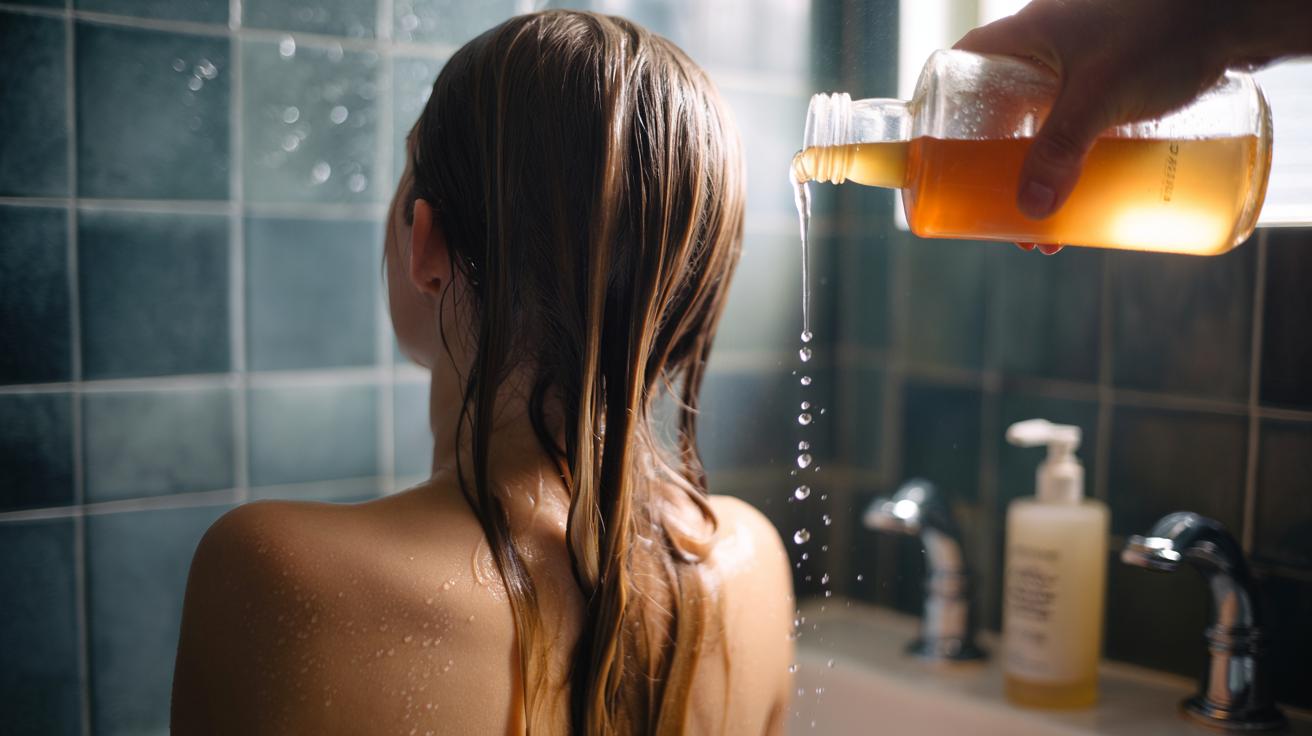
Wash as usual. After rinsing shampoo—or after a light conditioner if hair is very dry—tilt your head back and slowly pour the diluted vinegar along the lengths, working from root area to ends. Comb through with fingers to distribute. Let it sit for 60–120 seconds; that brief contact allows the acid to do its cuticle-tightening and mineral-lifting work. Do not rinse with hot water afterwards; go cool or lukewarm to preserve the sleek finish. Pat hair with a towel, avoid rough rubbing, and style as normal. Heat tools glide more easily on a flatter cuticle; use heat protection.
Frequency depends on hair type and water quality. For most, once weekly is ideal; in very hard-water areas or after swimming, up to twice weekly can help. Fine, easily weighed-down hair may prefer the rinse in place of conditioner; coarse curls might keep a light conditioner first, then the vinegar pass to lock down the finish. Shine should be immediate, with improved slip and fewer snags on the brush.
Safety, Hair Types, and Frequency
Who benefits most? Those with frizz-prone or high-porosity hair, city dwellers battling limescale, swimmers with chlorine exposure, and oily scalps coping with product build-up. Use caution if hair is extremely dry, brittle, or very low-porosity; the cuticle is already compact, so too much acid can make strands feel stiff. Recently bleached or relaxed hair can enjoy the smoothing effect, but keep dilutions gentle and observe how colour behaves. Always patch-test on a small section before committing.
Watch for signs of overuse: squeaky stiffness, static, or a tight scalp. If they appear, dilute more, reduce frequency, or pair the rinse with a lightweight conditioner or leave-in. Salons deliver similar results with acidifying treatments; the vinegar rinse is the minimalist, budget alternative grounded in the same pH logic. Stop at the first sign of irritation and consult a professional if issues persist. With a measured approach, you’ll get that “sealed cuticle” gleam without heaviness or build-up.
A vinegar rinse is a small change with outsized impact: it restores the hair’s preferred pH, smooths the cuticle, and lifts mineral haze, leaving a reflective, weightless finish that rivals premium conditioners. It’s quick, inexpensive, and—when diluted properly—kind to both scalp and strands. The key is precision: choose the right vinegar, dilute carefully, keep contact brief, and calibrate frequency to your hair’s response. Ready to try the rinse that can make your hair look brighter under the very next light? What’s your plan for tailoring the dilution and routine to your hair type and local water conditions?
Did you like it?4.4/5 (24)