In a nutshell
- ✨ Science: citric acidcuticle at roughly pH 3–4, reducing friction so strands reflect more light for instant gloss.
- 🧪 How-to: Use a safe dilution (1 tbsp/250 ml; fine or colour-treated hair: 1 tsp/250 ml), apply post-wash for 30–60 seconds, and never use undiluted lemon juice.
- 🚿 Hard water fix: Mild chelating lifts mineral buildup; ideal for swimmers and hard-water areas, with frequency from weekly to as needed.
- ⚠️ Cautions: Skip if irritated or within 5–7 days after a colour service; beware sun + citrus; high-porosity hair should follow with a light leave-in.
- 🔄 Results & compare: Expect instant shine and sleeker blow-dries; it won’t repair damage. Compared with apple cider vinegar, lemon is crisper; cheaper than salon acidifying treatments.
A bright, glossy finish often comes down to science, not serum. A simple lemon juice rinse leverages citric acid to smooth the hair’s outer layer for mirror-like reflection. When the shaft’s tiny shingles lie flat, light bounces cleanly and the result is instant sheen. This low-cost ritual, long favoured in beauty folklore, now aligns neatly with what we know about pH, porosity, and mineral build-up from hard water. Used correctly, a diluted lemon rinse can deliver salon-level gloss without weight or residue. Here’s how the acidity works, how to mix a safe formula at home, and when to skip it to protect colour and scalp health.
Why Acidity Makes Hair Shine
Hair’s outer layer, the cuticle, acts like overlapping tiles. Alkaline conditions push those tiles up; acidic conditions coax them flat. Lemon juice is rich in citric acid (naturally around pH 2), and when diluted to a gentle rinse it drifts your rinse water to roughly pH 3–4. That shift helps tighten the cuticle, reducing friction between strands. The surface becomes smoother, scattering less light and reflecting more. This is the optical trick behind “instant gloss”. It can also aid slip, so combs glide cleanly, curbing mechanical damage and frizz in humid air.
There’s a second win. Hard water leaves mineral deposits that cloud the surface, dulling colour. Mild acidity has a light chelating effect, loosening that film so shine can break through. If your hair feels rough after swimming or looks matte despite conditioner, a carefully diluted lemon rinse can reset the surface fast. For coarser or high-porosity hair, the effect feels especially dramatic, though these hair types must balance the gloss boost with moisture care after the rinse.
How to Mix a Safe Lemon Rinse
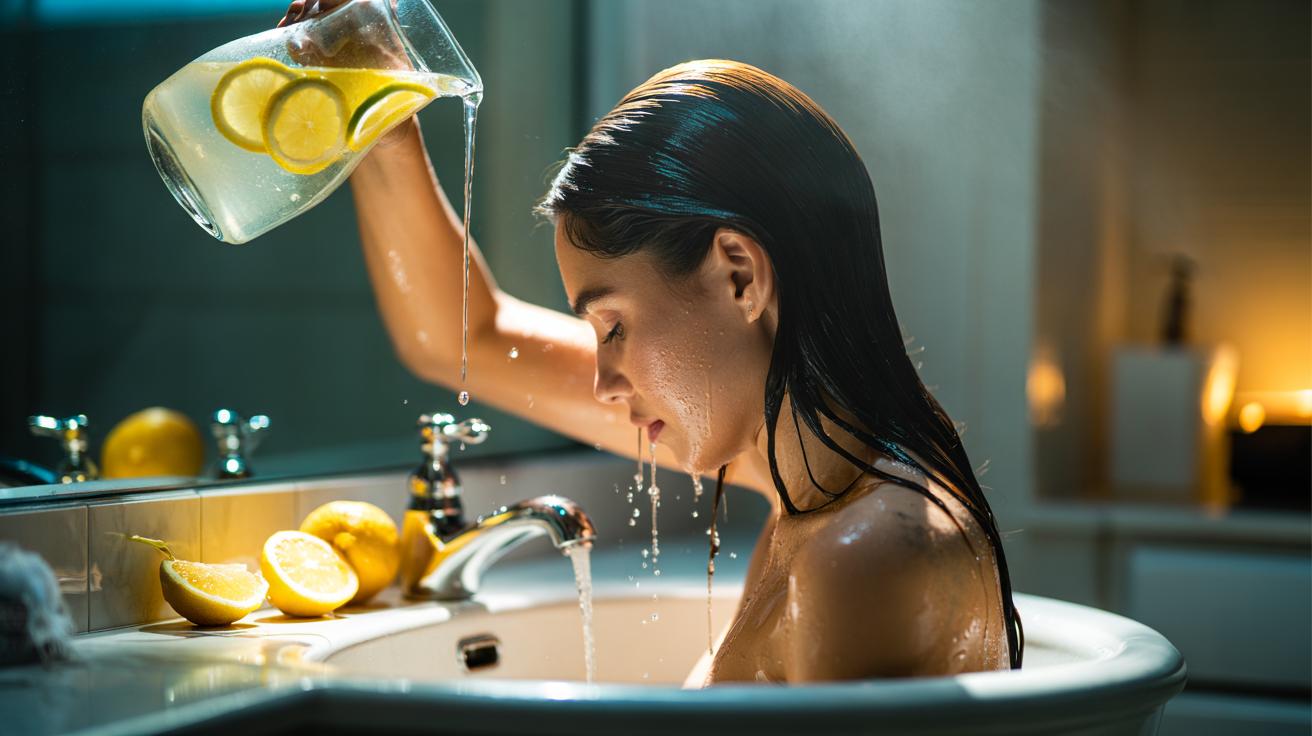
Start with fresh lemon juice, strain out pulp, and dilute thoroughly. A reliable base recipe: 1 tablespoon (15 ml) lemon juice to 250 ml cool water. For fine, dry, or colour-treated hair, begin milder at 1 teaspoon (5 ml) per 250 ml. After shampooing and conditioning your ends, pour the rinse over hair, work through lengths, and leave for 30–60 seconds. You may lightly splash with cool water, or leave in if your scalp is comfortable. Never use undiluted lemon juice on the scalp or hair.
| Hair Type | Dilution | Frequency | Notes |
|---|---|---|---|
| Fine/Colour-Treated | 5 ml : 250 ml | 1× weekly | Add a pea of aloe or glycerin for softness |
| Normal/Medium | 10–15 ml : 250 ml | 1–2× weekly | Leave on up to 60 seconds |
| Coarse/Low Porosity | 15 ml : 250–300 ml | Every 5–7 washes | Follow with a light leave-in |
| Swimmer/Hard Water | 15 ml : 250 ml | As needed post-swim | Pair with chelating shampoo monthly |
Keep away from eyes and broken skin. Patch test on the inner elbow. If you feel tightness on the scalp, increase dilution. Sun can interact with citrus; avoid direct midday exposure after use. For extra slip, whisk in a few drops of argan or jojoba oil and shake before pouring. A reusable bottle with a nozzle helps distribute evenly from roots to ends without drenching.
When to Use It and When to Avoid It
Slot the rinse in as a finish after cleansing: on dull days, after a swim, or when hard water leaves a stubborn film. Once weekly suits most. If you’ve just had a colour service, wait at least 5–7 days to let pigment settle; acidic rinses generally help close the cuticle yet can nudge tone on very porous blondes. Skip the treatment if your scalp is irritated, you have eczema or psoriasis flare-ups, or you’re experiencing active shedding. Children’s scalps are sensitive—use a gentler dilution or avoid entirely.
Bleached, high-porosity hair can still enjoy the gloss, but moderation matters. Follow with a light, protein-free leave-in to buffer potential dryness, and seal with a few drops of oil on the ends. If you use keratin or smoothing treatments, check your stylist’s aftercare; some systems prefer neutral pH for a period. Outdoors, wear a hat: citrus plus strong sun can encourage subtle lightening. At home, the safe rule is always dilute, never scrub, and watch how your hair responds.
Results You Can Expect and How It Compares
Expect a noticeable uptick in shine after the first rinse: strands feel sleeker, tangles melt, and blow-dries look sharper because the cuticle lies flatter. This isn’t a silicone coating; it’s a surface reset. Compared with an apple cider vinegar rinse, lemon feels crisper, smells brighter, and can be a touch stronger at equal volumes—hence the emphasis on dilution. Against a salon acidifying treatment, the effect is shorter-lived, but the cost is pocket change and the ritual takes under two minutes at the sink.
What it won’t do: repair split ends, reverse chemical damage, or replace deep conditioning. It can, however, help your masks perform better by clearing residue before you moisturise. Colour notes: darker shades gain a glassy finish; blondes see clarity, though extremely porous hair may shift slightly warmer or lighter with repeated use and sun. Styling tip: finish with a cool blast from the dryer to lock in smoothness. Shine is the sum of smooth cuticles, clean surfaces, and gentle handling.
Used with a light touch, the lemon rinse is a smart, sustainable gloss hack: precise, affordable, and rooted in the way hair responds to pH. Keep a small bottle in your shower, tweak the ratio to your hair’s mood, and note how quickly lacklustre lengths look camera-ready. If you’re juggling hard water, colour maintenance, and the usual frizz, this single step can tighten your routine and your cuticles. How will you tailor the dilution, timing, and aftercare to get your best, brightest finish?
Did you like it?4.5/5 (22)