In a nutshell
- 🍋 Citric acid from lemon wedges halts apple enzymatic browning by lowering pH, chelating PPO’s copper, and adding ascorbic acid to reverse early oxidation—delivering near-instant colour protection.
- 🔧 Easy method: rub slices with a lemon wedge or dip in a 1:3 lemon-to-water mix for ~30 seconds; then store in an airtight container at 0–5°C to keep apples fresh-looking through the day.
- 🧪 Alternatives compared: ascorbic acid powder offers very high anti-browning with neutral flavour; salt and honey dips work moderately but can affect taste—lemon remains the fastest, most convenient option.
- 🛡️ Safety and taste: Browning is cosmetic, not harmful; light lemon treatment preserves flavour. Follow UK hygiene norms—clean prep and chilling at 0–5°C—and avoid citrus if allergic (use ascorbic acid instead).
- ✅ Practical takeaway: A quick citrus coat plus cool storage delivers crisp, bright slices for lunchboxes and platters—choose neat rub, diluted dip, or vitamin C based on desired flavour and longevity.
In British lunchboxes and café prep rooms alike, a humble lemon wedge has a reputation for keeping sliced apples bright and inviting. The science is simple yet elegant: citric acid interrupts the natural browning that follows cutting, a process driven by exposure to air. A quick swipe of lemon can keep apple slices fresh-looking through a whole work or school day, sparing snacks from the tell-tale tan of oxidation. This is not culinary folklore. It’s applied chemistry that any home cook can use, from a morning packed lunch to a platter on the office credenza. Here’s how it works, why it works, and the best way to do it without overpowering the fruit’s flavour.
Why Apples Brown and How Citric Acid Intervenes
When an apple is sliced, cells rupture and release polyphenol oxidase (PPO). This enzyme meets oxygen and natural polyphenols, creating brown melanins in a cascade known as enzymatic oxidation. The colour shift is cosmetic rather than dangerous, yet it dulls flavour and perceived freshness. This is chemistry at the cut surface, not a sign of spoilage. The trick is to keep PPO quiet and oxygen at bay long enough for your lunch break or a day’s worth of service.
Enter citric acid, abundant in lemon juice. It helps in three ways. First, it lowers pH towards levels where PPO becomes sluggish. Second, it chelates copper ions at the enzyme’s active site, hobbling its activity. Third, lemon contains a touch of ascorbic acid (vitamin C), a reducing agent that reverses early browning intermediates. Together, these actions block oxidation almost instantly, leaving slices crisp and pale, especially when partnered with cool storage and minimal air exposure.
The Lemon Wedge Method: Step-by-Step for Lunchboxes
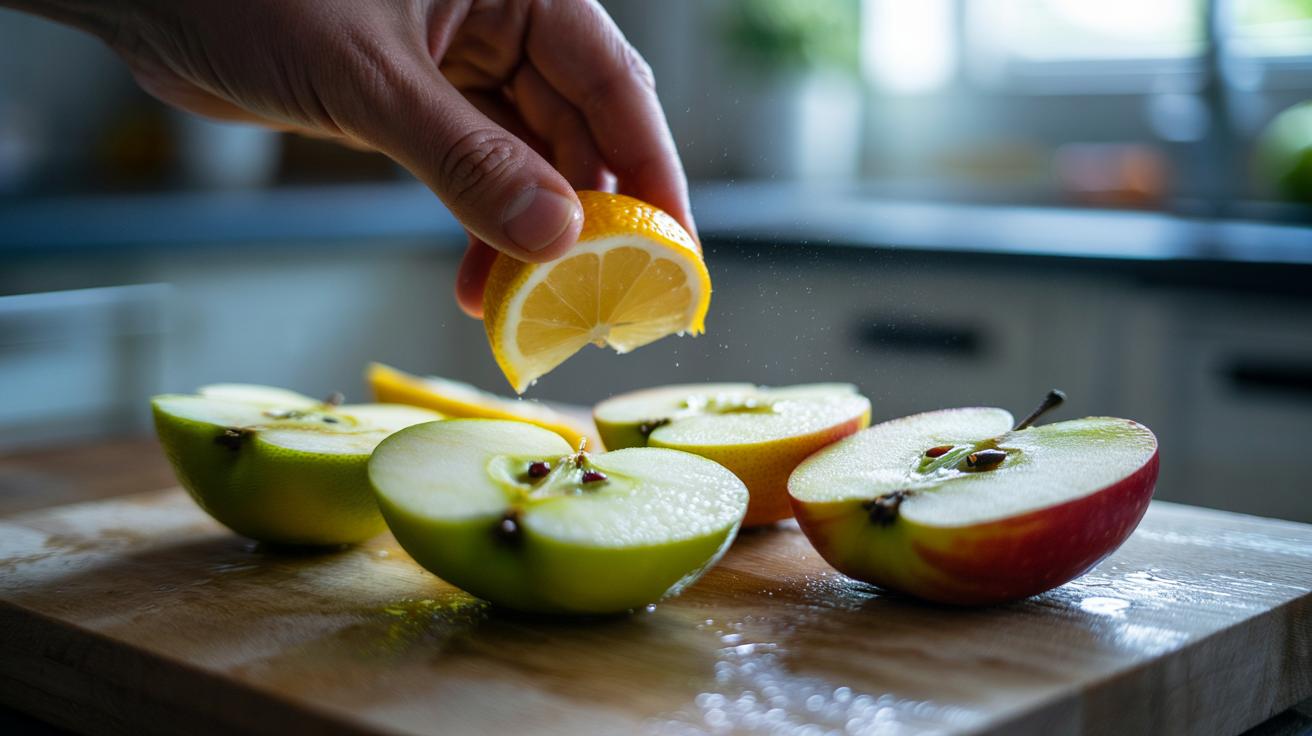
For everyday use, pick a fresh lemon and slice off a wedge. Cut your apple, then gently rub the exposed surfaces with the wedge, letting a thin sheen of juice coat each face. Ten to fifteen seconds of contact is typically enough. If you’re preparing for children’s lunchboxes, a light touch prevents overpowering tartness while delivering protection.
Prefer a gentler taste? Mix one part lemon juice with three parts cold water, and briefly dip the slices—about 30 seconds—before draining on kitchen paper. This dilutes acid intensity while retaining anti-browning effect. Highlight the essentials: citric acid for enzyme control, a light coating to limit oxygen exposure, and swift handling to reduce moisture loss.
Pack treated slices in a clean, airtight container. Chill at 0–5°C, consistent with UK food safety advice. Cool temperatures plus citric acid extend that just-cut look for hours. If you’re prepping a large platter, cover slices with film or a lid to reduce airflow, and refresh with a lemon rub only if needed.
Comparing Anti-Browning Methods
The lemon wedge is fast, cheap, and naturally available. Yet it’s not the only option. Some cooks prefer stronger ascorbic acid powders; others swear by a brief salt or honey dip. Each technique adjusts the apple’s surface chemistry to slow oxidation, though taste and longevity vary. The snapshot below helps you pick a method that balances flavour, look, and convenience.
| Method | Typical Mix | Effect on Browning | Taste Impact | Notes |
|---|---|---|---|---|
| Lemon (citric acid) | 1:3 lemon to water, or neat rub | High, near-instant | Tangy if undiluted | Also chelates copper; adds fresh aroma |
| Vitamin C (ascorbic acid) | 1 tsp per 250 ml water | Very high | Neutral to mildly tart | Strong reducing agent, minimal flavour |
| Salt water | 1/2 tsp per 250 ml water | Moderate | Risk of saline taste | Rinse lightly after dip to curb saltiness |
| Honey water | 1 tbsp per 250 ml water | Moderate to high | Slight sweetness | Forms a mild barrier; check for stickiness |
For speed and reliability, lemon or ascorbic acid usually wins. If you’re catering and need ultra-neutral flavour, ascorbic acid edges ahead. For home lunches, the lemon wedge is unbeatable on convenience: no measuring, no mixing, just rub and pack. Whichever route you choose, pair treatment with airtight containers and a chilled environment to extend the visual freshness window throughout the day.
Taste, Nutrition, and Food Safety Considerations
Citric acid doesn’t just protect colour; it complements the apple’s sweetness with a fresh lift. Light application preserves the fruit’s character while guarding against browning. If taste is a concern, dilution is your friend, offering comparable protection with a softer citrus note. For children, a quick dip often proves more acceptable than a full-strength rub.
On nutrition, the apple remains a low-calorie, fibre-rich snack. Lemon adds a hint of vitamin C, though not enough to transform the profile. The chief win is sensory: fresher look, crisper texture, and reduced waste. Importantly, browning is not a safety hazard by itself; it’s a quality issue. Citric acid slows enzymes but doesn’t replace hygiene or cold holding.
Follow standard UK guidance: keep sliced fruit chilled at 0–5°C and use clean utensils. Those with citrus allergies should avoid this method and consider ascorbic acid powders or a mild salt rinse. Good storage plus a smart anti-browning step is the simplest route to all-day appeal.
From the café prep bench to the school corridor, the lemon wedge proves that small interventions make a big difference. By lowering pH, chelating PPO’s copper core, and adding a dash of ascorbic acid, it disarms oxidation before it mars the fruit. The method is fast, frugal, and easy to fold into daily routines. Whether you prize pristine canapés or fuss-free lunchboxes, this is a reliable, natural fix. How will you tailor the technique—neat rub, quick dip, or vitamin C—so your apples stay picture-perfect right up to the final bite?
Did you like it?4.6/5 (22)