In a nutshell
- 🧠 Physics advantage: A rubber band raises the coefficient of static friction and effective torque, helping break the vacuum seal so one loop delivers “superhero” grip.
- 🧭 Step-by-step: Dry lid and hands, wrap a wide band flat around the rim, brace the jar, and twist anticlockwise with steady pressure; add a warm-water rinse or light tapping if needed.
- 🧵 Best bands: Choose wide latex or produce bands for maximum traction; use silicone for heat and wet conditions; ensure a snug, flat fit and replace aged, glazed bands.
- 🛡️ Safety and hygiene: Avoid prying with knives, brace close to the body to protect wrists, clean bands regularly, and never shock jars with boiling water; a teaspoon can gently vent the seal.
- 🔧 Beyond the kitchen: The grip hack tames bottle caps, hose connectors, tripod knobs, tool handles, and light fittings, adding non-slip control and everyday organisation.
There’s a moment every kitchen knows: dinner is waiting, the sauce is perfect, and one stubborn lid halts the whole operation. The simplest rescue comes from a desk-drawer staple. Loop a rubber band around the lid and you convert slick metal into a grippy belt that multiplies your pulling power. This low-cost trick sidesteps gadgets, spares your wrists, and preserves the jar for reuse. One loop can give superhero purchase where bare hands slide. Below, we unpack the physics, the precise method, smart band choices, and safety tweaks, so you can open jars cleanly, quietly, and on the first attempt—without resorting to risky prying or brute force.
Why Rubber Bands Beat Stubborn Lids
Jar lids feel immovable for two chief reasons: a partial vacuum seal that clamps the metal to the glass, and low friction between your skin and a smooth, often oily lid. A rubber band changes the contact surface. Its soft, compliant material deforms into micro-grooves on the lid, boosting the coefficient of static friction. With better grip, your hand applies more effective torque before slipping, so energy goes into turning rather than polishing the metal. The band also increases the radius slightly, which marginally raises torque for the same effort. A small improvement in friction can feel like a dramatic increase in strength, because you maintain steady pressure instead of restarting after each slide. When the seal finally breaks with a gentle hiss, the job is done—no heroics, no strained tendons.
Temperature and moisture matter. Condensation or oil sabotage grip, while a brief warm rinse around the lid softens the sealant inside the cap. Combine that gentle heat with a high-friction band and even factory-fresh lids tend to yield. It’s science in a loop.
Step-by-Step: The One-Loop Supergrip Method
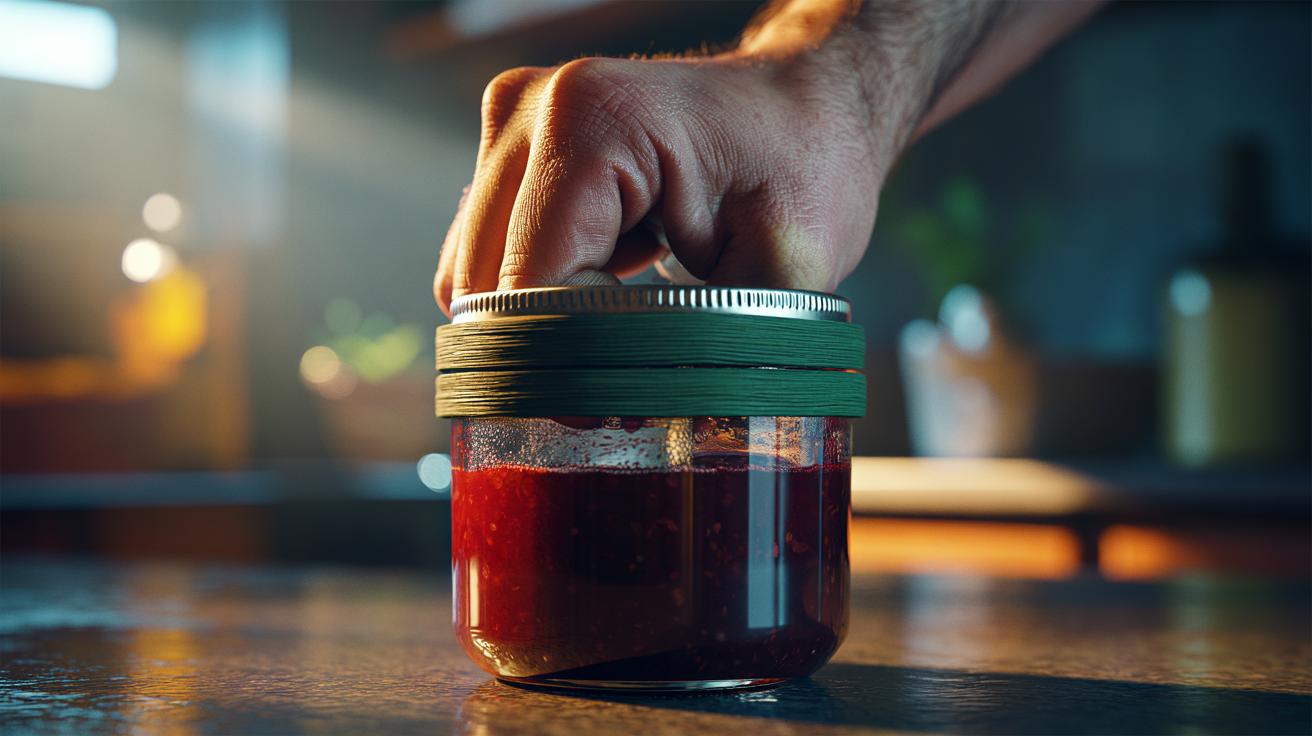
Dry everything first. A quick wipe removes oil or sauce mist that defeats the best band. Choose a sturdy, wide rubber band and stretch it around the lid’s outer rim, letting it sit flat like a tyre on a wheel. If the band twists, smooth it so maximum surface touches the metal. Hold the jar body with your non-dominant hand; bracing it against your hip or a tea towel stops rolling. Turn the lid anticlockwise—lefty-loosey—using steady, even pressure rather than a frantic yank. That steadiness is where rubber’s grip shines.
If it won’t budge, tap the lid’s edge lightly on the worktop or with a wooden spoon to nudge the seal. A 10–15 second warm-water rinse on the lid area (not the glass body) can loosen the compound under the cap. Reapply the band, reset your stance, and try again. For tender wrists, place a second band around the jar’s shoulders to improve your hold, or use a short tea towel over the band to protect skin without sacrificing traction.
Which Rubber Bands Work Best
Not all loops are equal. Wide, flat bands spread pressure and grip far better than thin strings, which bite into fingers and roll off caps. Look for bands 3–6 mm wide with decent thickness; the kind used on broccoli bundles, post-room parcels, or reusable silicone bands sold for jars are ideal. Latex offers exceptional tack but perishes with age and sunlight; silicone resists heat and lasts longer, though it can be slightly less sticky on dry metal. A snug, flat fit around the lid’s circumference is the single biggest predictor of success.
Keep a small selection in a drawer or clipped to the fridge with a magnet. Replace bands that crack or glaze over, as aged rubber loses grip. If you frequently open large jars—pickles, passata—use a wider loop to avoid finger strain. For delicate hands, a fabric-covered elastic hair tie can serve in a pinch, though it’s usually less grippy than raw rubber.
| Band Type | Width | Best For | Pros | Watch-outs |
|---|---|---|---|---|
| Latex postal band | 4–6 mm | General lids | High friction, cheap | Ages, can snap |
| Produce (broccoli) band | Wide, thick | Large jars | Excellent grip, comfy | Can smell, bulky |
| Silicone jar band | 3–5 mm | Hot or wet lids | Heat resistant, durable | Less tack on dry metal |
| Elastic hair tie | Varies | Emergency use | Common, gentle | Lower friction |
Safety, Hygiene, and Troubleshooting
Safety starts with control. Grip the jar close to your body and avoid twisting at the wrist alone; engage your forearm and shoulder to spread load. If glass is chipped or the lid is rusted, stop—pressing harder may crack the neck. Never insert knives or screwdrivers under the lid; one slip can gouge the seal or your hand. Instead, try a brief warm rinse around the metal cap, or gently lever the vacuum by sliding a teaspoon under the rim until you hear a faint pop, then twist using the band. Dry thoroughly before regripping.
Keep things clean. Rubber can harbour odours; wash bands with mild soap and let them air-dry. For arthritis or reduced grip strength, pair the band with a wide-handled silicone jar opener to amplify leverage without added strain. Do not pour boiling water on a cold jar; rapid expansion risks cracks. If a factory seal refuses, leave the jar upright for five minutes after warming, then retry with the band—patience pays.
Beyond the Kitchen: Everyday Uses for the Supergrip Loop
The same physics unlocks more than jam jars. A rubber band steadies bottle caps slick with condensation, tightens tripod knobs, and gives traction to stubborn garden-hose connectors. Around a torch or tool handle, it adds non-slip confidence in the rain. Wrap one around a smooth door knob to tame a toddler’s-room click at night. For tech tinkerers, a loop on camera lens rings delivers precise, quiet turns. Always cut power and let fittings cool before tackling light bulbs or fixtures, then use the band to grip the base, not the glass.
It also organises life: a loop marks the jar you’ve opened, bundles utensils for picnics, and keeps tea towels from sliding off oven rails. Once you start, you’ll stash bands in a few strategic spots, ready to convert slick surfaces into secure contact in seconds.
The tiniest household fixes carry outsized power. A humble rubber band converts shaky grip into steady torque, heads off wrist strain, and keeps jars intact for reuse. It’s sustainable—no new plastic gadgetry—and effective even when lids are damp or factory-tight, especially if you combine it with a dash of warm water and calm technique. Keep a few widths on hand, retire tired bands, and you’ll wonder why you wrestled with jars for so long. What other everyday items in your kitchen could moonlight as clever tools once you look at them with a maker’s eye?
Did you like it?4.7/5 (20)