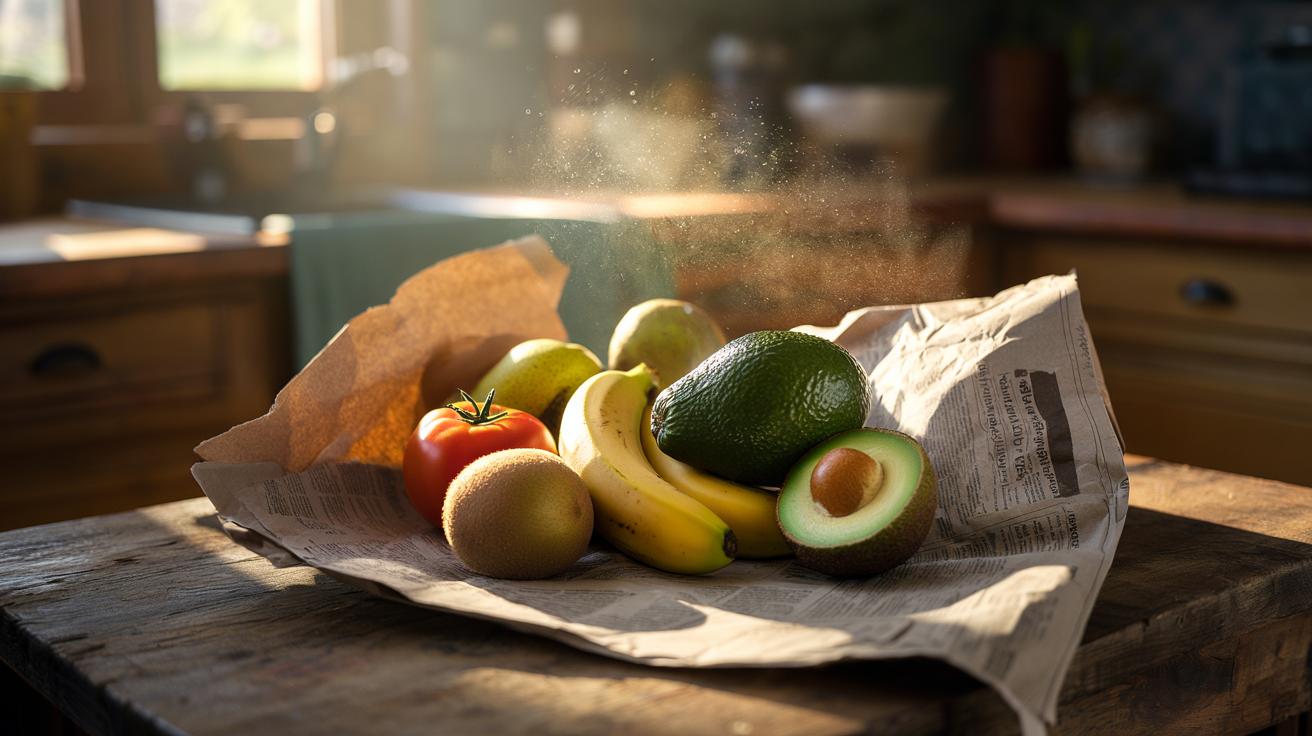
In a nutshell
- 🍌 Ethylene is the ripening “on” switch in climacteric fruits, triggering cell‑wall softening, aroma development, and conversion of starch to sugars, which speeds sweetness and texture change.
- 🗞️ A newspaper wrap creates a breathable microclimate that traps ethylene without trapping moisture, stabilising conditions around 18–22°C and accelerating ripening more safely than plastic.
- 🧰 Practical method: wrap loosely in clean newspaper or a paper bag at ~20°C, check daily, add a ripe banana for a boost, and unwrap to slow; avoid the fridge for avocados, bananas, and mangoes to prevent chilling injury.
- 📊 Typical wrap times (20°C): banana 12–36h; avocado 24–72h; pear 24–48h; tomato 24–72h; strawberries and other non‑responders should not be wrapped.
- 🌱 Limits and sustainability: Non‑climacteric fruits (berries, citrus, grapes) won’t ripen off the plant; wrapping can’t create missing sugars, but reusing newspaper is frugal and reduces food waste.
In British kitchens, the humble newspaper has long doubled as a quiet accelerant for ripening fruit. Wrap a green avocado or a firm banana, leave it on the counter, and sweetness seems to arrive overnight. The trick is not superstition but science: the paper traps ethylene, a natural plant hormone that signals fruit to soften, sweeten, and develop aroma. By creating a small, breathable cocoon, newsprint concentrates that signal without suffocating the produce. Used well, this method turns a waiting game into a predictable timetable, rescuing underripe shopping and reducing waste. Here’s how the process works, why it succeeds, and the right way to do it.
What Ethylene Does Inside Fruit
Ethylene is a gaseous hormone that many fruits produce as they ripen, particularly the so‑called climacteric group: bananas, avocados, pears, tomatoes, kiwifruit, and mangoes. Once levels rise, cells switch on enzymes that break down cell walls, soften the flesh, and convert starch to sugars. Colour shifts as chlorophyll fades and carotenoids or anthocyanins show through, while volatile compounds bloom into familiar aroma. In essence, ethylene is the ripening “on” switch that turns bland into fragrant and sweet. The more of it around, the faster that cascade proceeds—up to a sensible limit dictated by temperature and the fruit’s own physiology.
Ripening also involves a temporary spike in respiration—the “climacteric rise”—which generates heat and accelerates those reactions. That is why location matters. Too cold and the enzymes stall; too hot and texture deteriorates. Oxygen is still needed to fuel the chemistry, but a slightly enriched ethylene atmosphere nudges the process along. Think of it as moving from a whisper to a clear instruction: with ethylene concentrated, the fruit hears the message sooner and follows it more decisively.
Why Newspaper Wrapping Speeds Up Ripening
Wrapping fruit in newspaper creates a tiny, semi‑sealed headspace that slows air exchange just enough to let ethylene accumulate. Paper is porous, so it breathes; that limits condensation and discourages mould compared with plastic, which traps moisture. The result is a gentle microclimate where ethylene builds while the fruit still gets oxygen. Bananas are prolific ethylene producers, so tucking one into a paper wrap or a bowl with other fruit acts like a natural catalyst. Tomatoes, pears and avocados benefit similarly, especially if they were picked slightly under‑ripe for transport.
There is also a temperature nudge: dark paper absorbs a bit of warmth from the room, keeping the fruit in the sweet spot around 18–22°C. The wrap reduces drafts, which prevents local cooling and slows water loss, preserving turgor while enzymes do their work. By concentrating the signal and stabilising conditions, the paper shortens days into hours. Crucially, the method remains reversible: unwrap to vent ethylene and pause the pace once the fruit nears its prime.
How to Do It Safely and Effectively
Select climacteric fruits for this technique and keep skins intact. Use a single or double layer of clean newspaper; wrap loosely so you can peek in, or place fruit in a paper bag. Keep at room temperature—about 20°C is ideal—and check daily by touch and aroma. If you need speed, add a ripe banana to the wrap; if you need control, separate pieces once they soften. Avoid the fridge at this stage; cold can cause chilling injury in avocados, bananas and mangoes, muting flavour and mottling skin. Wash fruit before eating to remove any print residue.
Plastic bags can work but invite condensation and off‑odours, especially in warm kitchens. Paper strikes a balance: it traps ethylene while allowing moisture to escape. Do not wrap damaged or cut fruit; exposed flesh is an open door for microbes. For delicate produce, line with a plain paper towel. The guide below offers typical times at 20°C—your mileage will vary with variety and starting maturity.
| Fruit | Climacteric? | Relative Ethylene | Typical Wrap Time (20°C) | Notes |
|---|---|---|---|---|
| Banana | Yes | High | 12–36 hours | Use to boost others; monitor for spots. |
| Avocado | Yes | Moderate | 24–72 hours | Yields to gentle thumb pressure when ready. |
| Pear | Yes | Moderate | 24–48 hours | Fragrant when ripe; core softening follows. |
| Tomato | Yes | Low–Moderate | 24–72 hours | Improves colour and aroma off the vine. |
| Strawberry | No | Very Low | Not applicable | Won’t ripen after picking; don’t wrap. |
The Limits: Quality, Sustainability, and Food Waste
Not every fruit responds. Non‑climacteric berries, citrus and grapes do not ripen once cut from the plant; wrapping only risks mould. Even with responsive fruit, speed has a ceiling: texture and flavour depend on pre‑harvest conditions and variety. Paper can hasten the journey to ripe, but it cannot conjure sugars that never developed on the tree. Handle gently—excess pressure bruises cells and creates off‑flavours as enzymes leak and oxidise. If in doubt, stagger ripening by wrapping a few pieces at a time to smooth the household supply.
There are practical upsides. Reusing old papers is a low‑carbon trick that keeps packaging out of the bin while cutting food waste by rescuing underripe bargains. Most UK newsprint uses modern inks, yet avoid wrapping cut surfaces and wash skins before eating. By mastering ethylene, you can buy ahead, ripen on demand, and eat fruit at its fragrant peak. The newspaper wrap is not a miracle; it is savvy chemistry channelled through everyday materials.
The newspaper trick endures because it is simple, frugal and grounded in plant biology. By corralling ethylene, you align the fruit’s own signals with your schedule, turning green to gorgeous without gadgets. Keep the wrap loose, the temperature steady, and your checks frequent, and you will hit that fleeting window when texture and flavour meet. Used thoughtfully, this method saves money, cuts waste and elevates midweek meals. Which fruits on your counter would benefit most from a controlled ethylene boost, and how might you tailor the timing to suit your kitchen’s rhythm?
Did you like it?4.7/5 (26)