In a nutshell
- 🍌 The banana-skin shine works by depositing trace natural oils and waxes that lift dust and restore realistic lustre—aim for a thin, invisible film to keep stomata clear.
- 🧴 Safe method: wipe with a microfibre cloth and water, lightly buff with the peel, then remove residue and dry; ideal for glossy leaves (monstera, rubber plant), but avoid fuzzy or textured foliage—less product, more buffing.
- 🌿 Oil choices: jojoba gives a stable, light shine; neem adds mild pest deterrence; avoid heavy kitchen oils (e.g., olive) that attract dust—apply a drop on a damp cloth, never directly, and test one leaf first.
- ⚠️ Watch-outs and myths: thick oil layers block gas exchange and trap heat; sugars can attract pests; polish is not fertiliser, and a high gloss does not equal plant health.
- 🧪 DIY routine: mix 250 ml distilled water + 1 drop jojoba + a pinhead of castile soap, or use a peel-then-wipe approach; clean monthly in the growing season, less in winter, and keep plants out of direct sun right after polishing.
Houseplant owners have long sworn by the banana-skin shine, a simple rub-and-buff ritual said to turn dull foliage into a glossy centrepiece. The idea is disarmingly straightforward: the inside of a fresh peel deposits a whisper of natural oils and microscopic waxes that lift dust and revive lustre. Done carefully, it can refresh the leaf’s surface without resorting to aerosol polishes. Yet care is key. Too much oil can smother pores and invite grime, while sugary residue may attract pests. Here’s how the technique works, when to use it, and how to pair banana skins with gentle, plant-safe oils for a clean, enduring sheen.
The Science of Banana-Skin Shine and Natural Oils
Leaves look tired for three reasons: dust build-up, reduced surface wax, and uneven water spotting. The inner side of a banana skin carries trace lipids, soft waxes, and potassium-rich sap that act as mild polishers. As you buff, the peel’s soft fibres lift grime and create light-reflecting smoothness across the leaf’s cuticle. This is not fertilisation; it’s a cosmetic cleanup that restores a uniform surface. The goal is a thin, almost invisible film, enough to enhance reflectivity without clogging the tiny breathing pores, or stomata, especially on the leaf underside.
Why the focus on oil type? Plant leaves naturally carry waxy coatings, so a compatible, ultra-light layer can reinforce the finish. Jojoba oil (technically a liquid wax) aligns closely with cuticular chemistry and resists rancidity. Neem oil lends modest pest deterrence, though its scent divides opinion. Heavier kitchen oils—such as olive oil—can look glossy at first yet turn tacky, catching dust. Gloss alone is not the aim; clean, well-functioning leaves are. Think of the banana-peel method as a careful polish that should never leave a visible slick.
Safe Techniques for Buffing Leaves at Home
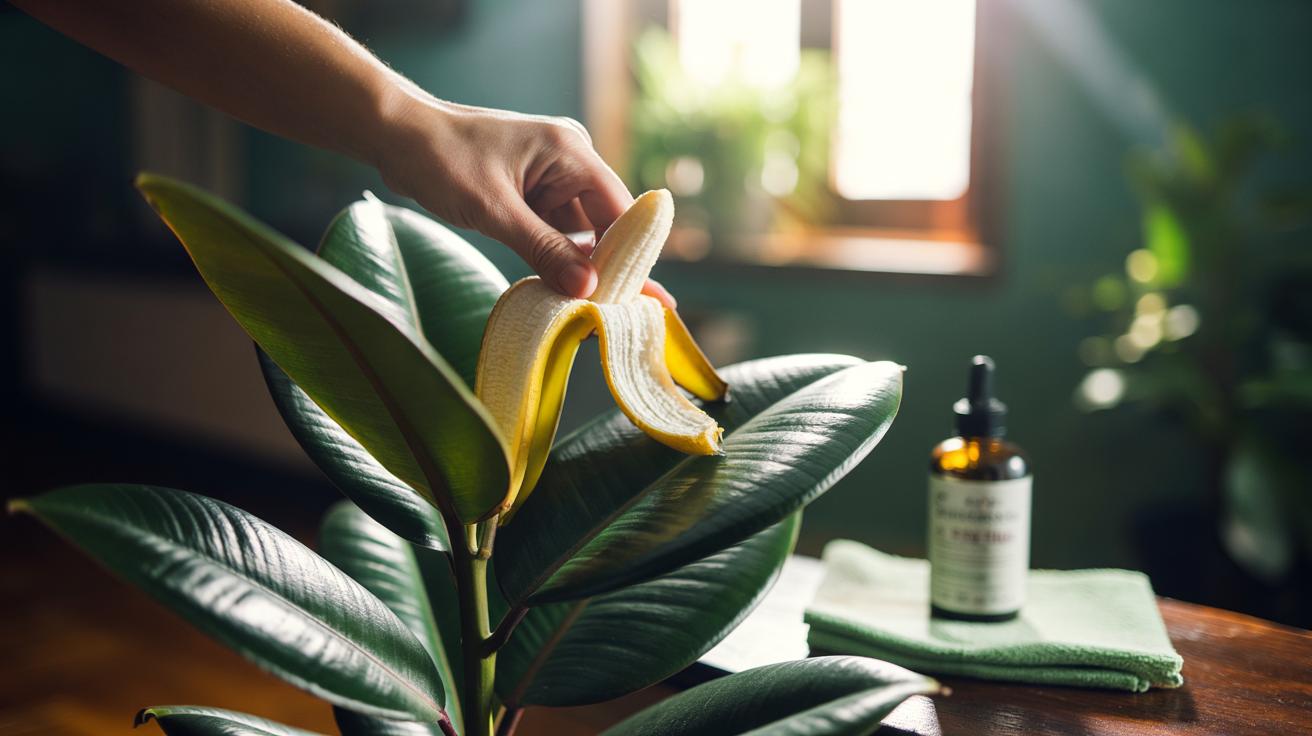
Begin with a soft microfibre cloth and tepid water. Wipe each leaf to remove loose dust. Take a fresh, ripe banana peel, inner side facing the leaf, and lightly glide over the top surface. Work in small arcs, avoiding the midrib. Immediately follow with a second cloth lightly dampened with water to remove sugars, then a dry cloth to finish. Always wipe off residue within a minute to prevent stickiness. Treat only the upper surface of glossy-leaved plants like rubber plants, monstera, and philodendron. Skip fuzzy or textured foliage—African violets, ferns, and many succulents—as fibres trap moisture and oils.
If you prefer oils, place one drop of jojoba or diluted neem on a damp cloth, not directly on the plant. Buff gently, then buff dry. Test on a single leaf first. Clean monthly at most during the growing season; in winter, extend intervals. Never polish stressed, sunburnt, or pest-ridden plants until they recover. Avoid midday sun straight after polishing, which can accentuate leaf temperatures. The mantra is simple: less product, more buffing. A transparent, clean finish beats a mirror shine every time.
| Material | Primary Benefit | Main Caution | Best For |
|---|---|---|---|
| Banana peel | Gentle polish, lifts dust | Sticky sugars if not wiped | Monstera, rubber plant |
| Jojoba oil | Light, stable shine | Use a drop; avoid buildup | Ficus, philodendron |
| Neem oil | Mild pest deterrent | Strong scent; dilute well | Hardy, glossy leaves |
| Olive oil | Immediate gloss | Attracts dust; can go rancid | Occasional use only |
Benefits, Pitfalls, and Persistent Myths
The rewards are real: a modest polish can improve light capture at the surface, helping leaves photosynthesise efficiently by removing dust that scatters rays. Visual appeal matters too; glossy foliage signals care and can spotlight healthy growth. A light touch with neem adds a preventative edge against soft-bodied pests. Yet the pitfalls are equally tangible. Thick oil layers block gas exchange, stress tissue, and create a dirt magnet. Sugars left behind from banana skins may lure fungus gnats or ants. And any oily film can amplify heat under strong sun or near radiators.
Myths deserve busting. Banana skins on leaves do not “feed” the plant; nutrients applied to foliage this way are negligible. Polish is not fertiliser. Another misconception: the shinier, the healthier. Plants evolved matte and glossy finishes for good reasons; forced gloss says more about technique than vitality. Finally, don’t confuse a clean sheen with pest control. Leaf shine may help you spot issues, but it doesn’t replace routine checks, appropriate watering, or balanced nutrition at the root zone.
DIY Shine Recipes and Smarter Alternatives
For a minimal routine, keep a two-cloth system. Mix 250 ml distilled water with a single drop of jojoba oil and a pinhead of unscented castile soap as an emulsifier. Shake, dampen a cloth, then buff and dry. For occasional pest pressure, swap jojoba for a weak neem oil solution following label rates; always buff dry. A pure banana-peel pass remains the quickest option, but make it a two-step: peel, then wipe. Frequency should fit your environment—city homes near roads need more dusting than quiet, filtered-air spaces.
Prefer to skip oils altogether? Use water and a microfibre mitt, upgrading to a soft brush for ribbed leaves. Some recommend diluted milk; it can cloud and smell, so it’s best avoided. Commercial aerosols often rely on silicones for a high-gloss finish that looks artificial and may seal the surface. Clarity, not glare, is the benchmark. Keep plants off direct sun for a few hours post-clean, and rotate the pot to balance light. Your leaves should look natural—clean, supple, and quietly bright.
Handled with care, the banana-skin shine and a dash of natural oils can lift a room without compromising plant health. The trick lies in restraint, smart product choice, and diligent buffing to leave no sticky trace. Never oil fuzzy or waxy leaves, and always test before committing. Paired with good light, proper watering, and seasonal feeding, a gentle polish becomes the finishing touch rather than the main event. Which plants in your collection would benefit most from a careful clean-and-buff, and how might you adapt the routine to your home’s light, dust, and humidity?
Did you like it?4.5/5 (27)