In a nutshell
- 🍋 One-pot lemon garlic pasta ready in 12 minutes, delivering trattoria-style flavour via starchy pasta water and a silky emulsion.
- 🥄 Key technique: cook in shallow, well-salted water, bloom lemon zest, gently warm garlic in extra-virgin olive oil, then finish with butter and cheese for glossy cling.
- 📦 Ingredients and swaps: core of spaghetti, lemon, garlic, oil; flexible options include gluten-free pasta, vegan butter/cheese, and add-ins like parsley or chilli.
- ⏱️ Method and texture: toss often for al dente, emulsify with cheese and butter, and balance fat, acid, salt, and heat using lemon, salt, and hot water.
- 🧯 Troubleshooting and serving: thin sauce? reduce and toss; too tight? loosen with water; serve immediately with extra cheese, peppery rocket, or upgrades like peas or prawns.
Some nights demand speed without sacrificing soul. This one-pot lemon garlic pasta puts dinner on the table in 12 minutes, yet lands with the poise of a trattoria favourite. The method is disarmingly simple: cook the pasta in a shallow, well-salted bath so the released starch creates a natural emulsion, then wake it up with lemon zest, softened garlic, and a gloss of butter or good extra-virgin olive oil. The result is a sauce that clings, perfume that travels, and minimal washing-up. Ready in 12 minutes, big on Italian character, it’s a pantry-first recipe that rewards precision as much as appetite, and it’s as comforting on Tuesday nights as it is impressive for last-minute guests.
What Makes This One-Pot Pasta Taste Like Italy
The secret is balance: fat, acid, salt, and heat arrive in concert. Zingy lemon does the heavy lifting on brightness, while garlic softens into sweetness when coaxed gently in extra-virgin olive oil. Cooking the pasta in its own shallow liquor means starchy pasta water never leaves the pan, so you build a glossy sauce naturally instead of diluting it. A restrained pat of butter (or vegan alternative) rounds edges without muting character.
Seasoning is handled the Italian way: salt the water until it tastes like the sea, then taste again at the end. You’re chasing al dente, a slight bite that keeps the sauce lively. Fresh zest brings fragrance; the juice waits until the hob is turned low to preserve its sparkle. It tastes like Italy because every element is in proportion, from citrus lift to savoury depth, finishing with a twist of black pepper and a snow of hard cheese.
Ingredients and Smart Substitutions
This is a pantry-first recipe designed for agility. Keep the backbone—pasta, lemon, garlic, olive oil—and adapt the rest to taste or dietary needs. The core stays simple; the flavour feels sophisticated. Use unwaxed lemons for the best zest, and choose bronze-cut spaghetti if you can for sauce cling. The amounts below serve two generously.
| Ingredient | Amount | Substitution/Notes |
|---|---|---|
| Spaghetti | 200 g | Gluten-free spaghetti works; shorten agitation to protect strands |
| Water | 600 ml | Hot kettle speeds start; keep extra hot water nearby |
| Fine sea salt | 1 tsp | Season to taste; pasta water should be well-salted |
| Lemon (unwaxed) | 1 (zest + 2 tbsp juice) | Use more zest for aroma; adjust juice for brightness |
| Garlic, thinly sliced | 3 cloves | Reduce to 2 for milder finish |
| Extra-virgin olive oil | 2 tbsp | Choose fruity, peppery oil for backbone |
| Butter | 15 g | Vegan block or more olive oil for dairy-free |
| Pecorino or Parmesan, finely grated | 30 g | Vegan hard cheese or 1 tbsp nutritional yeast |
| Chilli flakes | Pinch | Optional heat; add at the end |
| Flat-leaf parsley, chopped | 1 tbsp | Optional herb lift |
Quality matters. Choose a lemon that feels heavy for its size, as weight signals juice. Grate cheese finely so it melts quickly into the emulsion. Small choices—good oil, fresh zest, hot water—compound into restaurant-level results without fuss.
Step-by-Step: from Pan to Plate in 12 Minutes
Set a wide, high-sided pan over medium heat. Add the olive oil and sliced garlic; warm gently for 30–45 seconds until just fragrant, not browned. Tip in 600 ml hot water and the salt, then add the spaghetti, fanning it out so it softens evenly. Bring to a lively simmer, stirring and bending strands under as they yield.
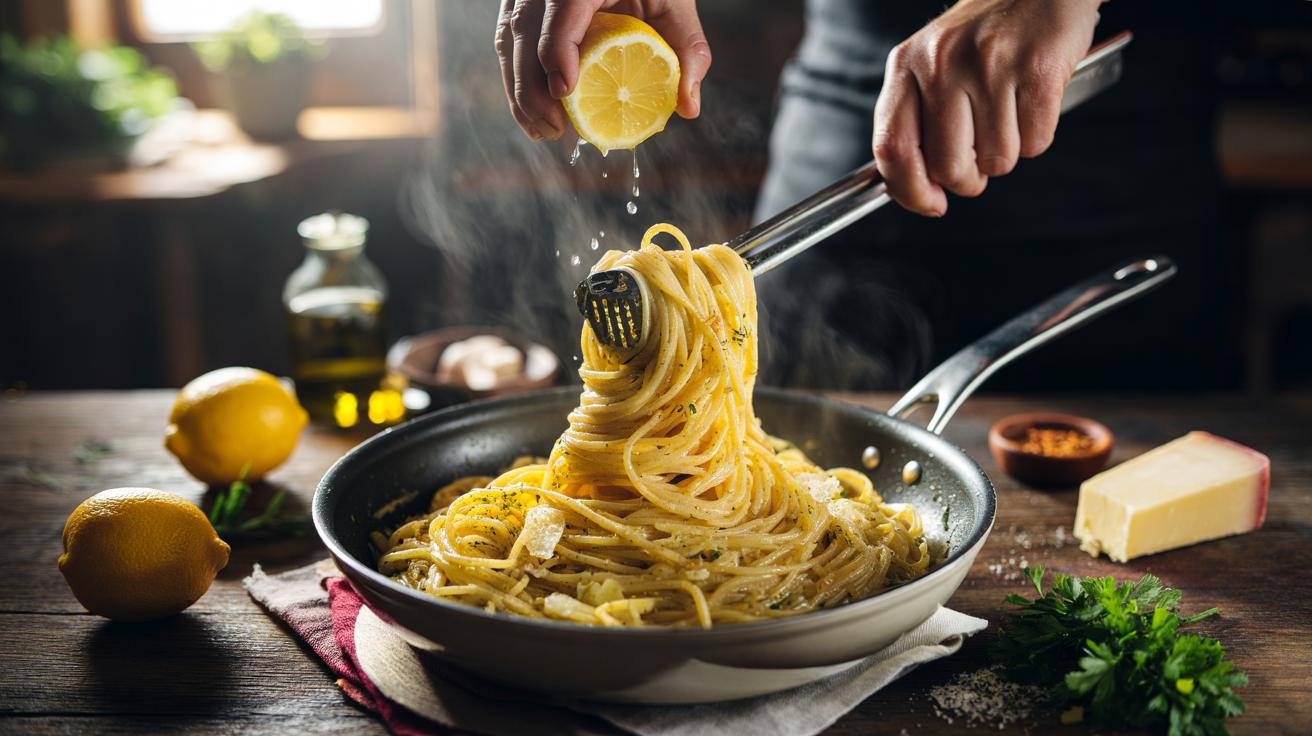
Cook for 7–8 minutes, tossing often so the released starch distributes and the sauce thickens. Scatter in lemon zest at the halfway mark to bloom its oils. When the pasta is nearly al dente, lower the heat; add butter, a splash of hot water if needed, and most of the cheese. Toss vigorously to emulsify into a glossy cloak. No draining, no separate sauce—just one pan, one swirl.
Finish with lemon juice, black pepper, and chilli flakes to taste. Adjust with a spoon of hot water if tight, or an extra pinch of salt for lift. Plate immediately, top with remaining cheese and parsley, and serve. It should shine, not pool.
Timing, Texture, and Troubleshooting
If the sauce looks thin, keep the pan over gentle heat and toss; starch and cheese will thicken in moments. If it clings too tightly, relax the sauce with a spoon of hot water. Too sharp? Soften with a knob of butter or a splash more oil. Too flat? Add a squeeze of lemon or a pinch of salt. Balance is your compass, and tasting as you go is the quickest route to brilliance.
For gluten-free pasta, reduce agitation and check earlier; shapes vary. Dairy-free versions shine with extra extra-virgin olive oil, vegan block butter, and a measured dose of nutritional yeast for savouriness. Add peas, spinach, or cooked prawns in the final minute for a one-bowl upgrade without compromising the core method.
Leftovers keep for a day, but this dish is best eaten immediately when the emulsion is silkiest. Pair with a peppery rocket salad and a chilled Italian white. The technique is repeatable, the flavour transportive, and the washing-up mercifully light—ideal for weeknights and date nights alike.
In a dozen minutes you’ve coaxed sunshine into a pan: lemon bright, garlic mellow, pasta glossed to the nines. The one-pot method removes faff while doubling down on flavour, letting starchy pasta water do the heavy lifting and turning simple ingredients into something that sings. Keep the basics, swap the accents, and you’ll have a reliable midweek marvel that feels like a mini holiday. Dinner, sorted—taste, assured. What twist will you try next: a handful of capers for brine, a scatter of toasted breadcrumbs for crunch, or a tangle of courgette ribbons for freshness?
Did you like it?4.3/5 (20)