In a nutshell
- 🧺 A folded towel creates an instant non-slip surface by adding compliance, increasing contact area, boosting static friction, and damping vibrations; a slightly damp cloth often grips best.
- 🧻 Choose tight-weave cotton terry or microfibre, avoid ultra-plush or threadbare towels, fold 2–3 layers, degrease the counter, and perform a two-finger slide test for a quick 30-second safety upgrade.
- 💧 Tune moisture to the surface: just-damp on stone or stainless, often dry microfibre on laminate; avoid over-soaked towels that can sledge and risk swelling wooden boards.
- 🧼 Protect hygiene: dedicate towels, use colour-coding to prevent cross-contamination, wash at 60°C, dry completely, replace frayed cloths, and keep storage areas clean and dry.
- 🧰 Know the alternatives: use a silicone mat or boards with non-slip feet in high-volume settings; prioritise stable setups outdoors—because stability is safety and speed.
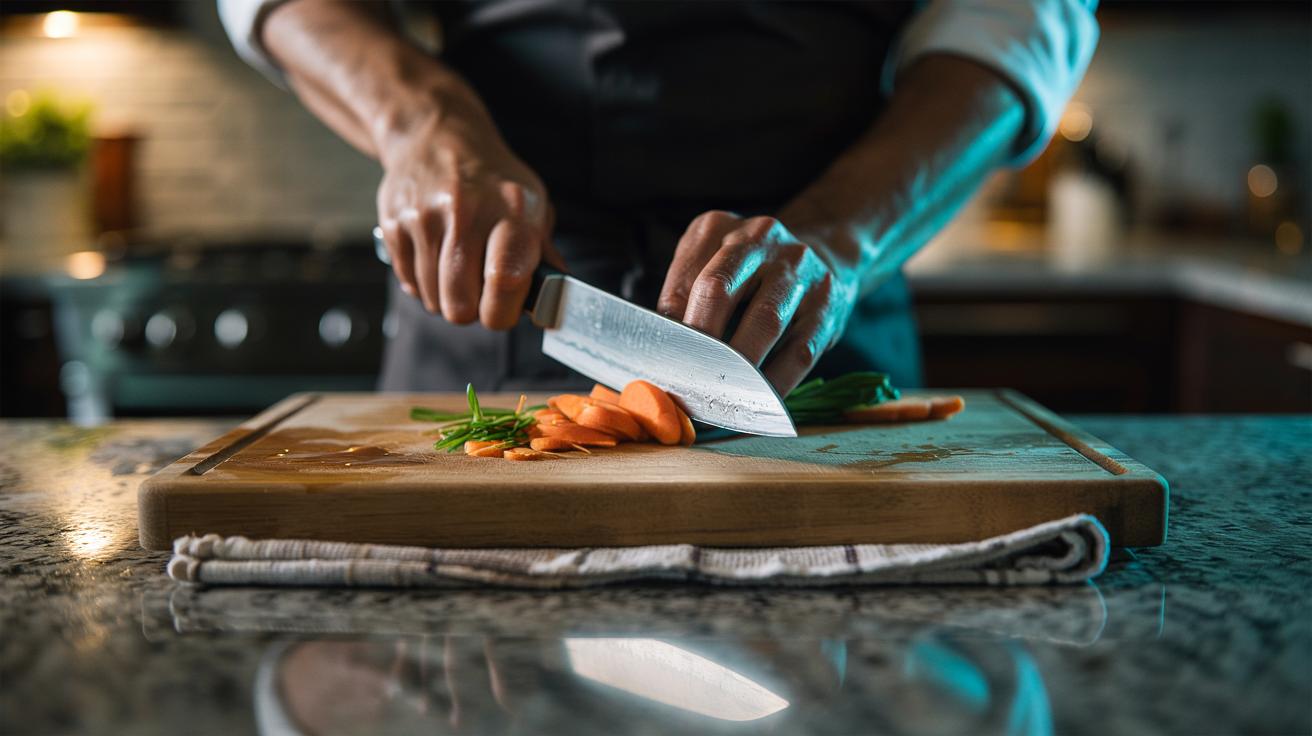
It’s the quiet trick loved by chefs across Britain: slip a folded towel beneath your chopping board and the wobbles vanish. In seconds, a slick worktop becomes an instant non-slip surface. There’s elegance in its simplicity, but also science. The towel cushions, grips and stabilises, helping you slice safely and efficiently. For home cooks and professionals, it’s a no-cost upgrade that protects fingers and preserves rhythm at the bench. When your board won’t stay put, this small intervention stops slipping in seconds. Here’s how it works, which towels do it best, and the hygiene habits that keep the hack kitchen-safe day after day.
The Physics Behind a Non-Slip Towel Hack
A rigid board on a smooth counter has limited real contact; micro-peaks touch, then shear. Add a towel and you introduce compliance. The fibres deform to match tiny irregularities in both the board and the benchtop, boosting the contact area and the effective static friction resisting the first hint of slide. The board’s weight preloads the towel, increasing normal force at myriad points, while the woven pile acts as a forest of micro-brakes. More true contact equals more grip—and better control when you’re bearing down on a butternut squash or a crusty loaf.
There’s damping at play too. As you chop, impacts travel into the towel, where the loops dissipate energy and quell stick–slip vibrations that can nudge a board sideways. A hint of moisture adds light adhesive action via capillary bridges, sharpening stability without mess. Go too wet and the layer can sledge; too fluffy and it compresses unevenly. The sweet spot is a compact weave with modest loft. A slightly damp towel often delivers the most reliable non-slip performance—firm under load, grippy under hand.
Choosing the Right Towel and Setup
Pick a towel with tight loops and good bite: cotton terry tea towels and microfibre cloths are dependable choices. Avoid threadbare linens that slide like paper, and ultra-plush bath towels that squish. Fold to match the footprint of your board—two to three layers typically give 4–8 mm of compressible support—then lay the board so the towel sits fully beneath, not just at the corners. Degrease the counter first; a film of oil defeats friction. Keep the towel flat, clean, and fully tucked so no edge peeks out to catch a sleeve. Wood and plastic boards benefit; glass boards, already treacherous, belong in the recycling, not the kitchen.
Dampness is a dial, not a switch. For most setups, a light spritz or a well-wrung cloth brings peak grip without puddling. If your benchtop is sealed stone or stainless steel, aim for “just-damp”; on older laminate, a dry microfibre can suffice. Test by pushing the board laterally with two fingers—no skid, you’re set. The whole routine is a 30-second safety upgrade that locks your mise en place in place, letting you focus on knife work rather than chasing your board around the kitchen.
| Towel Condition | Grip Level | Best For | Cautions |
|---|---|---|---|
| Dry cotton terry | Medium | Laminate, sealed wood | May slip on very smooth stone |
| Lightly damp microfibre | High | Quartz, granite, stainless | Wring well to avoid pooling |
| Over-soaked towel | Low/Unstable | None | Can sledge; risks swelling wood |
Hygiene, Safety, and Maintenance
The hack only shines when it’s clean. Dedicate towels to the job, and keep cross-contamination off the menu: one towel for raw proteins, another for veg, or adopt colour-coding to match your boards. Wash at 60°C with a thorough rinse, and dry completely to defeat lingering odours and microbes. Replace frayed cloths; loose fibres can migrate to food. Be wary of standing moisture under wooden boards—warping and mildew are unwelcome guests. If a towel smells, it’s not clean enough for food prep. Store folded towels in a dry drawer, not draped near the hob where grease mist can undo your good work.
There are times to switch tactics. In high-volume or commercial settings, a silicone mat or thin rubberised liner offers consistent grip and rapid sanitising. Boards with integrated non-slip feet are excellent on polished stone. For outdoor cooking, where surfaces flex and tilt, clamp a board to a stable table or use a heavier butcher’s block. Keep clear of open flames and avoid pooling water near live electrics. A minute of checks—clean towel, dry surface, square placement—repays itself in confidence and cut precision. Stability is safety, and safety is speed.
From physics to practice, the folded towel is a wonderfully British solution: inexpensive, ingenious and ready to work at a moment’s notice. By boosting contact, damping vibration and adding a touch of tack, it turns a restless board into a steadfast platform for confident knife work. Keep it clean, choose the right weave, and tune the dampness for your surface, and you’ll enjoy professional-level stability at home. What combination of towel, board and benchtop gives you the best grip, and how might you refine the setup to suit your own kitchen rhythm?
Did you like it?4.6/5 (30)