In a nutshell
- 🔬 The vinegar + paper towel wrap holds acetic acid against stainless steel, dissolving oils, salts, and mineral haze for a streak‑free finish.
- 🧽 Method: spray white vinegar, press on saturated paper towels for 3–10 minutes, remove, wipe with the grain using a damp microfibre, then buff dry.
- ⚠️ Safety: never mix vinegar with bleach, avoid natural stone, limit contact on aluminium, and skip abrasive pads; always dry thoroughly after cleaning.
- 🧠 Use cases: best for fingerprints, smears, and light water marks; pair with a drop of washing‑up liquid for heavy grease, or add a light mineral oil finish to slow reprints.
- 🌍 Benefits: low‑cost, low‑odour, and eco‑lean; especially effective in hard‑water areas where acetic acid cuts limescale spots other cleaners smear.
There’s a quietly brilliant cleaning hack sweeping British homes: the vinegar + paper towel wrap that restores stainless steel to a streak-free sheen. It’s simple, inexpensive, and rooted in basic chemistry. Fingerprints are a cocktail of skin oils, salts, and moisture that cling to the metal’s protective surface, leaving cloudy smears. By holding acetic acid in place, the wrap loosens residues that ordinary wipes smear around. Keep the surface wet, give the acid a moment, and those smudges melt away. For appliance doors, cooker hoods, and splashbacks, the method offers newsroom-speed results with professional polish—no proprietary sprays, no lingering perfume, just crisp clarity and a pleasant reset for busy kitchens.
How the Vinegar Wrap Dissolves Fingerprints
Stainless steel wears a thin, self-healing layer of chromium oxide that resists rust but loves to show marks. Fingerprints stick because sebum (lipids) mingles with tiny salt crystals, water spots, and detergent residue. A quick wipe often shifts oils while leaving streaky minerals behind. Enter white vinegar (roughly 5% acetic acid). Its mild acidity helps dissolve alkaline traces—like limescale and soap film—while its water content softens and lifts grime. Instead of pushing residues across the grain, the wrap gives the chemistry time to work exactly where it’s needed, reducing the force required to clean and minimising micro-scratches.
Hold time is critical. Saturated paper towels cling to vertical panels, creating a uniform, wet interface. That continuous contact breaks the bonds between deposits and the passive layer, so a final wipe removes the lot rather than redistributing it. The result is streak-free clarity because you’re not fighting residues; you’ve dissolved or displaced them. For fresh prints, the effect is nearly instant; for stubborn haze, a few minutes’ dwell time does the heavy lifting.
Step-By-Step: The Paper Towel Wrap Method
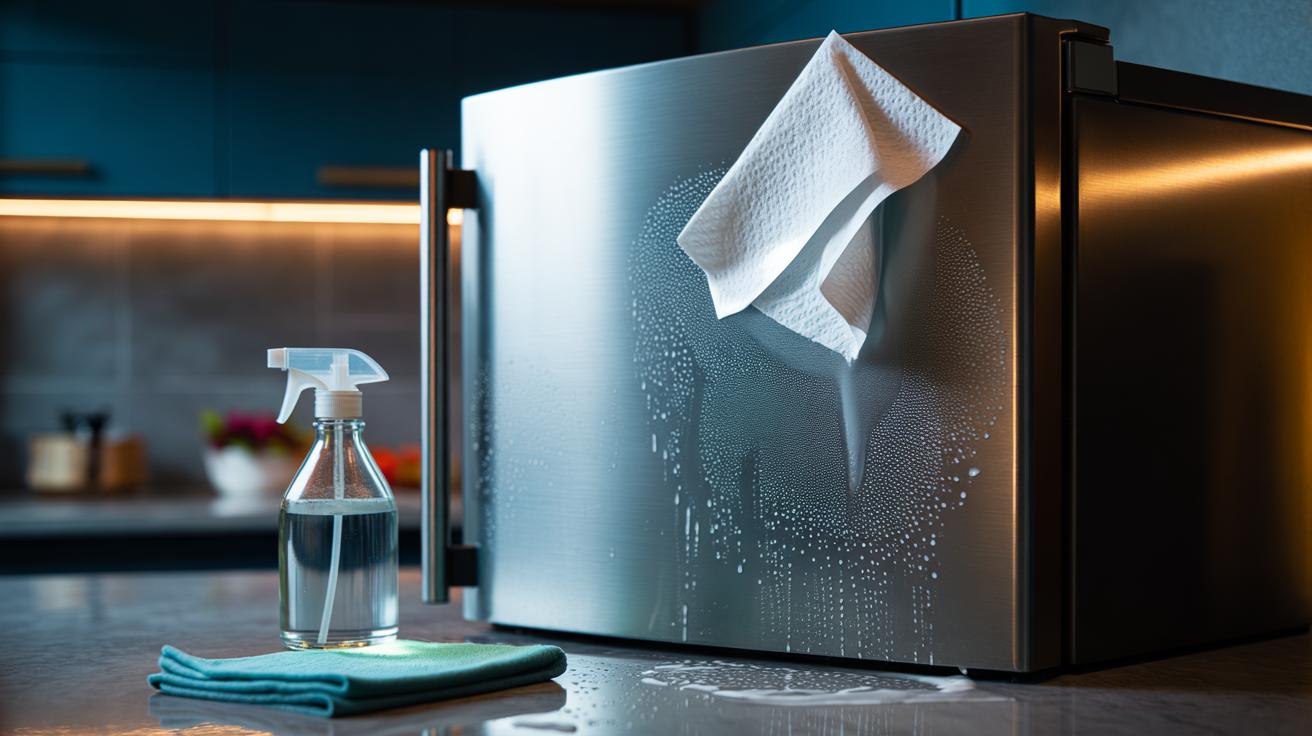
Start with cool surfaces. Decant standard white vinegar into a spray bottle. Lightly dust the steel with clean water if visibly dusty, then spray until evenly damp. Press on folded paper towels to create a full cover “wrap” and spritz again so the towels are properly saturated. Allow 3–10 minutes of contact, depending on build-up, to let the acid loosen salts and film. Remove the towels and wipe in the direction of the metal’s grain with a clean microfibre cloth, rinsed and wrung out. Follow with a second dry microfibre to buff until the surface snaps to clarity.
For heavy kitchen film, repeat once or spot-treat with a fresh vinegar spritz. If you encounter greasy fingertips that resist, add a tiny drop of washing-up liquid to your damp microfibre for one pass, then re-spritz vinegar and buff dry. Optional: finish with a pea-sized amount of food-safe mineral oil on a cloth to reduce future prints—always applied sparingly and wiped thoroughly.
Safety, Materials, and What to Avoid
Vinegar is a weak acid, kind to most stainless finishes when used briefly and followed by a rinse or buff. Do not mix vinegar with bleach or chlorine-based cleaners—this produces dangerous gases. Avoid long soaks on pitted or damaged steel, and never use the wrap on natural stone (it can etch), reactive metals, or electronic interfaces. Use soft paper towels or non-abrasive cloths; never pair the method with scouring pads, which can scratch and invite future staining. For brushed steel, always wipe with the grain to preserve the factory texture.
| Surface/Item | Vinegar Wrap Suitability | Contact Time/Notes |
|---|---|---|
| Stainless steel appliances | Yes | 3–10 mins; wipe with grain, buff dry |
| Stainless steel cookware | Yes | 3–5 mins; rinse thoroughly around rivets |
| Aluminium and anodised aluminium | Caution | Brief only; can dull finish—spot test |
| Natural stone (granite, marble) | No | Risk of etching—avoid entirely |
| Rubber seals/painted panels | Limited | Wipe-on/wipe-off; do not soak |
Finish every clean by drying thoroughly—this halts residual acidity and blocks new water spots. A quick rinse or a damp-to-dry buff is your corrosion insurance, especially in coastal homes or busy commercial kitchens where salt and steam linger.
When to Use It Versus Other Cleaners
The wrap shines when you’re battling smears, fingerprints, and light water marks on doors and splashbacks. It outperforms glass cleaner on steel because it actively targets mineral haze instead of flashing off with alcohol. For baked-on grease, begin with warm water and a drop of washing-up liquid to break heavy lipids, then apply the vinegar wrap to finish. Commercial stainless steel polishes can mask marks with oils; they look glossy but may attract fresh prints. The vinegar technique gives a neutral, streak-free base that you can leave bare or seal lightly with a non-greasy protectant.
Environmentally, it’s a win: no propellants, minimal packaging, and a familiar ingredient already in the cupboard. Costs are pennies per clean, and there’s no cloying scent—just a brief tang that dissipates. If your water is very hard, the method is especially effective because acetic acid targets limescale spots. For mirrored finishes, reduce dwell time and buff promptly to maintain that crisp, reflective look.
For households juggling family fingerprints, steamed-up cooking sessions, and the steady scuff of daily life, the vinegar + paper towel wrap offers a journalist’s favourite combination: quick, reliable, and elegantly simple. Keep the contact time short, work with the grain, and always dry to protect the finish. Do not use on stone, avoid mixing with bleach, and spot test unfamiliar surfaces. With that, most steel will gleam on cue. What’s your biggest stainless steel headache—a smeary fridge door, a dull cooker hood, or the high-traffic splashback—and where will you try the wrap first?
Did you like it?4.5/5 (20)