In a nutshell
- ☕ Used coffee grounds are the £1 kitchen waste that can transform compost overnight by feeding nitrogen-hungry microbes, raising heat, and accelerating decay.
- ⚖️ Use safely: keep grounds to 15–20% by volume, mix thoroughly with carbon-rich browns, maintain “wrung-out sponge” moisture, and avoid clumps to prevent anaerobic smells.
- 🔬 The science: grounds help hit the ideal carbon-to-nitrogen ratio (~25–30:1), triggering an exothermic microbial bloom that can reach 55–65°C and speed pathogen kill and fibre breakdown.
- 🐛 Wormery tips: worms enjoy grounds; add about a mug per week mixed with bedding, include paper filters, and skip plastic-lined pods or metallised bags.
- 🇬🇧 Sourcing made easy: use home-brew leftovers or pick up free café grounds; store briefly in a lidded tub and add in small, regular doses for consistent results.
Compost can be sluggish in winter and patchy in summer. Yet there’s a simple, thrifty fix hiding in plain sight: the used coffee grounds you’d otherwise throw away. In the UK, a small bag of grounds costs about £1 if you’ve none at home, and many cafés hand them out free. Add them to your heap tonight and you’ll often notice a warmer, livelier pile by morning. The reason is straightforward biology paired with smart ratios. High-activity microbes love the nitrogen-rich, moist, finely milled texture of grounds. They wake up, multiply fast, and turn sleepy compost into a hotbed of decomposition.
Why Used Coffee Grounds Supercharge Compost
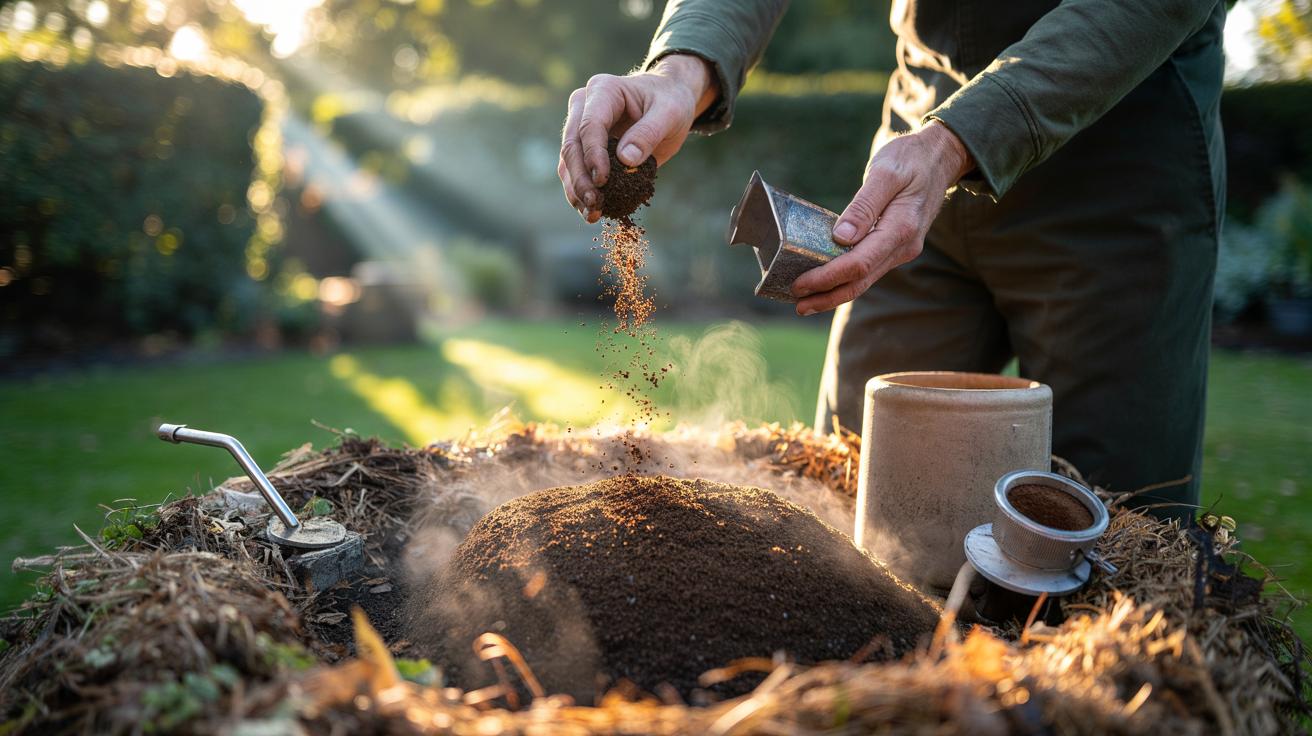
Used coffee grounds arrive pre-moistened, finely textured and laden with readily available nitrogen (typically around 2% by weight). This combination is gold for microbes. Fine particles create more surface area, so bacteria and fungi can colonise quickly. Grounds also hold water like a sponge, stabilising moisture where heaps often falter. Add them in the evening and the microbial party starts fast, pushing temperatures up and accelerating decay.
There’s structural magic too. When mixed through with “browns” such as shredded cardboard or dry leaves, grounds stop a heap becoming claggy. They knit into the matrix, improving airflow—vital for aerobic composting that avoids sour smells. They contribute trace minerals (magnesium, potassium, copper), and while their famed “acidity” is mostly myth (used grounds test close to neutral), they do subtly nudge the micro-ecology. Worms adore them. So do thermophilic bacteria that drive that coveted rise to 55–65°C, where pathogens are neutralised and tough stalks surrender. The result is a darker, sweeter-smelling, faster-maturing compost that looks like woodland soil far sooner than you’d expect.
How to Use Coffee Grounds Safely and Effectively
Think ratio, contact, and moisture. Aim for no more than 15–20% grounds by volume in any one addition. Sprinkle and fork them through—don’t dump in clumps. A thick, wet mat can turn anaerobic and slimy, slowing everything down. Pair every scoop of grounds with a bigger helping of “browns”: shredded paper, torn egg boxes, chipped twiggy prunings. This balances carbon, opens air channels, and moderates moisture. Grounds are a green (nitrogen) ingredient, so match them like-for-like with dry, carbon-rich materials.
Check the feel of the heap. It should be as damp as a wrung-out sponge. Too dry? Your grounds help. Too wet? Fold in more shredded cardboard. You can add paper coffee filters as well; they break down readily. Pods and plastic-lined bags are out. In a wormery, go smaller: a mugful a week, mixed with bedding, keeps worms happy without overheating the bin. If odour creeps in, you’ve gone anaerobic—fluff the heap, add browns, and back off on quantity for a week.
| What | Target | Tip |
|---|---|---|
| Grounds proportion | 15–20% by volume | Layer thinly, then mix |
| Moisture | Wrung-out sponge feel | Add browns if soggy |
| Aeration | Fluff weekly | Fork through in minutes |
| Wormery dose | 1 mug per week | Mix with bedding |
The Science Behind the Overnight Boost
Compost speed hinges on the carbon-to-nitrogen ratio and oxygen. Grounds push the ratio toward a sweet spot (~25–30:1) when balanced with dry carbon. Microbes seize the finely milled particles, metabolise simple compounds, and multiply. This microbial bloom is exothermic—heat is a by-product of respiration. That’s why a previously tepid heap often runs warmer within hours of adding grounds and remixing.
Temperature tells the tale. Slide in a compost thermometer at dusk after mixing in grounds; readings commonly lift by morning as bacteria enter a thermophilic phase. Warmer conditions speed enzyme activity, which breaks down lignin and cellulose in stubborn stems and cardboard. Yes, caffeine remains in traces, but research suggests spent grounds behave neutrally or even beneficially in compost, with no lasting harm to worms or plant growth when used sensibly. The fine texture also reduces air gaps around dense food scraps, improving contact and colonisation. In short, you’re not “fertilising” the heap—you’re turbocharging microbial logistics, compressing days of sluggish breakdown into a single, visible surge.
Sourcing Grounds for £1 (or Free) in the UK
If you brew at home, yesterday’s puck or paper-filter leftovers are the perfect kitchen waste. No coffee machine? Pop into an independent café or major chain; many bag up grounds for gardeners—often free. Bring a container. Supermarkets sometimes sell small bags of pre-ground coffee for around £1 on promotion; brew a pot, then compost the lot. Choose unbleached paper filters if possible (both bleached and unbleached are generally compostable, but unbleached keeps things simpler). Avoid plastic-lined pods and metallised bags—they don’t belong in your heap.
Store collected grounds in a lidded tub for a day or two, then use. If they compact or sour, crumble and mix with dry material before adding. Tea leaves (loose) and the contents of plastic-free tea bags behave similarly, though check for bag composition—many brands still use polypropylene. Ask your council’s guidance if you’re feeding a community compost scheme; some restrict café waste by volume. When you find a friendly local source, make it routine: a small, steady supply is better than sporadic binges that swamp your bin.
Used coffee grounds are the £1 kitchen waste that acts like a switch, flipping compost from idle to industrious overnight. They’re accessible, scalable, and—when balanced with dry browns—astonishingly effective at building heat, structure, and nutrient richness. The trick is simple: sprinkle lightly, mix well, watch the temperature climb, then repeat in modest doses. In a season of tight budgets and wilder weather, this is low-cost resilience you can feel in your hands. Will you try a night-time sprinkle and check your heap at dawn—what difference will you see, and how quickly will your compost darken and sweeten?
Did you like it?4.5/5 (27)