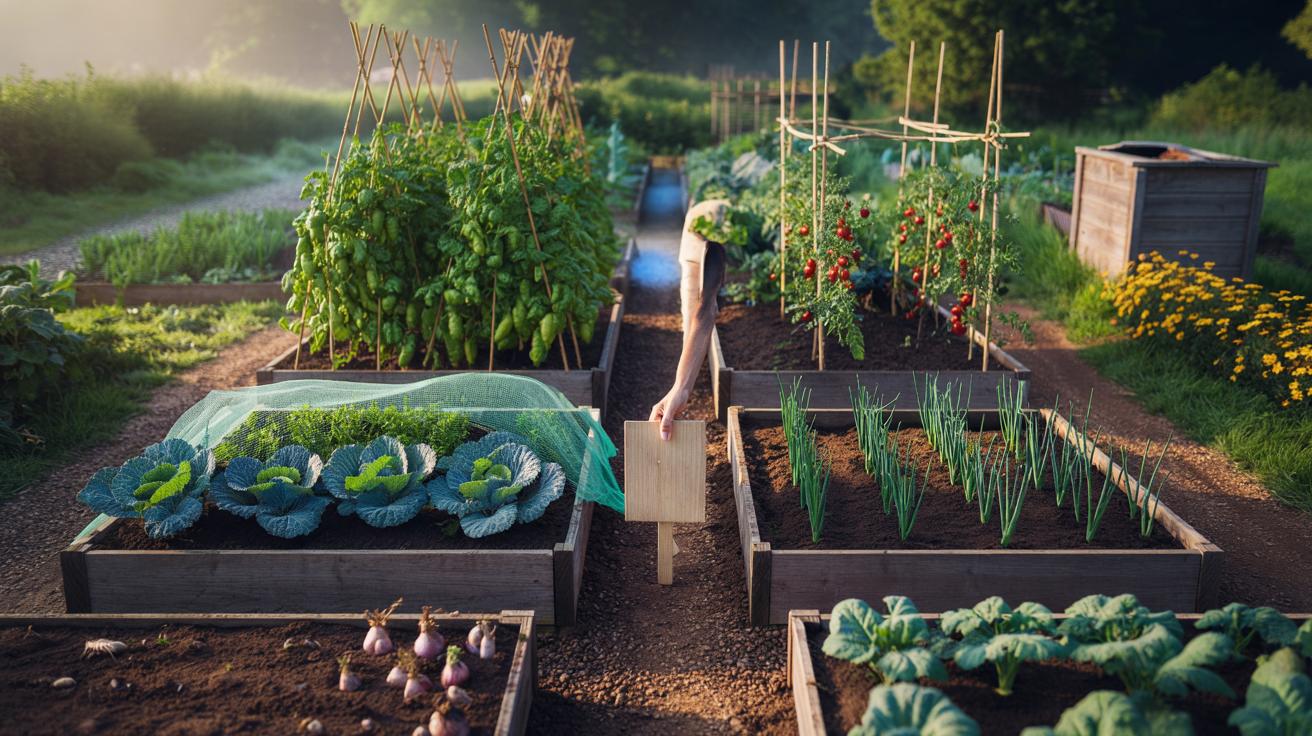
In a nutshell
- 🌱 Never repeat families: Don’t grow the same plant family in the same bed two years running to cut soil-borne disease and avoid nutrient depletion.
- 🧭 Four-bed rotation: Cycle Legumes → Brassicas → Roots & Alliums → Fruiting (Solanaceae & Cucurbits); scale to two beds or containers if space is tight.
- 🌿 Feed the soil: Add 2–3 cm compost annually, manure before brassicas, hold off before roots, and use green manures (vetch, phacelia, clover) to keep living roots in the ground.
- 🐛 UK pest control: Rotation reduces clubroot, onion white rot, carrot fly, and potato scab/blight; combine with mesh, clean sets, and removal of volunteers.
- 📓 Practical rhythm: Follow UK sowing windows (peas March, brassicas April/May, tomatoes late May/June), keep records, adjust lightly—yields rise while inputs and weeds fall.
Good gardens are built on simple habits repeated over seasons. Here’s one that quietly transforms beds into dark, living loam: rotate what you grow, by family, in a steady rhythm. The principle is disarmingly simple, yet it solves several problems at once, keeping nutrients in balance while reducing disease pressure. Done well, crop rotation turns a patchwork of beds into a self-renewing system. It doesn’t demand fancy kit, just a plan and a label or two. Stick with it for a year. Then another. Before long, the soil does the heavy lifting. Yields rise. Inputs fall. And your weekend weeding shrinks.
The One Rule: Never Repeat Families
The heart of rotation is a single, memorable line: never grow the same plant family in the same bed two years running. That’s it. Follow that and your soil will thank you. Families matter because related crops feed in similar ways and share pests. Brassicas crave nitrogen and risk clubroot. Solanaceae, such as tomatoes and potatoes, attract blight and scab. Alliums meet white rot. By moving families, you starve soil-borne problems and stop one nutrient from being stripped to exhaustion.
Group your crops by family: Legumes (peas, beans), Brassicas (cabbage, kale, broccoli), Solanaceae (tomatoes, potatoes, peppers), Cucurbits (courgettes, squash), Roots & Alliums (carrots, parsnips, onions, garlic, leeks), plus leafy odds like lettuces and spinach. Label beds A, B, C, D. Each season, slide each family to the next bed. Over time you’ll notice fewer repeat attacks, steadier growth, and better flavour. Rotation is preventative medicine for soil—quiet, consistent, and more effective than reactive sprays or endless fertiliser.
A Four-Bed Rotation You Can Start This Weekend
Start simple with four groups and four beds. The classic flow is: Legumes → Brassicas → Roots & Alliums → Fruiting (Solanaceae & Cucurbits). Legumes add nitrogen, setting up leafy, hungry brassicas. Roots and onions then follow, preferring steadier, not-too-rich soils that won’t fork carrots or bloat bulbs. Finally, fruiting crops, including tomatoes, peppers, squash and potatoes, take the remaining bed with plenty of homemade compost. Keep the order consistent and the soil cycles will do the heavy lifting.
Use this quick map as your annual prompt:
| Year | Bed A | Bed B | Bed C | Bed D |
|---|---|---|---|---|
| Year 1 | Legumes | Brassicas | Roots & Alliums | Fruiting |
| Year 2 | Brassicas | Roots & Alliums | Fruiting | Legumes |
| Year 3 | Roots & Alliums | Fruiting | Legumes | Brassicas |
| Year 4 | Fruiting | Legumes | Brassicas | Roots & Alliums |
No room for four beds? Pair families in two beds and still rotate—legumes with brassicas; roots with fruiting. Containers count too: rotate the contents between patio spots, and refresh with compost. The principle scales from allotment to balcony. Consistency beats size.
Feeding the Soil Between Crops
Rotation shines brightest when partnered with steady feeding. Think in terms of soil meals, not plant snacks. In autumn, lay 2–3 cm of compost across all beds. It’s enough. Microbes will pull it down. Before brassicas, add extra well-rotted manure; before roots, hold off to avoid forked carrots. For fruiting crops, blend compost with a slow, organic feed. Feed the soil, not the plants. That’s the mantra.
Lean on green manures to keep beds living in the off-season. Field beans or winter vetch over winter; phacelia, buckwheat or clover in summer gaps. They cover bare ground, scavenge leftover nutrients, and—if they’re legumes—fix atmospheric nitrogen. Chop them before flowering, then mulch in place or compost. The pulse of growth and decay builds crumb structure, boosts soil biology, and lifts moisture retention. Even a quick, six-week phacelia stint between early potatoes and autumn salads makes a difference. Leaving beds bare invites weeds, erosion, and wasted fertility. Keep roots in the ground, always.
Pests, Timing, and UK Realities
Rotation is your best shield against persistent UK problems. Clubroot lurks in brassica beds; moving the family on reduces inoculum. Onion white rot can persist for years—rotating and buying clean sets lowers the odds. Carrot fly hones in on repeated sites; a fresh bed plus mesh deters it. Potatoes? Rotate diligently to dodge soil-borne scab and limit blight carryover on volunteers. Rotation won’t make you bulletproof, but it shifts the odds firmly in your favour.
Time your moves for British weather’s mood swings. Sow peas early under cover in March, set out brassicas after harden-off in April or May, plant onions and shallots as soon as soil is workable, then wait for warmth before tomatoes and squash in late May or early June. Slot in quick green manures after July harvests. Keep a notebook: what grew where, what thrived, what sulked. Adjust orders if a bed feels tired, but respect the family shuffle. A light dusting of lime after legumes can steady pH for brassicas on acidic plots. Water deeply, mulch generously, and let the rotation do its quiet work.
Simple rules endure because they earn their keep. Rotate by family, feed with compost, keep living roots in the soil. Over seasons, the bed that once needed constant nursing begins to carry itself: richer tilth, steadier moisture, fewer crises. The work changes from firefighting to fine-tuning, and the harvest tastes of timing rather than luck. If you try one change this year, make it this rotation rhythm. What’s your first move—new labels for the beds, or a swift sowing of green manure to start the cycle?
Did you like it?4.5/5 (30)