In a nutshell
- 🌫️ Powdery mildew spreads fast in warm days and cool, humid nights, hitting roses, cucurbits, and gooseberries; early action and airflow reduce outbreaks.
- 🧪 Baking soda (sodium bicarbonate) raises leaf-surface pH, hindering spore germination; it’s a preventative and containment tool, not a cure for heavy infections.
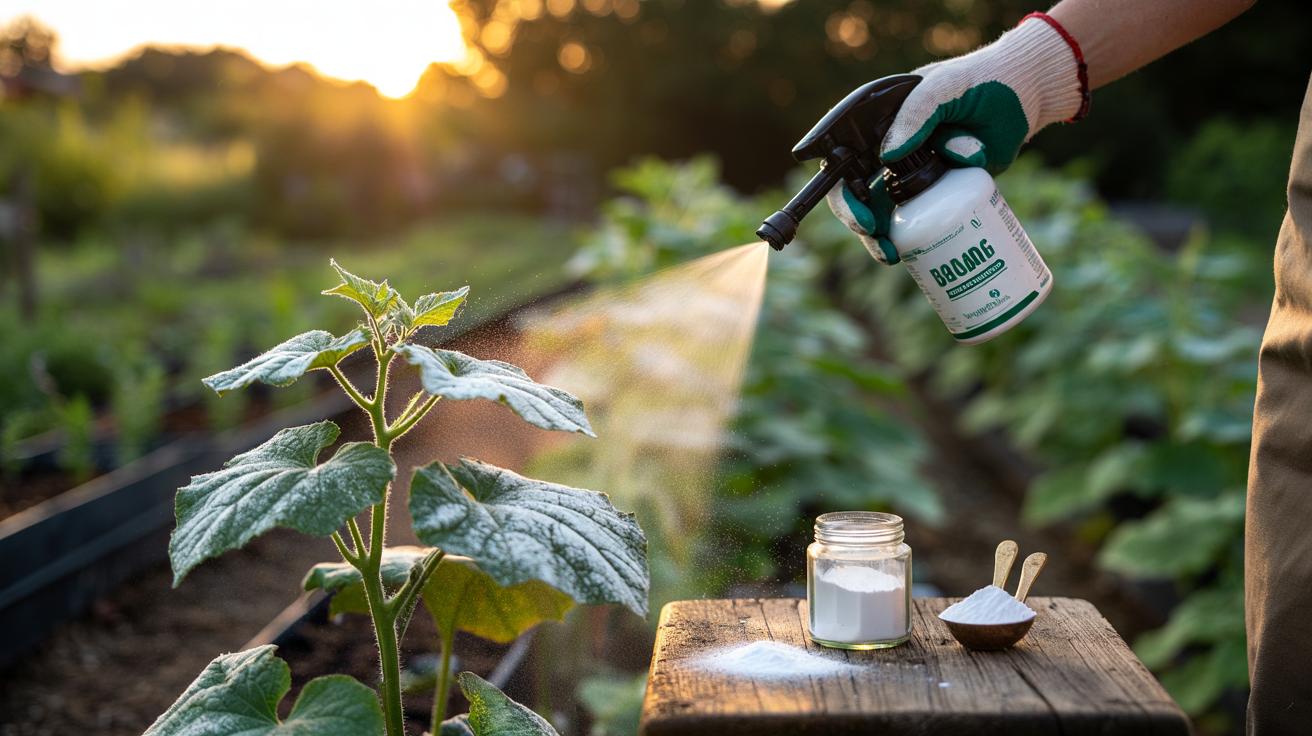
- 🧴 Mix 1 tsp baking soda + ½ tsp mild soap (+1 tsp horticultural oil optional) per litre of water; spray leaves top and underside weekly, in morning/evening; patch-test and remix fresh each time.
- ⚠️ Watch for phytotoxicity (scorch, spotting); avoid heat, drought-stressed plants, and blooms; don’t combine with copper products; protect beneficial insects.
- 🔄 Consider potassium bicarbonate, neem, or sulphur (with safe intervals), and pair sprays with cultural controls: pruning, spacing, base-watering, and resistant cultivars.
Gardeners dread the chalky bloom that creeps across leaves just when growth surges. Powdery mildew thrives in our fickle British summers: warm days, cool nights, a whisper of humidity. It disfigures foliage, saps vigour, and spoils harvests. Chemical fungicides exist, but many home growers want a lighter touch. Enter the humble baking soda spray. Cheap. Quick to mix. Surprisingly effective as a preventative. While not a silver bullet, this kitchen-cupboard remedy can tip the balance in your favour if used wisely. Used correctly, it strengthens a plant’s front line before spores take hold. Here’s how it works, how to make it, and when to reach for alternatives.
What Powdery Mildew Is and How It Spreads
Powdery mildew is a group of fungal diseases that paint leaves with a white, talc-like film. You’ll see it first on tender growth: roses, courgettes, cucumbers, gooseberries. It loves crowded stems and still air. Spores spread by wind and splashes, colonising leaf surfaces without needing free water. That’s why it appears in dry spells as readily as damp ones. The fungus steals nutrients and reduces photosynthesis, leaving plants stunted and fruit quality down. Early action makes the difference between a minor blot and a season-long frustration. Once mildew blankets a plant, rescue is hard and losses mount quickly.
Conditions favouring outbreaks are predictable: dense canopies, high humidity at night, temperature swings around 15–25°C. Overhead watering in the evening worsens it. Poor air circulation seals the deal. Understanding that ecology helps you plan a defence. Space plants. Prune for airflow. Water at the base in the morning. Then deploy a preventative spray that makes leaf surfaces less welcoming to spores looking for a foothold.
Why Baking Soda Works
Baking soda (sodium bicarbonate) doesn’t “cure” established infections; it changes the battlefield. By making the leaf surface slightly alkaline, it creates conditions that inhibit spore germination and disrupt fungal cell integrity. Think of it as nudging the pH to a zone where mildew struggles. Mixed with a little mild soap and, optionally, horticultural oil, it spreads evenly and clings to foliage. Its strength is prevention and containment, not miracle reversals. There is also an osmotic effect at play: at sufficient concentration, bicarbonate can stress fungal cells directly, limiting expansion of fresh lesions.
Crucially, bicarbonate’s low toxicity makes it attractive for home plots. It’s inexpensive, widely available, and pairs neatly with cultural controls such as improved airflow and careful irrigation. Yet restraint is essential. Overly strong mixes or frequent applications risk phytotoxicity—leaf scorch, spotting, or a dull, salt-burned sheen. The smart approach? Light solutions, regular but not excessive spraying, and keen observation after each application.
How to Make and Apply the Spray
The core recipe is simple and repeatable. Use clean, lukewarm water. Dissolve the bicarbonate thoroughly before adding any oil to avoid clumping. A mild, fragrance-free liquid soap acts as a surfactant so droplets spread instead of beading, ensuring even coverage on upper and lower leaf surfaces. Always test on a small area first and wait 48 hours for any adverse reaction. Spray in the early morning or early evening, never under hot midday sun, and keep plants off-limits to overhead water for a few hours so the film sets.
| Ingredient | Per Litre | Purpose | Notes |
|---|---|---|---|
| Baking soda | 5 ml (1 tsp) | Raises surface pH | Do not exceed 7 ml per litre |
| Mild liquid soap | 2.5 ml (½ tsp) | Surfactant | Avoid antibacterial or perfumed soaps |
| Horticultural oil (optional) | 5 ml (1 tsp) | Adhesion and smothering | Skip in heatwaves or on sensitive leaves |
| Water | 1 litre | Carrier | Use clean, non-hard if possible |
Apply weekly as a preventative, every 5–7 days during risk periods, and after heavy rain. Target both sides of leaves; mildew starts where you don’t look. Reduce to fortnightly once pressure drops. Do not store leftover solution; mix fresh each time for consistency and to avoid separation. If a plant shows stress—leaf curl, bronzing—pause for a cycle, flush with plain water the next morning, and resume at a lower concentration.
Safety, Limits, and Alternatives
No home remedy is consequence-free. Excess bicarbonate can accumulate as salts on foliage and in potting media. That’s where caution earns its keep. Avoid spraying drought-stressed plants, seedlings, or waxy-leaved ornamentals without a patch test. Take care around blooms; soap and oils can blemish petals and unsettle beneficial insects. Never apply in strong sun or when temperatures exceed 27°C. Keep pets and children away until leaves are dry. If you’re rotating products, don’t mix with copper fungicides; alternate by at least a week to reduce phytotoxic risk.
When mildew is rampant, consider stepping up. Potassium bicarbonate is closely related but often more potent on contact and is included in some approved garden fungicides. Neem oil and horticultural sulphur have roles, though sulphur can react badly with oils—space them by a fortnight. Cultural tactics remain bedrock: prune crowded centres, feed moderately (soft, lush growth invites trouble), water at the base, and choose resistant cultivars. Prevention is a programme, not a single spray.
Used with intent, a baking soda spray is a practical shield against the first flirtations of powdery mildew. It’s frugal, fast to mix, and gentle when kept within the lines. Yet its real power lies in partnership with good gardening: air movement, sanitation, varietal choice, and timely watering. Treat it as one tool in a tidy kit rather than a cure-all. Watch the weather, watch the leaves, and adjust your rhythm as the season shifts. What will your mildew plan look like this year, and which plants will you prioritise for the first protective pass?
Did you like it?4.5/5 (26)