In a nutshell
- 🧪 A single drop of washing‑up liquid slashes surface tension, reaches the critical micelle concentration (CMC), and forms micelles that encapsulate grease for easy rinsing.
- 🧴 Different surfactant classes—anionic (LAS, SLES), nonionic (alcohol ethoxylates), and amphoteric (CAPB)—combine to boost wetting, degreasing, foam stability, and mildness.
- ⚙️ Cleaning power depends on time, temperature, and agitation; hard water and pH influence performance, while tools like microfibre pads enhance shear without scratching.
- 🧼 Practical dosing: a pea‑sized squeeze in 4–5 litres or a single drop pre‑dotted on grease, brief soak, and warm water agitation; avoid over‑sudsing—micelles, not foam, do the work.
- ✅ Benefits: faster degreasing, less product waste, and protected cookware finishes—turning chemistry into everyday efficiency at the sink.
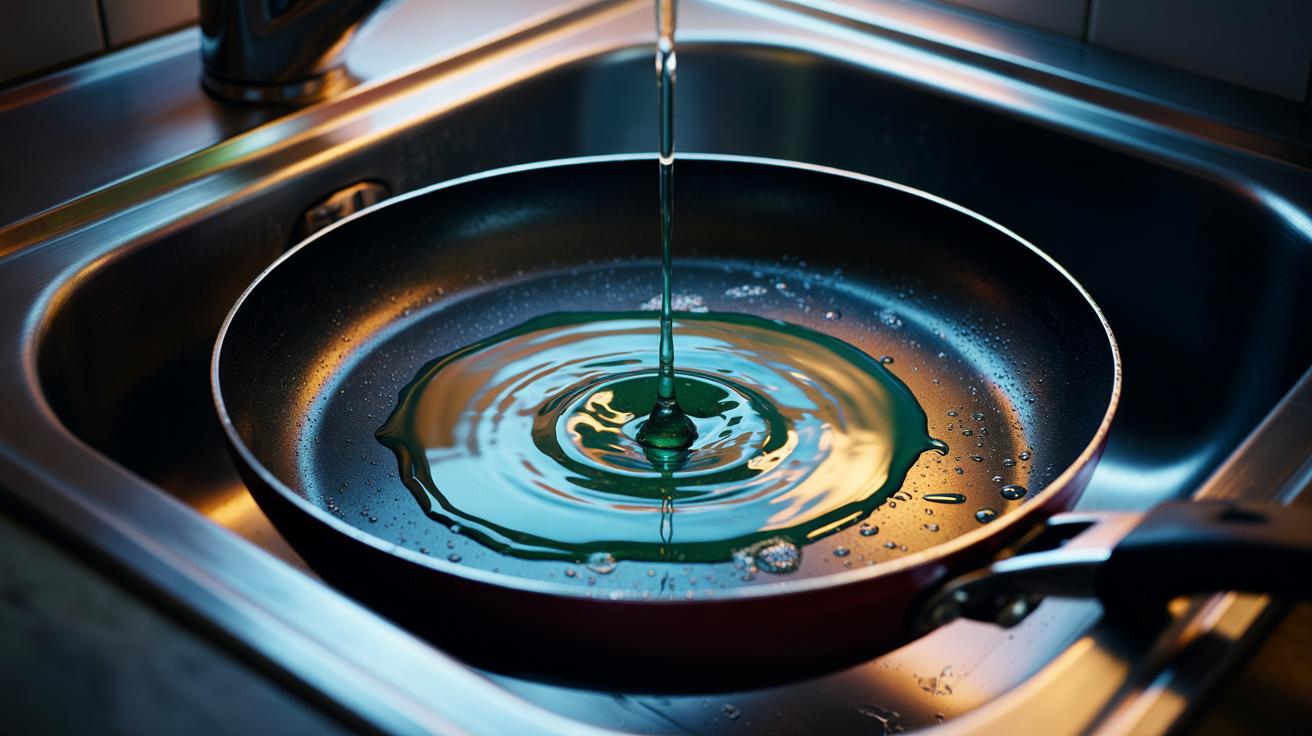
Put a greasy pan under the tap and water simply beads, sliding past the slick. Add a single drop of washing‑up liquid and the scene changes instantly: the water spreads, the grease lifts, and suds ferry grime away. This dramatic switch is not magic; it is chemistry and physics working in tandem. A tiny dose of the right molecules transforms how water behaves on fat. By slashing surface tension and building grease‑trapping micelles, dish soap turns a stubborn, hydrophobic mess into a removable suspension. Understanding why this happens helps you clean faster, waste less product, and even protect your cookware.
How One Drop Changes Water’s Behaviour
Pure water clings tightly to itself, a property called surface tension. Grease and oils repel it, creating those familiar, obstinate beads. A drop of washing‑up liquid introduces surfactants that wedge themselves at the water–air and water–oil interfaces, lowering the energy that keeps water “pulled into” droplets. Once surface tension falls, water spreads instead of beading, wetting the pan so cleaning can begin. You can even watch oil scuttle away from a pinpoint of soap on a film, a visible sign that surface forces have been abruptly rebalanced by that single drop.
The game‑changer is reaching the critical micelle concentration (CMC). Below this threshold, surfactants mostly guard the surface, boosting wetting. Cross it, and they assemble into micelles—spherical clusters that hide their grease‑loving “tails” inside and their water‑friendly “heads” outside. Hit the CMC, and suddenly the water is not just wetting; it is actively capturing oil. Agitation then shears greasy films into tiny droplets that micelles envelop, producing the cloudy rinse that swirls down the drain.
The Science of Surfactants and Micelles
Surfactants are amphiphiles: one end loves water, the other loves oil. In a sink, that dual nature lets them bind to fats while staying dispersed in water. Anionic surfactants—such as linear alkylbenzene sulfonate (LAS) or sodium laureth sulfate (SLES)—deliver excellent foam and cutting power against typical kitchen grime. Nonionics—like alcohol ethoxylates—thrive in cooler water and hard water, while amphoterics (for example, cocamidopropyl betaine) balance mildness with stability. The micelle is the workhorse: a movable, nanoscopic cage that emulsifies oil and prevents re‑depositing on plates, glasses, and pans.
Think of a micelle as a tiny rescue raft. Grease—non‑polar and reluctant to mix—gets ferried inside the raft’s hydrophobic core. The hydrophilic exterior interacts happily with water, keeping the whole package suspended until it is rinsed away. The more surface area you create by scrubbing, the more efficiently micelles can form and load up. This is why a moment of agitation multiplies your cleaning power. Temperature matters too: warmer water softens fats, making them easier for micelles to digest.
| Surfactant Class | What It Does | Where You See It |
|---|---|---|
| Anionic (e.g., LAS, SLES) | High degreasing, rich foam, rapid wetting | Most everyday washing‑up liquids |
| Nonionic (e.g., alcohol ethoxylates) | Stable in hard/cold water, good on dried fats | “Premium” or low‑foam formulas |
| Amphoteric (e.g., CAPB) | Boosts mildness, foam stability, tolerance | Gentle or skin‑friendly blends |
Factors That Supercharge or Sabotage Cleaning
Three variables govern success: time, temperature, and agitation. Warm water loosens semi‑solid fats, shortening the distance surfactants must penetrate. Soaking grants time for micelles to form around oils, while light scrubbing shears big slicks into droplets micelles can swallow. Hotter is generally better for grease, provided your cookware tolerates it. Yet more heat does not fix poor dilution: under‑dosing fails to reach the CMC, and over‑dosing wastes product, creating stubborn suds that take longer to rinse.
Water hardness complicates matters. Calcium and magnesium ions can bind anionics, trimming their effectiveness and foam. Nonionics help in hard‑water areas, as do chelating agents in many UK formulas. pH also nudges performance: slightly alkaline blends saponify some fats into soap, aiding removal. Finally, tools matter. A microfibre cloth or non‑scratch pad provides mechanical bite without gouging non‑stick coatings. Choose the right pairing—formula, temperature, and tool—and a drop becomes a force multiplier.
Practical Tips for Instant Degreasing at Home
Target the CMC quickly. For a standard washing‑up bowl, a pea‑sized squeeze (about 1–2 ml) in 4–5 litres of warm water usually suffices; on a greasy pan, dot a single drop directly onto the slick, then add a splash of water and agitate with a brush. This pre‑dot method breaks the film before you fill the sink. For baked‑on residues, drain excess fat, run hot water for 20–30 seconds to soften, then soak with a small dose of liquid so micelles can assemble while you tackle other dishes.
Go easy on foam. Suds signal surfactants at work, but they are not the work itself; the micelles are. Over‑sudsing can slow rinsing and leave films on glassware. In hard‑water postcodes, add a bit more product or choose a blend with nonionics. Use microfibre or a soft‑bristle brush to boost shear without scratching. Rinse with hot water to thin viscosity and carry micelles away. Use less, sooner, and smarter—your drop will do more.
A single drop of washing‑up liquid changes the physics of your sink, lowering surface tension, forming micelles, and turning stubborn grease into a removable suspension. With smart choices—right dose, warmer water, a touch of agitation—you can clean faster, conserve product, and protect finishes. These principles apply from roasting tins to barbecue tools and glass oven doors. Once you understand the mechanism, you can orchestrate it. What will you try first to make that one drop work harder: a pre‑dot on the worst pan, a warmer soak, or a switch to a surfactant blend better suited to your water?
Did you like it?4.6/5 (26)