In a nutshell
- ✅ A daily white vinegar spray prevents limescale and soap scum from bonding to glass by stopping early crystal nucleation, keeping doors clear with minimal effort.
- 🧪 The chemistry: acetic acid dissolves alkaline mineral deposits and cuts soap residue; frequency over force makes clarity the default, like dental hygiene for glass.
- 🧰 Routine: mix 1:1 vinegar:water, spray after the last shower, wait 60–90 seconds, then squeegee or wipe with microfibre; in very hard water use 2:1 weekly before returning to 1:1.
- ⚠️ Safety: avoid natural stone and unsealed grout, don’t soak brass/nickel, check for hydrophobic coatings, and never mix vinegar with bleach.
- 💷♻️ Low-cost, eco-friendly: costs pennies per week, reduces harsh chemical use; dislike the smell? Use citric acid solution and pair with a squeegee to minimise deep cleans.
Cloudy shower screens are a stubborn reminder of Britain’s hard water, yet the simplest fix is already under your sink. A daily mist of white vinegar turns a costly cleaning battle into a 30‑second habit, keeping glass clear without harsh chemicals or elbow grease. The trick isn’t brute force; it’s chemistry and timing. Regular spritzing prevents mineral crystals from taking hold, so they never need scrubbing off later. In practice, that means a quick spray after the last shower, a brief pause, and a wipe or squeegee. Here’s why it works, when to use caution, and how to set up a routine that pays you back in clarity and time.
Why Limescale Loves Your Shower Glass
When hot water dries on glass, dissolved calcium and magnesium carbonate left behind harden into limescale. The process accelerates with heat: as water evaporates, minerals become supersaturated and crystallise on microscopic imperfections in the glass. Soap and body-wash residues add a sticky, alkaline matrix that traps particles and spreads the haze. Left to cure, this residue can etch the surface and turn routine cleaning into restoration. Bathroom conditions amplify the problem—steam raises temperature, droplets linger, and airflow is poor, so minerals enjoy a long window to settle and bond.
Shower glass is especially vulnerable because it’s flat, vertical, and constantly splashed. The smoothness you see is deceptive; at a microscopic level, there are plenty of anchor points for crystals. Every dry-down bakes the layer harder. Taps and frames suffer too, but glass shows every streak, which is why the build-up feels relentless. Breaking the cycle requires stopping crystal “nucleation” before it begins.
How Vinegar Disarms Mineral Deposits
Vinegar contains acetic acid, a mild acid that dissolves alkaline mineral deposits through a simple reaction: carbonates convert into soluble acetates, releasing carbon dioxide. In plain terms, the acid neutralises the crust that would otherwise harden on your door. Use it daily and you reset the surface chemistry before deposits harden, making clarity the default state rather than a weekend job. Because acetic acid also cuts through the alkaline film of soap scum, it tackles both sides of the problem—minerals and surfactant residue—without leaving a smeary finish.
The key is frequency over force. A light spray lowers surface pH for a minute, loosening fresh residue while it’s still soft. Wiping or squeegeeing removes the dissolved particles before they re-precipitate. Compared with periodic deep cleans, this micro-dose approach prevents layers from stacking up. Think of it as dental hygiene for glass: consistent, gentle, and far more effective than heroic scrubbing after months of neglect.
Daily Spritz Method: Step-by-Step Routine
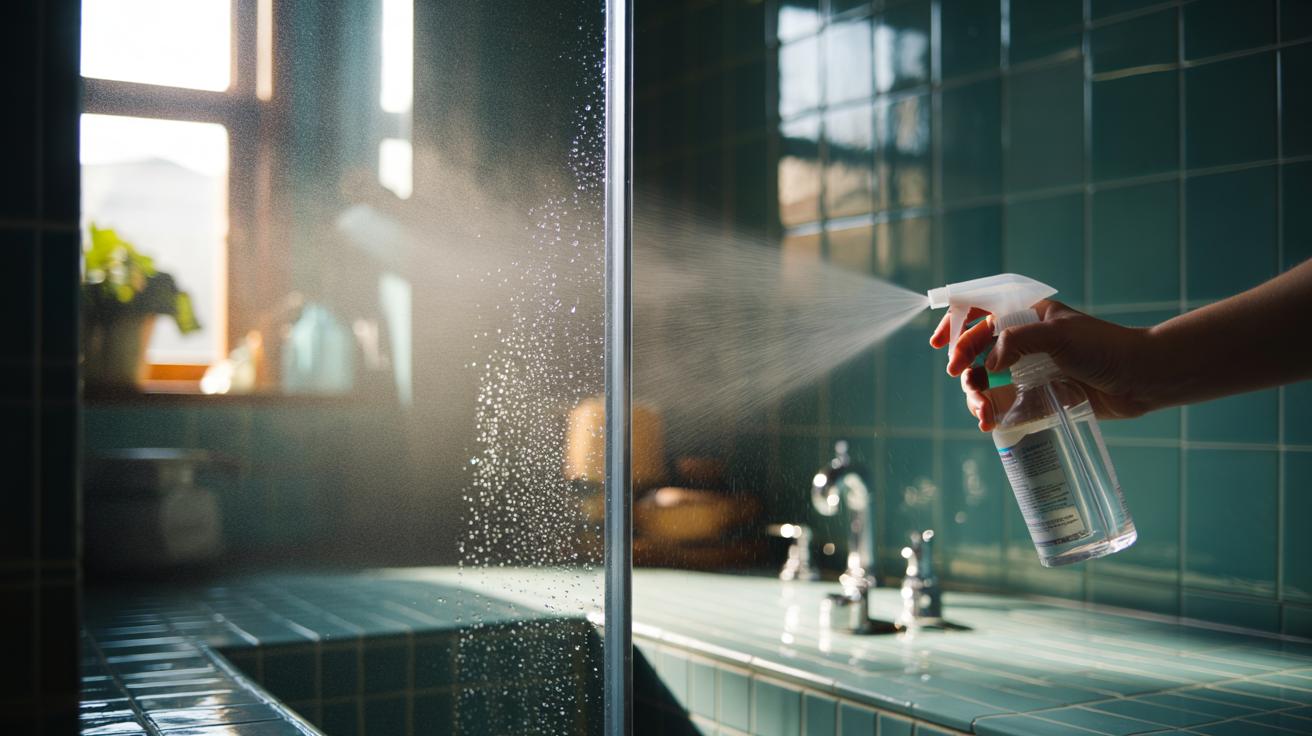
Mix a 1:1 dilution of white distilled vinegar and warm water in a trigger bottle. Optional: add one drop of mild washing-up liquid per 500 ml to improve wetting. After the day’s final shower, spray the inside of the door from top to bottom, focusing on edges where droplets cling. Let it sit for 60–90 seconds to do the chemical heavy lifting. Wipe with a soft microfibre cloth or run a squeegee from top to bottom. For very hard water, use a slightly stronger mix (2:1 vinegar to water) once a week, returning to 1:1 for daily use.
| Aspect | Best Practice |
|---|---|
| Vinegar:Water | 1:1 daily; 2:1 weekly in hard water areas |
| When to Spray | After last shower, while glass is warm |
| Dwell Time | 60–90 seconds |
| Finish | Squeegee or microfibre wipe |
| Storage | Keep bottle in the enclosure for instant use |
Consistency is the secret—tiny daily effort beats sporadic scrubbing. If you prefer a light scent, a drop of essential oil is fine, but avoid dyes that could stain seals.
Safety, Sealants, and When to Avoid Vinegar
Vinegar is gentle on ordinary glass yet not a universal solvent. Avoid spraying it on natural stone such as marble, limestone, or travertine; acids can etch and dull these surfaces. Never use vinegar on stone thresholds or tiled surrounds with stone inlays. Take care with unsealed cement grout, which can be slowly weakened by repeated acid exposure—keep the spray targeted to the glass and rinse stray drips. Metal fittings are generally fine, but prolonged contact may tarnish brass or nickel; a quick water rinse prevents issues.
Check for hydrophobic coatings on new or premium screens. Some factory-applied or aftermarket treatments specify neutral pH cleaners, as repeated acidity can reduce performance. If in doubt, test a small corner or consult the manufacturer’s guidance. Keep the bottle labelled and out of children’s reach, and never mix vinegar with bleach or products containing chlorine, which can release harmful gases. Used correctly, it’s a safe, low-tox routine for daily bathroom care.
Costs, Alternatives, and Environmental Wins
From a household budget perspective, vinegar is a bargain. A supermarket litre in the UK often costs well under £1, and a 1:1 mix stretches that to two litres of cleaner—typically a month or more of daily use. That’s pennies per week for a door that looks newly installed. Environmentally, it’s low-VOC, septic-safe, and free from synthetic fragrance loads common in bathroom sprays. You’ll likely cut down on plastic-heavy specialty products and harsh descalers.
If you dislike the smell, try citric acid crystals: dissolve 50–75 g in 1 litre of warm water for a similar effect with a softer scent. A final cold-water rinse after showering also slows spotting by lowering surface temperature. Pair the daily spritz with a squeegee habit, and you’ll rarely need heavy descaling. For existing heavy buildup, start with a stronger solution and a gentle, non-scratch pad, then move to maintenance mode.
Vinegar’s edge is not mystery but method: a swift, consistent routine that denies limescale a foothold and keeps glass optically clear with minimal effort. By harnessing mild acidity at the right moment, you stop the cycle of deposit, harden, and scrub, saving time, money, and the planet a few unnecessary chemicals. Ready to reclaim your shower door with a bottle, a minute, and a habit—what small tweak will help you make this ritual stick every day?
Did you like it?4.5/5 (20)