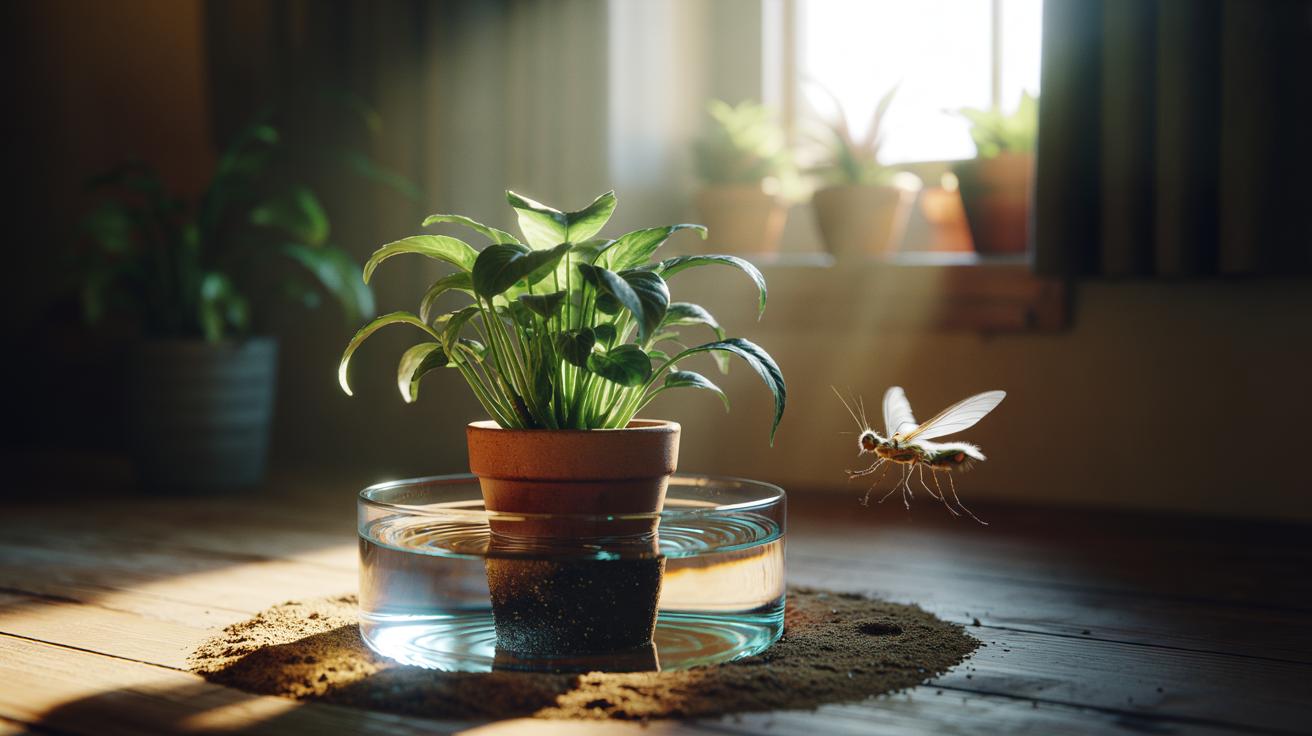
In a nutshell
- 🪰 Bottom-watering keeps the top centimetre of soil dry, denying fungus gnats ideal breeding sites and disrupting their life cycle without chemicals.
- 🌱 Capillary rise delivers moisture to the root zone while preserving a drier surface, improving soil structure, aeration, and deeper root architecture.
- 💧 Practical method: place pots in 2–5 cm of water for 10–20 minutes, remove when the surface is just damp, allow full drainage, water by pot weight, and perform a monthly top flush to clear salts.
- 🧰 Strengthen control with sticky traps, a sand/grit top-dress, clean saucers, quarantining new plants, and well-aerated peat-free mixes; use pebble trays and airflow for targeted humidity.
- ⚖️ Expect fewer adults within weeks; manage trade-offs (salt build-up, moisture-loving species) with occasional top-watering and enjoy more stable, pest-resistant results.
For many indoor gardeners, the tiny black flies hovering over potting soil are more than a nuisance—they’re a sign that conditions favour pests. The simplest fix is also the least disruptive: bottom-watering. By letting plants drink from the base, you keep the upper centimetres of compost comparatively dry, which denies fungus gnats ideal breeding sites. This method reduces mess, encourages robust roots, and helps the substrate stay structurally sound. A consistently dry top layer breaks the gnat life cycle without chemicals. Done with care, bottom-watering also saves time and water, all while keeping moisture where roots need it most and not where pests proliferate.
How Fungus Gnats Thrive and Why Top-Watering Helps Them
Fungus gnats (family Sciaridae) prosper in damp, oxygen-poor, organic media. Adults lay eggs in the top 1–3 cm of moist compost, and their larvae feed on algae, fungi, and delicate root tips. Frequent surface wetting—whether from heavy top-watering, decorative mists, or slow drips—creates a humid microclimate at the soil line. Constantly damp surfaces accelerate microbial growth, providing a buffet for larvae. When moisture lingers at the crown, gnats complete their life cycle unhindered. Seedlings and cuttings are particularly vulnerable, but established houseplants can also suffer stunting, yellowing, and increased susceptibility to root diseases if larval populations surge.
Top-watering itself is not inherently harmful, yet its side effects can be. Repeated overhead application compacts fine particles, forming a crust that dries unevenly and traps moisture below. This patchy profile leaves warm, film-wet zones where eggs survive. Uneven drying also encourages shallow rooting as plants chase intermittent surface moisture rather than exploring deeper. The result is a vicious circle: the surface stays appealing to gnats while roots remain near the very layer where larvae graze. Breaking this pattern starts with changing where water enters the pot.
What Bottom-Watering Does Inside the Pot
Bottom-watering pulls water upward by capillary action, creating a healthier vertical gradient: moist in the root zone, drier at the surface. This pattern supports aerobic microbes, reduces algal films, and discourages egg-laying at the top. Because water arrives from below, particles settle more evenly, preserving soil structure and macropores vital for oxygen exchange. A drier top centimetre is hostile to fungus gnats but friendly to roots. Plants also learn to “search” deeper, building a more resilient root architecture. Crucially, bottom-watering minimises splash, so spores and larvae are less likely to be moved upward or onto rims where adults often rest.
Think of the method as both irrigation and hygiene. It feeds roots without saturating the crown, limiting conditions that lead to damping-off and mould. It reduces water loss by evaporation, and in peat-free mixes with good wicking, it delivers even moisture without creating cold, soggy pockets. The result is stable moisture profiles that are kinder to both plant physiology and household air quality. The table below distils the contrasts gardeners notice within a few weeks of switching techniques.
| Practice | Surface Moisture After Watering | Gnat Pressure | Root Architecture | Notes |
|---|---|---|---|---|
| Top-watering (frequent) | Wet for hours | High | Shallow, lateral | Risk of compaction and crusting |
| Bottom-watering (correct) | Dry to slightly damp | Low | Deeper, denser | Keeps crown drier; better aeration |
| Top-watering (occasional flush) | Wet briefly | Moderate | Balanced | Useful monthly to clear salts |
Step-by-Step Bottom-Watering for Houseplants
Use a tray or sink and add 2–5 cm of water, ideally at room temperature. Set pots—always with clear drainage holes—into the water. In 10–20 minutes, the potting mix will wick moisture upward; you’ll feel the pot become heavier and the surface turn faintly cool. Remove the pot as soon as the upper layer is just damp, not wet. Let it drain thoroughly before returning it to its cachepot or saucer. For thirsty species or very dry mixes, a second brief soak may be needed, but avoid prolonged immersion that can leach oxygen.
Adjust cadence by weight, not the calendar: lift the pot when unsure. If the top centimetre is still dry and the pot remains light, it’s time to water; if it’s heavy, wait. In peat-free or barky mixes that initially repel water, a quick top pre-wet helps rehydrate fibres so capillary rise works efficiently. Do not leave pots standing in water longer than 30 minutes. Mark a monthly reminder to top-flush in the sink to remove mineral build-up, especially if using hard tap water or liquid feeds.
Evidence, Trade-offs, and Smart Complementary Tactics
Observational trials in glasshouses and homes consistently show fewer adult gnats within weeks of moving to bottom-watering, largely due to the dry surface deterrent. While not a silver bullet, it reduces breeding success across generations. There are trade-offs: exclusive bottom-watering can concentrate salts near the surface, so schedule an occasional top flush until runoff is clear. Some moisture-loving plants (e.g., ferns) may still want modest surface humidity; provide that with pebble trays and airflow rather than wetting the compost top. The aim is targeted hydration, not universal dampness.
Reinforce the method with simple controls. Sticky traps catch adults while you suppress larvae by drying the surface. Top-dress with 1–2 cm of horticultural sand or fine grit to make oviposition harder. Refresh tired mixes with well-aerated, peat-free substrates that wick evenly. Quarantine new plants, and clean saucers to prevent biofilm. If infestations persist, a short course of Bacillus thuringiensis israelensis or yellow sticky cards can help, but most households see dramatic declines once the watering pattern changes.
Bottom-watering is not just a convenience; it’s a subtle redesign of your plant’s water economy that deprives pests of their preferred nursery. By encouraging deep roots, preserving oxygen in the root zone, and keeping the surface comparatively dry, you create conditions where plants thrive and fungus gnats fail. A small change in technique can transform both plant health and household calm. With a tray, a timer, and a light touch, you can restore balance to your pots and your windowsills. Which plant in your collection will you trial with bottom-watering first, and what baseline will you set to measure the difference?
Did you like it?4.6/5 (25)