In a nutshell
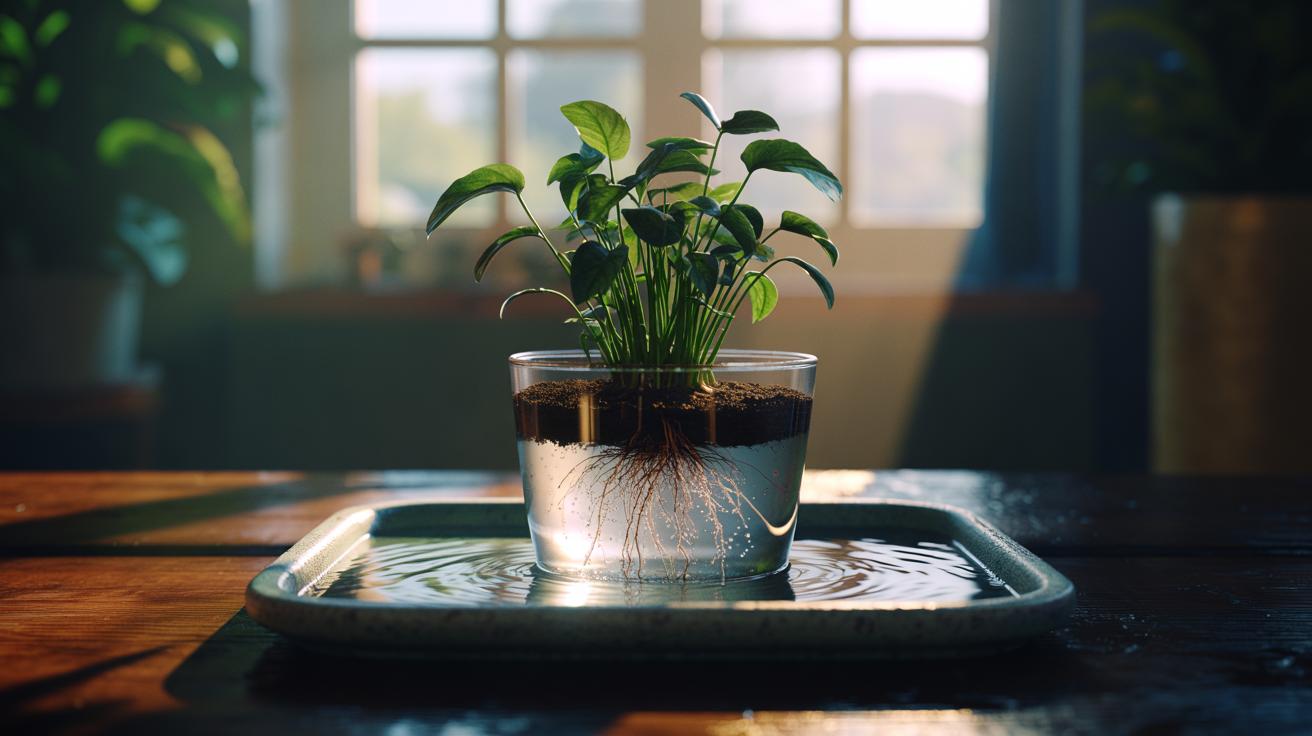
- 🌿 Bottom watering uses capillary action to deliver even moisture from below, preserving aeration and reducing the risk of root rot by keeping the root zone moist yet breathable.
- 💧 How-to: place pots in 2–5 cm of water for 10–30 minutes, then drain thoroughly; test by pot weight; use rainwater where possible; and occasionally flush salts with a light top-water.
- 🪴 Plant fit: ideal for African violets, peperomias, calatheas, seedlings, and most foliage plants; avoid or adapt for epiphytes and dense mixes that wick poorly, and never skip drainage holes.
- 🪱 Surface wins: a drier surface curbs fungus gnats, algae, and leaf spotting, while minimising mess and salt crusting in modern peat-free mixes.
- 🔁 Smart strategy: use bottom watering for routine hydration, then periodically top-water to reset the substrate, maintaining balanced moisture, nutrients, and long-term root health.
Too often, houseplants die not from neglect but from kindness: repeated dousings from above that leave compost sodden and starved of oxygen. Bottom watering offers a gentle correction. By allowing moisture to wick upward, it hydrates evenly, keeps the surface drier, and limits the conditions in which root rot thrives. Think of it as irrigation tuned to a plant’s own demand rather than our best guess with a watering can. The result is steadier growth, fewer fungus gnats, and less mess on the windowsill. When water rises by capillary action, the root zone stays moist yet breathable, protecting delicate feeder roots while discouraging the anaerobic pathogens that love stagnant, waterlogged compost.
Why Top Watering Can Invite Root Rot
Root rot isn’t just about “too much water”; it’s about oxygen deprivation and microbial opportunists. Traditional top watering can compact the upper compost layer, driving fine particles into pore spaces and reducing aeration. The surface remains wet long after deeper layers dry, creating uneven moisture that confuses plants and carers alike. Puddling in decorative cachepots or tight saucers keeps collars damp, inviting Pythium and Phytophthora to flourish. In poorly draining mixes, the effect intensifies, with nutrients leaching rapidly while roots sit cold and starved of air.
Roots need air as much as water. When oxygen is displaced, respiratory processes stall and tissues soften, a perfect gateway for rot. Overhead splashing can also leave foliage wet and soil surfaces sticky, a beacon for algae and fungus gnats. Even careful pourers struggle to hit the narrow target between dryness and drench. Bottom watering flips the script by reducing surface saturation and letting moisture settle where it’s needed most.
How Bottom Watering Protects the Root Zone
Bottom watering relies on capillary action—water migrating upward through fine channels in the potting mix. As the compost drinks from beneath, moisture spreads evenly, and the plant naturally limits uptake once the profile equilibrates. Let the plant decide when to stop drinking is a simple rule of thumb. Because the surface remains comparatively dry, there’s less gnat activity and fewer salt residues crusting at the top. Crucially, oxygenated pore spaces persist, so roots can respire while still accessing consistent moisture.
This method also trains roots to grow downward, building a denser, more resilient network in the lower third of the pot, which improves drought tolerance. It’s especially useful for hydrophobic mixes that initially repel water from above; soaking from below gently re-wets peat-free or coir-based media without channeling. By distributing moisture progressively rather than in a sudden flush, bottom watering cuts swings in substrate temperature and pH that can slow growth.
Step-By-Step Method and Essential Tools
Choose a vessel—tray, sink, or bucket—wider than your pot. Add 2–5 cm of water, ideally filtered or rainwater for calcifuge species. Set the pot in the bath and wait 10–30 minutes. The compost darkens as capillarity does the work. Check by touch: when the top feels cool and faintly damp, remove the pot. Never leave pots sitting in water indefinitely; allow them to drain thoroughly in a dry saucer before returning to their usual spot.
Frequency depends on light, temperature, and pot size. Test by weight: a dry pot feels markedly lighter. Feed as normal by dissolving fertiliser in the bath at half strength, but every few weeks perform a brief top-water to flush salts and prevent build-up. Wicking mats can automate small collections; self-watering inserts add a buffer for weekends away. If water rises slowly, loosen the surface gently with a fork to reopen pore spaces and ensure even uptake.
Which Plants Benefit, and When to Avoid It
Many indoor favourites thrive with this approach. African violets, peperomias, pileas, calatheas, ficus, and most foliage plants appreciate steady moisture without soggy crowns. Seedlings and cuttings benefit from gentle wicking that avoids dislodging tender roots. Herbs in bright kitchens respond well too, provided pots drain freely. Succulents and cacti can be bottom watered sparingly during active growth, then left to dry fully between drinks.
Some plants are exceptions. Epiphytes like many orchids require very airy mixes and periodic flushing; they often prefer careful top watering. Large containers with dense or clay-heavy composts may wick poorly, risking uneven wetting. If your tap water is hard and you never leach, salts can accumulate; include occasional top flushes. And avoid standing baths in cold rooms: chilled water slows uptake and stresses roots. Bottom watering is a technique, not a licence to overwater; drainage holes and suitable compost remain non-negotiable.
Quick Comparison: Top vs Bottom Watering
Both methods have their place. The trick is matching them to plant, potting mix, and schedule. Bottom watering is superb for even hydration and clean leaves; top watering shines when you need to flush salts or soak a very dry, compacted mix quickly. The table below outlines key differences to help you decide which is right for your next water day.
| Aspect | Top Watering | Bottom Watering |
|---|---|---|
| Moisture Distribution | Can be patchy; risk of channels | Even wicking via capillary action |
| Surface Conditions | Stays wet; attracts fungus gnats | Drier surface; fewer pests |
| Salt Management | Excellent for flushing | Requires occasional top flush |
| Risk of Root Rot | Higher if drainage is poor | Lower thanks to better aeration |
| Foliage Cleanliness | Can spot leaves | Keeps leaves dry and clean |
Use both methods strategically: wick from below for routine hydration, then top-water lightly every few weeks to rinse residues and reset the substrate. This blended approach delivers reliability without abandoning the practical benefits of a quick overhead pour when needed.
Healthy container plants depend on a balance: water available, oxygen abundant, salts under control. Bottom watering delivers that balance with minimal fuss, creating conditions that actively discourage root rot while supporting steady, resilient growth. By letting moisture rise, you preserve structure in modern peat-free mixes and keep pests at bay. Add periodic top flushes, choose the right compost, and give pots room to drain. With these habits, the difference in vigour is striking. Which plants in your home would gain most from a switch to watering from below—and how might you test the change over the next few weeks?
Did you like it?4.6/5 (28)