In a nutshell
- 🌱 Bottom watering builds stronger roots by leveraging capillary action for even moisture and better aeration, keeping foliage dry and reducing risks like powdery mildew and crown rot.
- 💧 More consistent hydration, fewer pests: it prevents surface compaction, limits fungus gnat breeding, preserves fine roots, and reduces nutrient washout compared with constant top watering.
- 🪣 Simple method, precise timing: soak pots in 2–3 cm of water for 10–40 minutes (size-dependent), then drain fully; use rain/filtered water when possible and monitor by pot weight or a moisture meter.
- ⚠️ Key caveats: flush from above every 3–6 weeks to remove salt build-up, adjust dense or ultra-gritty mixes for wicking, and avoid prolonged standing water to prevent root rot.
- 🌿 Best candidates and exceptions: African violets, calatheas, ferns, and seedlings thrive; use caution with cacti, succulents, and epiphytic orchids; consider wicking cords for hanging baskets.
Across Britain’s radiators-and-draughts season, houseplants often swing between parched and swampy. A quietly radical fix is bottom watering: letting pots drink from a tray so moisture rises by capillary action. Horticulturalists say this builds stronger roots, steadies moisture, and reduces leaf problems. By drawing water from below, plants aren’t shocked from above, soil isn’t disturbed, and crowns stay dry. It’s a method that suits busy schedules and fussy species alike, encouraging uniform hydration right where roots live. From African violets to ferns, growers report fewer brown tips, fewer fungus gnats, and more resilient growth—when it’s done correctly and paired with occasional flushing to manage salts.
How Bottom Watering Works And Why Roots Respond
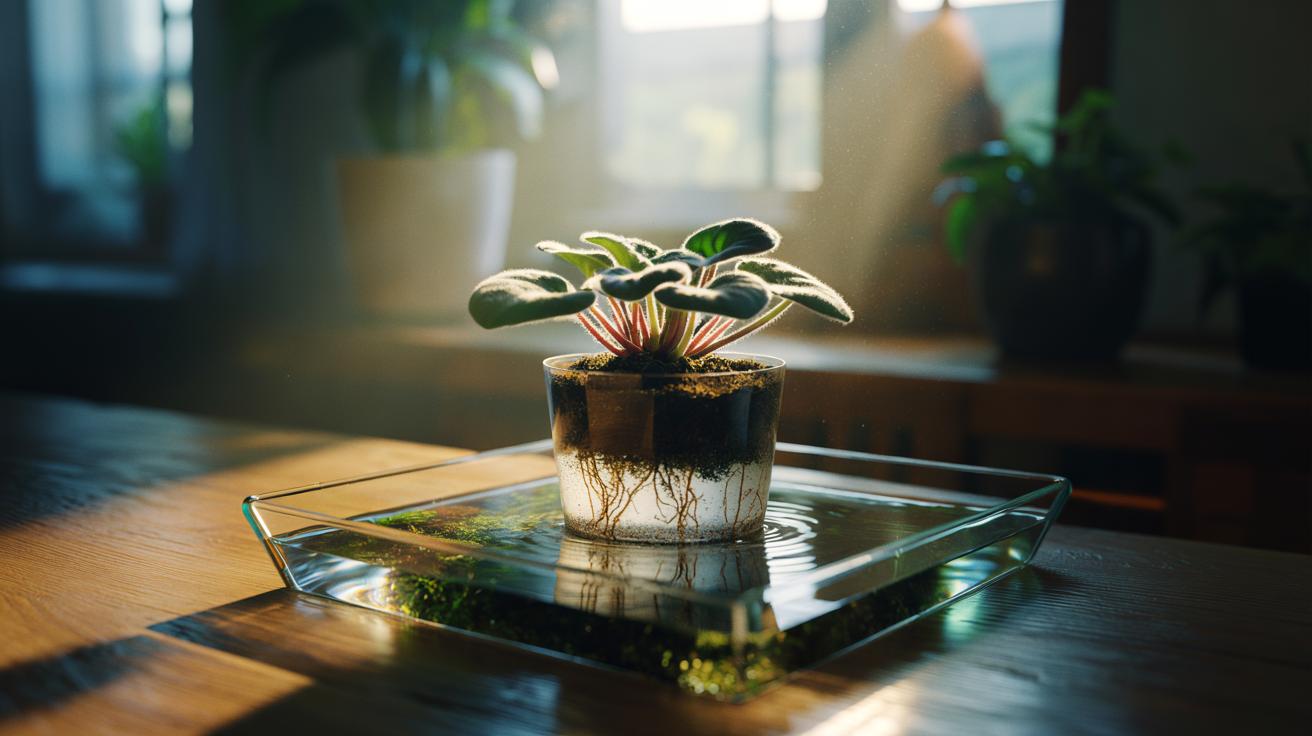
Bottom watering relies on capillary action: water moves upward through pores in the potting mix until the profile equalises. As moisture rises from the base, it creates a gradual gradient that roots can chase. That downward-to-upward gradient encourages deeper, denser rooting, improving a plant’s ability to tap reserves between waterings. Because the leaf canopy stays dry, there’s lower risk of powdery mildew, bacterial spotting, or a collapsed crown. Importantly, moisture spreads more evenly across the root ball, so hydrophobic peat doesn’t “shed” water at the surface—a common headache with top watering after a dry spell.
There’s also a vital oxygen story. By sipping from beneath and then draining, soils gain aeration as air refills pores when the tray is removed. Plants need that gas exchange to guard against root rot. The result, growers say, is sturdier root architecture and steadier turgor—fewer wilting dramas and less nutrient stress. Done well, bottom watering gives water where it’s needed and air where it matters, a balance that underpins resilient growth indoors.
Benefits Versus Top Watering: What Experts And Growers Observe
Top watering works and remains essential for flushing fertiliser salts, but it can compact media, leave foliage wet, and sometimes sends water down the sides of the pot rather than through the root zone. Bottom watering counters those pitfalls. It provides even hydration, reduces surface algae, and limits fungus gnat breeding by keeping the top centimetre drier. Keeping crowns and leaf axils dry is especially protective for fuzzy-leaved or rosette plants. Because the surface isn’t disturbed, fine roots and delicate soils stay intact, and nutrients are less likely to wash out prematurely.
There are caveats. Without occasional top watering, salts from hard water or fertiliser can accumulate, causing leaf tip burn. The fix is simple: once every three to six weeks, water from above until a healthy volume drains, carrying residues with it. Also watch potting mix: a very dense, peat-heavy medium may wick poorly, while an ultra-gritty cactus blend may wick slowly; both can be tuned with perlite or bark. Think of bottom watering as your default, with periodic top-down rinses as maintenance.
How To Bottom Water Correctly: Step-By-Step With Timing And Tools
Set a tray or sink with 2–3 centimetres of room-temperature water. Place the pot—ideally with a drainage hole—into the water and wait 15–30 minutes. You’ll know it’s ready when the pot feels heavier and the top of the soil is slightly cool or darkened. For larger containers, extend to 40 minutes; for small nursery pots, 10–15 may suffice. Never leave pots standing in water for hours, as this invites anaerobic conditions and root rot. Allow excess to drain thoroughly before returning plants to their cachepots or shelves.
Additions can refine the routine. Use rainwater or filtered water for sensitive species; in hard-water regions, this curbs limescale and leaf tip scorch. Fertilise at half-strength in the tray during active growth, then schedule a top-down flush monthly. For hanging baskets, a wicking cord can bridge pot and reservoir to automate capillary flow. Monitor by weight and a moisture meter rather than the calendar. Consistency beats quantity: steady moisture with ample air is the aim.
Which Plants Benefit Most—and When To Avoid It
Bottom watering shines for species that resent wet crowns or frequent leaf wetting. African violets, streptocarpus, peperomia, and many calatheas thrive with evenly moist roots and dry foliage. Seedlings and fresh cuttings also appreciate gentle, uniform uptake that doesn’t dislodge media. Ferns and prayer plants often reward the method with perkier fronds and fewer crispy margins. Plants that want consistent moisture and clean leaves are prime candidates.
Caution applies to cacti and succulents (risk of lingering sogginess), epiphytic orchids (roots crave air first), and very large containers that wick unevenly. If your mix is compacted, re-pot or amend with perlite before relying on capillary uptake. Always pair bottom watering with occasional top flushes to manage salt build-up. For carnivorous plants that live in trays, use soft water only. Method matters, but the substrate and species needs decide success.
| Plant Type | Why Bottom Watering Helps | Caution |
|---|---|---|
| African violets, streptocarpus | Keeps crowns dry; steady moisture for fine roots | Flush from above monthly to prevent salts |
| Calatheas, ferns, prayer plants | Even hydration reduces leaf edge burn | Use soft water to avoid mineral spotting |
| Cacti, succulents | Occasional use only during active uptake | Allow full dry-down; avoid long soaks |
| Orchids (epiphytes) | Rarely beneficial | Prioritise airy watering and rapid drainage |
Bottom watering isn’t a fad; it’s a practical rebalancing of water and air that strengthens roots and calms plant care. By leaning on capillary action, you get fewer pests, cleaner leaves, and a sturdier root system that holds its nerve between waterings. The trick is measured soak times, a breathable mix, and periodic top-down rinses. With those habits, even temperamental houseplants behave more predictably, rewarding you with growth rather than gripes. Which of your plants would benefit most from a switch to bottom watering—and how might you adapt your routine to give their roots the lead role?
Did you like it?4.5/5 (23)