In a nutshell
- 🌿 Cinnamon powder acts as a natural antifungal, with cinnamaldehyde and eugenol disrupting pathogens like Botrytis and damping-off organisms.
- 🛠️ Use two methods: dry dusting on compost surfaces and cuts, and a cinnamon soak (1–2 tsp per litre, strained) for soil drenching—avoid wetting leaves.
- 🌱 Prevent damping-off by sowing thinly, improving airflow, watering from below, and adding a whisper-fine cinnamon layer as a targeted barrier.
- 🚫 Avoid overapplication and gritty sprays; strain thoroughly, keep powder off flowers, and remember cinnamon won’t cure systemic diseases.
- 🧂 Choose fresh, aromatic cinnamon (verum or cassia), store well, and use it as a spot treatment alongside clean tools, good drainage, and timely intervention.
Walk into any British potting shed and you’ll find it: a small jar of cinnamon, tucked beside twine and seed labels. Gardeners swear by it. Not for baking. For battling blight and fuzz. This kitchen staple can interrupt fungal growth without resorting to synthetic chemicals. The trick is disarmingly simple, cheap, and smells rather good. Sprinkle or steep, then apply with care. Whether you’re coaxing tomatoes through a damp spring or nursing houseplants on a steamy windowsill, cinnamon powder offers a natural, low-risk line of defence. The science helps explain why, and the method is easy enough to slot into any weekend routine.
Why Cinnamon Works Against Plant Fungus
At the heart of cinnamon’s reputation is cinnamaldehyde, the aromatic compound that gives the spice its warmth and a notable antifungal punch. In laboratory studies, cinnamaldehyde disrupts fungal cell membranes, making it harder for pathogens to colonise tender plant tissue. Another constituent, eugenol, also shows antimicrobial activity. Together they create a natural cocktail hostile to common culprits such as Botrytis (grey mould) and damping-off organisms that menace seedlings. When applied sensibly, cinnamon can tip the balance in favour of the plant’s own defences.
Importantly, the spice doesn’t sterilise soil; it simply impedes the spread of susceptible fungi on the surface and around wounds. That distinction matters. Garden ecosystems rely on beneficial microbes. Cinnamon is best seen as a spot treatment and preventative, not a blanket purge. Home growers value it for that reason: it offers targeted help without the collateral damage you might risk with harsher fungicides. Used alongside good airflow, careful watering, and clean tools, it reassures without overpromising.
There’s also the pragmatic angle. A jar of ground cinnamon lives in most kitchens already. No special licence, no waiting for deliveries in prime planting season. Accessibility keeps gardeners using it at the moment when early intervention counts most. That timeliness often marks the difference between a minor blemish and a full-blown outbreak. Quick dusting today; avoided heartbreak tomorrow.
How to Use Cinnamon Powder in the Garden
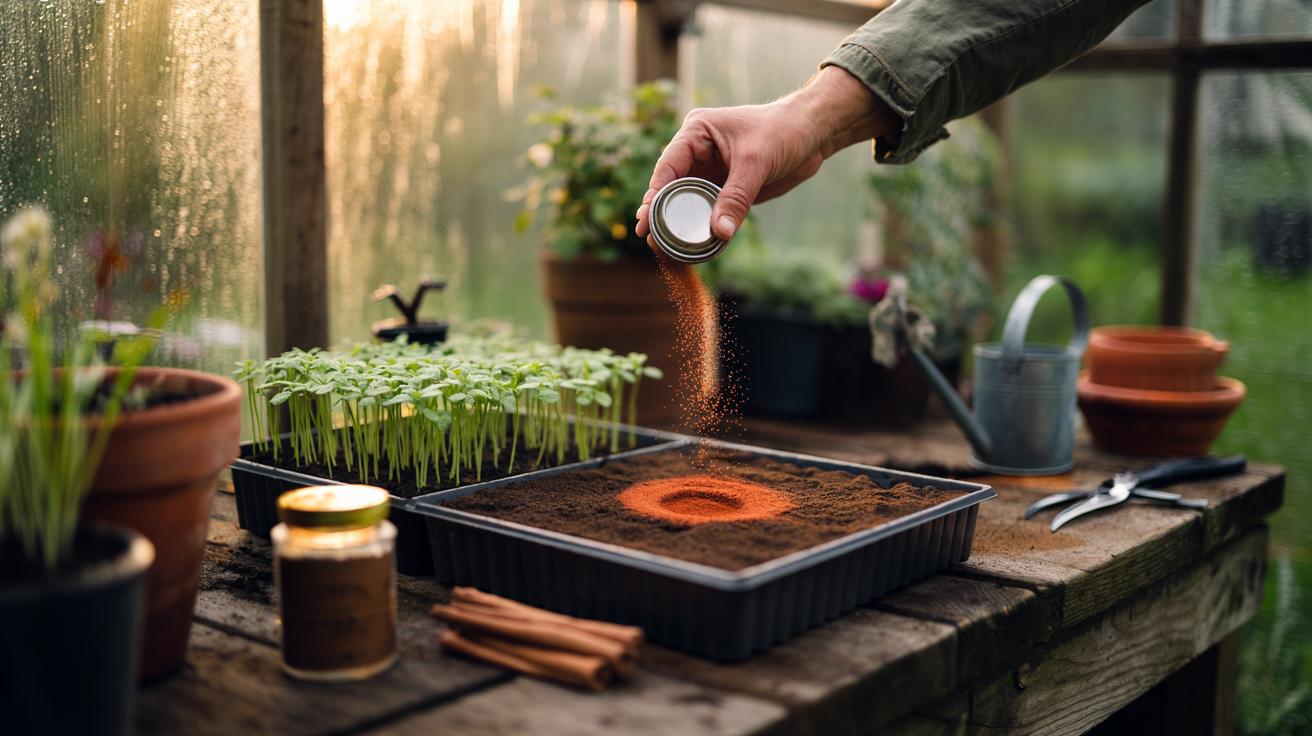
Two routes dominate. First, dry dusting: shake a light veil of cinnamon over the compost surface in seed trays or directly onto small pruning cuts and bulb wounds. It clings, it dries, it guards. Second, the cinnamon soak: make a simple extract by stirring 1–2 teaspoons of ground cinnamon into 1 litre of warm water, leave it to steep for a few hours, then decant the liquid off the sediment. Use this to water around the base of susceptible plants or to rinse seed trays before sowing. A thin layer or a weak brew is enough; excess brings no extra benefit.
| Use Case | Method | Ratio / Amount | Frequency | Notes |
|---|---|---|---|---|
| Seedling damping-off | Dry dusting on compost surface | Light sprinkle, just visible | After sowing and post-germination | Combine with good airflow |
| Cuttings and wounds | Tap powder onto cut ends | Pinch between fingers | Once at time of cut | Also deters minor rot |
| Soil drench | Strained cinnamon water | 1–2 tsp per litre | Weekly during risk periods | Avoid leaf wetting |
A few refinements help. Use fresh, fragrant cinnamon; tired jars lose potency. Apply in the morning so surfaces dry quickly. Avoid blasting foliage—dab or water the soil instead. For houseplants, place the pot in a sink, apply the soak, then drain well. If you can smell a warm, woody note, you’ve likely used enough. Overdo it and you risk clumping on the compost, which can repel water and annoy delicate roots.
Preventing Damping-Off and Seedling Loss
Damping-off loves the conditions gardeners often create for eager seeds: warmth, still air, soggy compost. Cinnamon offers a gentle countermeasure. Start clean—wash trays, labels, and tools. Then sow thinly to avoid overcrowding, which locks in humidity. After watering in the seeds, let the surface glisten, not glug. Dust on a whisper-fine layer of cinnamon across the top. This is a shield, not a blanket. The spice forms a dry barrier where pathogens usually begin their attack, right at the interface of air and moist compost.
Once germination begins, shift attention to environment. Lift the propagator lid or crack it open to encourage air movement. A tiny desk fan set on low, angled away, works wonders for seedlings in a spare room. Water from below whenever possible to keep stems dry and resilient. If you notice a patch of collapse—stems pinched and flopped—remove the affected plug, refresh with sterile mix, and reapply cinnamon dusting to the gap. Acting fast stops the domino effect.
There’s a psychological bonus too. The ritual of dusting adds a moment of mindful inspection. Tiny issues get spotted: algae bloom, gnats, overwatering. Attention is the best fertiliser, and cinnamon encourages it. Paired with gentle light—close, bright, time-limited—you’ll find the spice becomes part of a wider, robust routine that reduces losses dramatically without complicated kit.
Common Mistakes and Safety Notes
One temptation is to treat cinnamon like glitter: more must be better. Not so. Heavy layers can crust and repel water, stressing seedlings. Stick to a visible but sparse film. Another misstep is spraying a gritty slurry onto leaves. Grit scratches, and wet leaves invite different troubles. If you’re using a soak, strain thoroughly through muslin or a coffee filter and direct it to the compost, not the foliage. Cinnamon is most effective where fungus begins—on surfaces and cuts—so target those.
Not all “cinnamon” is equal, but both common types—Cinnamomum verum (true cinnamon) and cassia—carry useful antifungal compounds. Choose whichever you have to hand; freshness matters more than species. Check the jar’s aroma. If it smells flat, effectiveness will be flat too. Consider storage: a tight lid, a cool cupboard, away from the cooker’s steam. Replace annually if you’re using it seriously for plant care.
Safety-wise, cinnamon is friendly but not trivial. Avoid inhaling the powder; it’s irritating. Keep it away from curious pets’ noses. Don’t dust open flowers—pollinators deserve an unspiced landing pad. And remember limitations: cinnamon won’t cure systemic fungal diseases deep inside tissues. Think of it as an early-stage preventative and a hygienic dressing for minor wounds. When a plant is severely infected, consult targeted treatments or remove the source to protect the rest of the garden.
Cinnamon’s charm lies in its balance of simplicity and science. A domestic spice becomes a garden ally, offering a clean, inexpensive nudge against the fungi that thrive in our damp climate. Used lightly and early, it can save trays of seedlings, protect cuttings, and steady houseplants through muggy spells, all while keeping your toolkit pleasingly ordinary. Small rituals, repeated, carry big results. Will you set a jar beside your watering can this season—and if you do, where will that first cautious dusting make the greatest difference in your patch?
Did you like it?4.4/5 (28)