In a nutshell
- 🌱 Know the plant: identify soft annuals vs. woody perennials, prune just above nodes to break apical dominance, and never cut into old brown wood.
- ✂️ Get the basics right: use clean, sharp secateurs, sterilise between plants, prune in the morning, and follow the one-third rule to protect energy reserves.
- 🌿 Trigger bushiness: rely on pinching and heading cuts, stagger reductions on leggy stems, thin crowded centres, and remove flower spikes to redirect growth.
- 💧 Prioritise aftercare: water deeply post-prune, use light balanced feed, keep moisture steady, give bright light or LEDs, rotate pots, and avoid heavy nitrogen.
- 📈 Harvest smart: take regular, modest harvests, maintain airflow, check for rootbound plants, and expect tighter internodes and fuller flavour within a fortnight.
Herbs are generous plants, but they reward smart hands. Pruning isn’t a hack-and-slash job; it’s a quiet conversation with growth hormones and daylight. When you remove the right tips, you flip a biological switch called apical dominance, urging dormant buds to wake and branch. The result? Bushier basil, denser thyme, mint that behaves, and rosemary that holds its shape on the plate and in the border. Done badly, pruning weakens flavour and structure. Done well, it supercharges perfume, prolongs harvest, and keeps plants youthful. Here’s how to prune with purpose so your herbs regrow thicker, stronger, and far more productive.
Know Your Herb’s Growth Habit
Before you cut, identify whether a plant is a soft annual like basil and coriander, a tender perennial like mint, or a woody perennial such as rosemary, sage, and thyme. Each behaves differently after pruning. Soft herbs thrive on frequent pinching, as their pliable stems erupt with new shoots from the nodes. Woody herbs respond to shaping, but resent deep cuts into old, leafless wood. Observe internodes: the stretch of stem between leaf pairs. Short internodes signal compact growth; longer ones hint at legginess. Prune to shorten those gaps and you’ll invite branching and sturdier architecture. A moment’s diagnosis saves a season’s regret.
Understand the plant’s calendar. Basil wants cutting early and often to prevent flowering. Mint can be sheared hard, then fed for a lush flush. Thyme prefers light, regular tip-pruning after flowering. Rosemary appreciates respectful heading cuts that follow its natural form. Never drive cuts deep into brown, dormant wood on woody herbs—new shoots may not return. Aim your snips just above a pair of healthy leaves. That’s where the magic happens: lateral buds take command, new stems split outward, and the plant thickens from within.
Tools, Timing, and Hygiene
Clean, sharp secateurs or snips make smooth cuts that heal quickly; ragged wounds invite disease. Sterilise blades with isopropyl alcohol or a flame pass when moving between plants. Morning is ideal, once dew has lifted; tissue is plump, and heat stress hasn’t arrived. For container herbs under glass or on windowsills, prune when the potting mix is lightly moist. Never remove more than one-third of the plant at any one time. That simple rule keeps energy reserves intact. For herbs on the cusp of bloom, nip off flower spikes promptly—this diverts sugars back to leaves, preserving oil-rich flavour compounds.
Timing varies by species and season. Early to mid-spring kickstarts woody perennials. Soft herbs revel in repeat light harvests all summer, with a pause during heatwaves. Keep hygiene non-negotiable: wipe blades, clear fallen trimmings, and ventilate crowded clumps. If rain is forecast, delay pruning to reduce pathogen risk on fresh cuts. Use the quick guide below to plan your next session.
| Herb | Best Time | How Much | Cut Position |
|---|---|---|---|
| Basil | Every 1–2 weeks | 20–30% | Above 2nd–3rd leaf pair |
| Mint | Spring to late summer | Up to 50% (shear) | Above low nodes with new shoots |
| Thyme | After flowering | Light tips only | Above green, leafy growth |
| Rosemary | Spring, midsummer touch-ups | 10–20% | Above leafy side shoots |
| Sage | Spring; post-bloom tidy | 15–25% | Above fresh, green wood |
Cutting Techniques That Trigger Bushiness
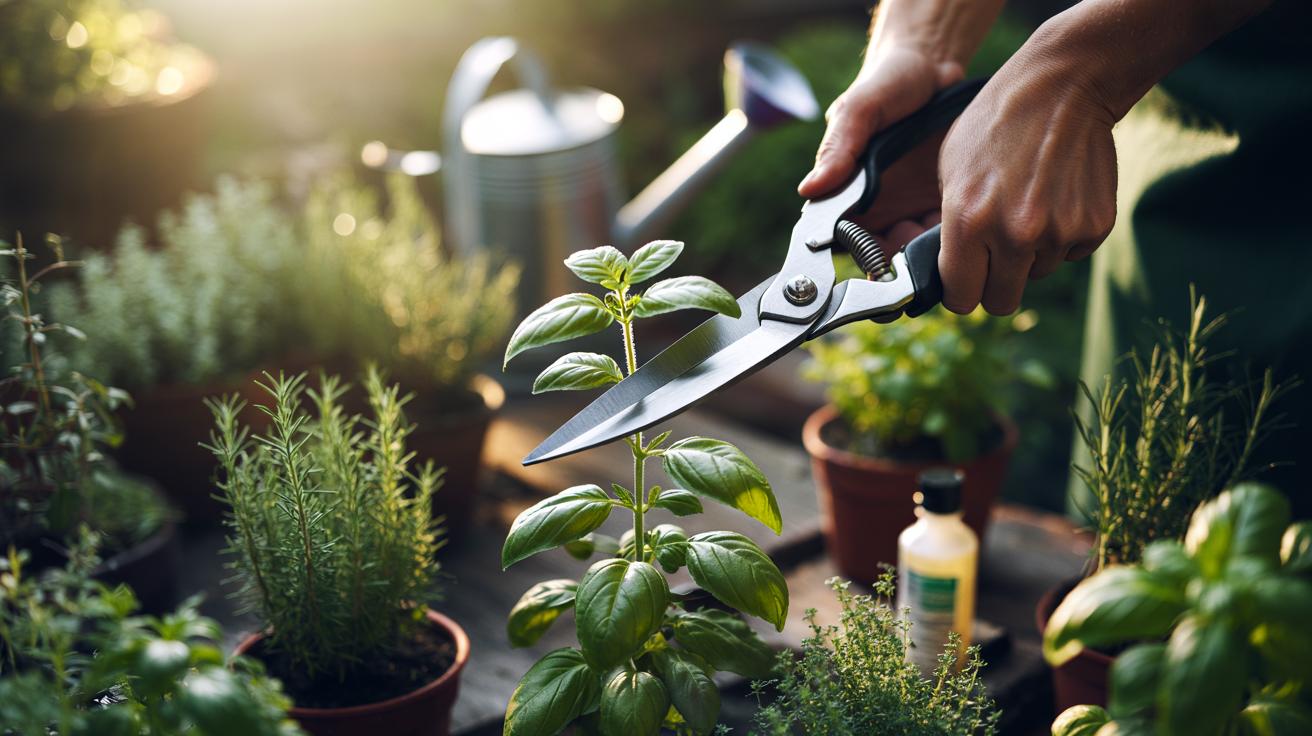
The simplest technique is pinching. Use your thumb and forefinger to remove the soft tip just above a node; two new shoots replace one, instantly doubling potential harvest. For sturdier stems, deploy a clean, angled heading cut 5–10 mm above a leaf pair. The angle sheds water; the height protects dormant buds. Always cut just above a node—never leave long stubs that die back and harbour disease. Rotate your harvest sites around the plant to balance growth and prevent a lopsided shape. On basil, remove any flower buds as they appear. On mint, shear runners to keep flavour high and texture plush.
Leggy herbs need a reset. Stagger your cuts: take some stems down by one-third, others by a quarter, leaving a few leaders to photosynthesise. This mosaic pruning keeps momentum while encouraging lateral shoots at different levels, thickening the plant from base to tip. For woody perennials, trace back to a junction with fresh green growth and cut there. Do not cut into lifeless brown stems expecting revival. Thin congested centres for airflow; light reaches inner buds, which respond with dense, tasty new foliage. Small, precise habits add up to dramatic bushiness.
Aftercare: Feed, Water, and Light for Rapid Regrowth
Pruning is half the story; recovery writes the rest. Water deeply right after a session to settle roots and move nutrients. Feed potted herbs with a light, balanced liquid fertiliser—something gentle, like seaweed or a 4-4-4—every two to three weeks in the growing season. In the ground, top-dress with fine compost. Heavy nitrogen spikes can blow soft, floppy growth with diluted flavour. Keep soil consistently moist but never waterlogged; roots need oxygen as much as hydration. Mulch lightly around outdoor herbs to stabilise moisture and temperature, but pull back from stems to avoid rot.
Light powers regrowth. Place windowsill herbs in a bright, south-facing spot, or supplement with LEDs at 12–14 hours daily if days are short. Rotate pots for even exposure and symmetry. Improve airflow with a small fan or careful spacing; dry leaves mean fewer fungal troubles and cleaner cuts. Resume light pinching once new growth reaches 8–10 cm. Regular, modest harvests beat infrequent, drastic chops. If a plant stalls after pruning, check for compacted roots and repot—space often unlocks renewed vigour. Within a fortnight, most herbs rebound, fuller and more aromatic.
Good pruning is a rhythm, not a one-off event. Your herbs will tell you when you’ve got it right: tighter internodes, richer scent, and a constant parade of fresh leaves replacing what you’ve taken. Work with the plant’s habit, keep your tools immaculate, and follow the gentle limits that protect reserves. Cut with intent today and you’ll harvest with abundance tomorrow. Which herb on your windowsill or in your border will you try this with first, and what shape are you aiming to coax from it this season?
Did you like it?4.6/5 (25)