In a nutshell
- 🌱 Calcium strengthens cell walls and membranes, supports root function, and prevents disorders like blossom end rot; steady supply to new growth is crucial.
- 🥚 Crushed eggshells are ~95% calcium carbonate (CaCO₃), acting as a slow-release soil amendment; finer grinding speeds availability and moderates acidity.
- 🛠️ Prep and dose: rinse, dry, bake, then grind to <1 mm; apply 50–100 g/m² in beds or 1–2 g/L in containers; avoid heavy use on alkaline soils and wear dust protection.
- 🔬 Evidence over myth: expect effects in months, not days; coarse shells don’t reliably stop slugs; balanced nutrition and consistent watering are essential alongside calcium.
- 📏 Manage and measure: use simple pH tests, integrate shells with compost and mulches, track results across beds to gauge improvements in structure and yield.
For many British gardeners, the humble eggshell is more than breakfast detritus; it is a quiet ally for healthier beds, borders, and allotments. Ground into a fine powder, eggshells release calcium that supports resilient growth, steadier yields, and cleaner harvests. Small changes in a soil’s mineral balance can transform plant health, and calcium is central to that transformation. Yet timing, particle size, and soil conditions determine how well this kitchen scrap performs. Understanding the science—rather than relying on folklore—helps you turn a waste stream into a reliable source of slow‑release calcium without over-liming your patch or starving plants of other nutrients.
How Calcium Builds Stronger Plants
Calcium acts as a structural element in plants, knitting together cell walls via calcium pectates and stabilising membranes. The result is tougher tissues, sturdier stems, and leaves that resist splitting or collapse during stress. Because calcium is largely immobile in plant tissues, a steady supply to actively growing tips is essential. When supply falters, fast-growing crops show tell-tale symptoms: blossom end rot in tomatoes and peppers, tip-burn in lettuces, and distorted new leaves in ornamentals. These are not merely cosmetic issues; they sap productivity and invite secondary infections.
Calcium also influences root development and root-hair function, improving the uptake of water and other nutrients. In the rhizosphere, adequate calcium helps moderate the effects of soil acidity and aluminium toxicity. It plays a role in intracellular signalling, aiding plants’ responses to heat, drought, and salinity stress. Stronger cell walls combined with stable membranes give crops a literal and biochemical shield. For growers, that translates into firmer fruit, better storability, and fewer physiological disorders across the season.
Why Crushed Eggshells Work in the Soil
Eggshells contain about 95% calcium carbonate (CaCO₃), the same active ingredient as agricultural lime, with trace magnesium and proteins. In soil, CaCO₃ dissolves slowly, releasing calcium as acidity and microbial activity act on the particles. Particle size is decisive: finely ground shells behave more like lime, while chunky shards can persist for years. This makes eggshells a slow-release conditioner rather than a quick cure for mid-season disorders. In mildly acidic beds, they can lift pH gradually; in neutral or chalky soils, the pH effect is limited but calcium still contributes to soil structure and nutrient balance.
Preparation matters. Rinsing, drying, and grinding reduce odour, deter pests, and increase surface area for faster mineralisation. Claims that coarse shells deter slugs are contested; their benefit is mainly nutritional and pH-buffering when used correctly. Think of eggshells as part of a system: blended into compost, they mineralise alongside organic matter, improving tilth and long-term fertility. Combined with consistent watering, this supports calcium transport to fruits and growing points.
Practical Steps, Dosage, and Safety
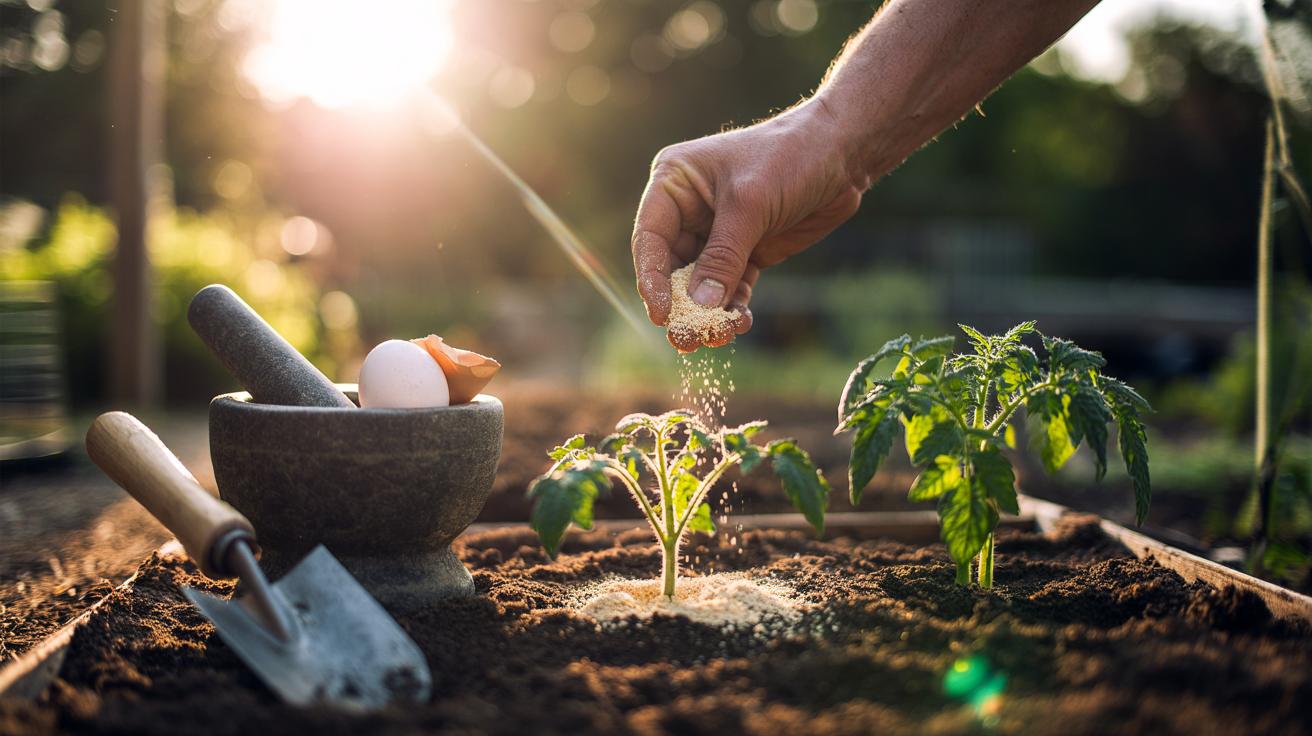
Rinse shells, dry thoroughly, then bake for 10–15 minutes at 120°C to sterilise. Blitz to a fine powder—ideally under 1 mm—using a spice grinder. The finer the grind, the faster the release and the more predictable the result. For garden beds with acidic to neutral soil, work in roughly 50–100 g per square metre during autumn or early spring. For containers, mix about 1–2 g of powder per litre of potting medium, or top-dress sparingly and water in. One medium eggshell weighs around 5–6 g, so ten shells yield about 50–60 g of material.
Avoid heavy use on already alkaline or chalky soils; test pH to stay between 6.5 and 7.0 for most vegetables. Wear gloves and a mask when grinding to prevent cuts and dust inhalation. Eggshells are not a stand-alone fertiliser: pair them with compost for nitrogen and phosphorus, and maintain even moisture—vital for moving calcium within the plant. If you’re tackling blossom end rot mid-season, improve watering and consider readily available calcium sources; eggshells will contribute long-term, not immediately.
| Item | Rule of Thumb |
|---|---|
| Eggshell weight | 5–6 g per medium shell |
| Bed application | 50–100 g/m² mixed into top 5–10 cm |
| Container mix | 1–2 g/L potting medium or light top-dress |
| Particle size | Under 1 mm for meaningful season‑scale release |
| Soil pH caution | Avoid large doses if pH > 7.2 |
Science, Myths, and Measurable Results
The agronomy is clear: plants need calcium for structural strength and signalling, and CaCO₃ sources can raise soil calcium while moderating acidity. Studies of finely milled eggshell show liming performance approaching conventional limestone, though coarse material releases far slower. Expect months, not days, for noticeable effects in the root zone. For fruiting crops, preventing disorders such as blossom end rot depends as much on steady watering and balanced nutrition as on calcium input itself.
Common myths persist. Coarse shells alone do not reliably stop slugs. Nor will a handful of shards rescue a crop already showing severe deficiency. What you can do is measure and manage: use a simple pH kit, keep notes on rates applied, and compare growth and yield across beds. Eggshells excel as a circular, low-cost amendment when integrated with compost, mulches, and careful irrigation. The result is a healthier soil architecture and a more resilient, responsive garden ecosystem.
Turning breakfast remnants into a soil ally is an elegant act of frugality and science. Crushed eggshells supply slow-release calcium, subtly improve structure, and help nudge pH towards a crop-friendly range when needed. Success hinges on fine grinding, modest doses, and sound watering, alongside compost that feeds biology and balances nutrients. Used this way, shells support stronger plants across seasons without the heavy hand of quick fixes. How might you test eggshell powder in one bed or container this year—and what will your own records reveal about its long-term impact on your soil?
Did you like it?4.5/5 (29)