In a nutshell
- 🌿 A diluted vinegar spray lowers leaf-surface pH, disrupting cues for aphids, whitefly, and mites; the aim is deterrence, not destruction.
- ⚗️ Use 5% distilled white vinegar: 1:20 for tender plants, 1:10 for general use; avoid stronger than 1:5 and target a temporary surface pH under 3.5 after a patch test.
- 🕒 Apply at dawn or dusk with a fine mist on both leaf surfaces, avoid blooms and full sun, reapply after rain, and add a drop of mild soap as a surfactant for better coverage.
- 🚫 Note risks: avoid on ferns, African violets, many succulents, and seedlings; protect soil life, never pour vinegar into beds, and skip “cleaning vinegar” above 6%.
- ♻️ Use within integrated pest management: pair with water jets, predators (ladybirds), and gentle alternatives like kaolin clay or neem; record outcomes to refine tactics.
Gardeners often reach for cupboard staples before chemical sprays, and few are as handy as vinegar. Used correctly, a diluted vinegar spray can help keep sap‑sucking insects at bay and discourage nibbling, without leaving persistent residues. The trick is the acidity: a brief dip in leaf‑surface pH makes foliage less attractive to pests and disrupts their cues. It is not a cure‑all or a substitute for healthy soil and biodiversity, yet it can be a useful, low‑cost tool within an integrated approach. Applied at the right strength and time, diluted vinegar can repel pests while keeping leaves safe from scorch. Here is what to know before you mix, mist, and monitor.
How Acidity Deters Common Garden Pests
The active agent in household vinegar is acetic acid. On contact, this mild acid briefly lowers the phyllosphere pH—the micro‑environment on leaf surfaces. Many soft‑bodied pests, including aphids, whitefly and spider mites, rely on cuticular chemistry and microbial films to feed and communicate. A temporary acidic film can disrupt feeding cues and soften biofilms, making leaves less palatable. It also confuses ant foraging trails that protect aphid colonies. The goal is deterrence, not destruction—think “please move along” rather than “wipe‑out”. Because the effect is short‑lived, regular light applications are more effective than heavy, infrequent spraying.
This tactic complements mechanical and biological controls. A firm water jet dislodges colonies; predatory ladybirds and lacewings then mop up stragglers. The vinegar film adds a chemical nudge to discourage recolonisation. Crucially, the spray must be properly diluted so it will not damage the leaf cuticle or scorch tender tissues. Always test a small patch first and observe for 24 hours for any bronzing, wilting or spots before treating a wider area.
Safe Dilution Ratios and pH Targets
For foliage, start with supermarket white vinegar at 5% acetic acid. Mix with clean water—ideally soft or filtered—to avoid mineral spotting. As a rule, gentler is safer: a 1:20 ratio (vinegar:water) delivers a mild, repellent film; 1:10 offers a stronger nudge for resilient pests on tougher leaves. Do not exceed 1:5 on foliage, and never use concentrated vinegar on plants. A drop of mild, unscented washing‑up liquid can act as a surfactant, improving coverage at lower acidity.
| Target/Purpose | Vinegar:Water | Approx. pH on Leaf | Suitable Plants | Notes |
|---|---|---|---|---|
| Tender herbs, seedlings | 1:20 | ~3.3–3.6 | Basil, lettuce, coriander | Test first; light mist only |
| General repellent | 1:10 | ~3.0–3.2 | Roses, brassicas, citrus | Reapply after rain or heavy dew |
| Spot hot‑spots | 1:8 | ~2.9–3.1 | Woody ornamentals | Avoid blooms; dab rather than spray |
pH values are indicative; foliage chemistry and water hardness shift outcomes. Aim for a temporary surface pH under 3.5 without visible stress. If leaves show dulling or blotches, rinse with plain water and step down dilution. Use distilled white vinegar for consistent results; “cleaning vinegar” above 6% acidity is over‑powerful for most plants and best avoided outdoors.
When and How to Apply Vinegar Spray
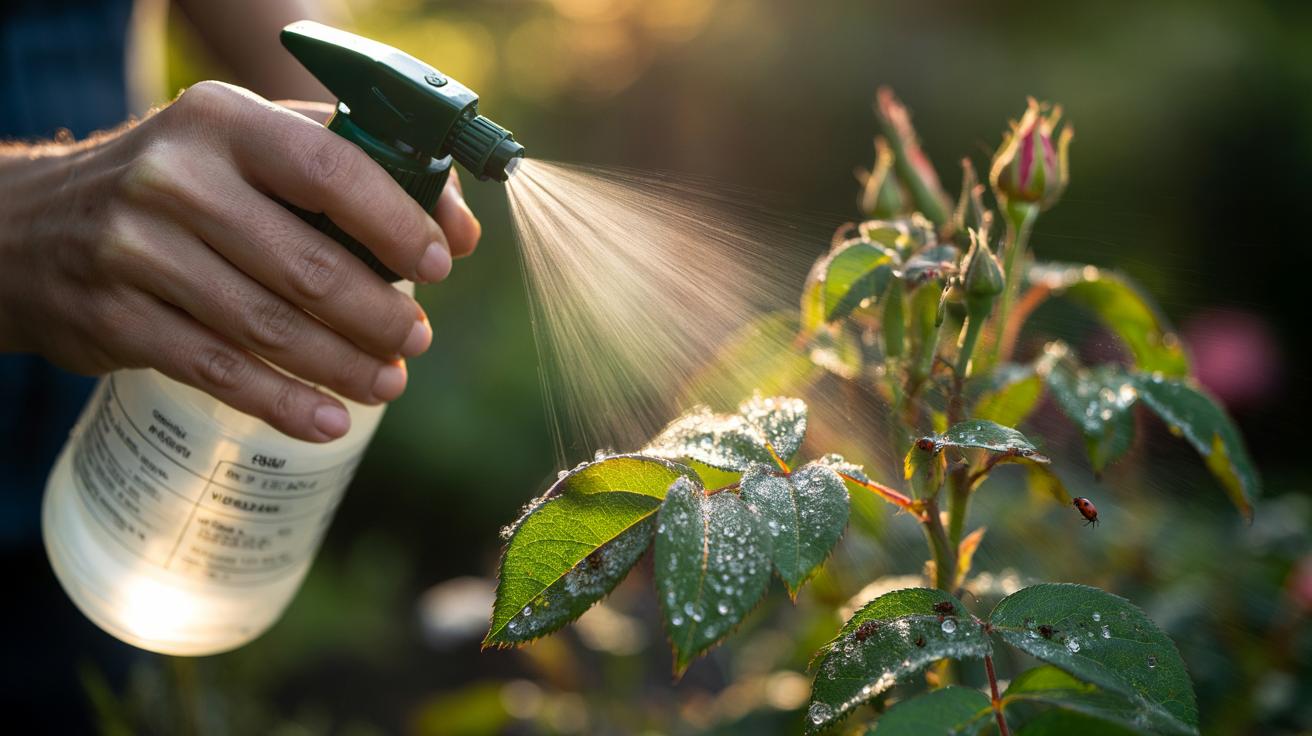
Timing matters. Apply in the early morning or at dusk, when temperatures are lower and stomata are less stressed. Never spray in full sun or during a heatwave, as acid plus intense light can scorch. Use a fine‑mist trigger bottle to achieve even, light coverage on upper and lower leaf surfaces—leaves should glisten, not drip. Keep the spray off open blossoms to protect pollinators, and avoid direct contact with beneficial insects by treating when they are least active.
Frequency depends on pressure. In peak pest season, mist once or twice weekly, stepping down as populations fall. Reapply after rain or irrigation that washes the film away. Adding a tiny amount of non‑bio washing‑up liquid (one drop per 500 ml) improves spread, reducing the acid needed. For heavy clusters under leaves, combine with physical removal: wipe with a damp cloth, then follow with the diluted spray. Always label your bottle with the ratio and date, and mix fresh weekly for consistent strength.
Risks, Exceptions, and Eco-Friendly Alternatives
Vinegar’s same acidity that deters pests can mark delicate foliage. Avoid on ferns, African violets, many succulents, and plants with very thin cuticles. Seedlings are easily damaged; use the mildest ratio or switch tactics. Shield the soil with cardboard or mulch during spraying to protect earthworms and beneficial microbes; if overspray occurs, water the soil lightly to dilute. Do not pour vinegar into beds or around roots—at strong concentrations it is a non‑selective herbicide. Keep metal tools and limestone paths clear to prevent corrosion or etching.
Consider rotation with other low‑impact options to avoid over‑reliance. Neem oil (used sparingly), garlic and chilli infusions, kaolin clay films, yellow sticky traps, and simple water jets each play a role. Encourage natural predators with mixed planting and minimal broad‑spectrum chemicals. If using vinegar indoors, ventilate and wipe residues from surfaces. Outdoors, a quick rinse 24 hours after treatment resets the leaf surface while leaving the deterrent effect on pest life cycles. Think in terms of integrated pest management: observe, intervene lightly, and support plant resilience first.
Used prudently, a diluted vinegar spray is a nimble, inexpensive line of defence that nudges pests away without drenching your garden in synthetics. The key is respect for dose, timing and plant choice: start mild, test, and keep the soil life in mind. As with any home remedy, document what works on your plot so you can repeat it with confidence and retire what doesn’t. Are you ready to trial a gentler, pH‑based deterrent—and which plants in your garden would you treat first to compare results side by side?
Did you like it?4.5/5 (23)